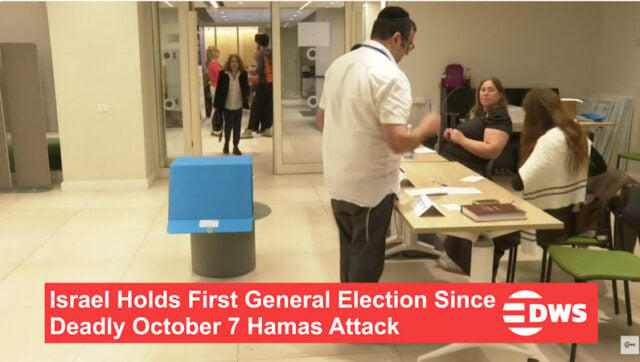
Israelis went to the polls today to elect a new parliament. However, voters do not cast ballots directly for their next prime minister. Instead, citizens vote for specific political party lists.
Because of this proportional representation system, there is no clear winner tonight. No single party has ever won the 61 seats needed for an outright majority. Therefore, forming a government always requires intense negotiations to build a coalition.
Once official results are published, the President of Israel will hold official consultations. President Isaac Herzog will meet with representatives from each elected party. Every faction will recommend a specific candidate for prime minister. The president then assigns the task of forming a government to one person.
Usually, the president selects the candidate with the best prospect of assembling a coalition. This selected candidate has exactly 28 days to negotiate with potential coalition partners. They can also request a 14-day extension if they need more time.

If they succeed, they will present their proposed government directly to the Knesset. The new government must pass a vote of confidence to take office.
If this first candidate fails, the president can assign the task to someone else. That second candidate gets another 28 days to try and build a legislative majority.
If they also fail, a group of 61 lawmakers can nominate a third candidate. That final candidate would receive only 14 days to assemble a viable government.
The 26th Knesset is officially scheduled to be sworn in on November 10. Meanwhile, the outgoing government remains fully in place acting as a caretaker.
These coalition negotiations are about much more than just adding up parliamentary seats. Governing parties must agree on core policies, budget allocations, and specific cabinet positions. Sometimes, rivalries and ideological disagreements prevent parties from aligning in the same government.
If no leader can form a viable coalition, Israelis will head back to the polls. Now, all eyes turn to President Herzog and the upcoming political negotiations.
Sources Used:
- Ynetnews: https://www.ynetnews.com/article/bytladcnzg
- Unpacked: https://unpacked.media/how-do-israeli-elections-work-a-guide-to-the-2026-vote-and-why-choosing-a-prime-minister-could-take-weeks/
- Israel Democracy Institute: https://en.idi.org.il/articles/63976
- Israel Policy Forum: https://israelpolicyforum.org/2026/10/26/how-is-an-israeli-government-formed/
Disclaimer
Artificial Intelligence Disclosure & Legal Disclaimer
AI Content Policy.
To provide our readers with timely and comprehensive coverage, South Florida Reporter uses artificial intelligence (AI) to assist in producing certain articles and visual content.
Articles: AI may be used to assist in research, structural drafting, or data analysis. All AI-assisted text is reviewed and edited by our team to ensure accuracy and adherence to our editorial standards.
Images: Any imagery generated or significantly altered by AI is clearly marked with a disclaimer or watermark to distinguish it from traditional photography or editorial illustrations.
General Disclaimer
The information contained in South Florida Reporter is for general information purposes only.
South Florida Reporter assumes no responsibility for errors or omissions in the contents of the Service. In no event shall South Florida Reporter be liable for any special, direct, indirect, consequential, or incidental damages or any damages whatsoever, whether in an action of contract, negligence or other tort, arising out of or in connection with the use of the Service or the contents of the Service.
The Company reserves the right to make additions, deletions, or modifications to the contents of the Service at any time without prior notice. The Company does not warrant that the Service is free of viruses or other harmful components.