Have you ever checked your bank balance and wondered where your money went? Routine checking account charges might be the quiet culprit. These minor charges sneak up quietly when you least expect them. Over time, they steadily chip away at your hard-earned budget. Nobody likes watching their cash vanish into annoying administrative costs. Understanding these hidden expenses is the first step toward stopping them.
According to Bankrate, “Checking account fees may be charged by banks when customers make certain transactions.” The site also notes fees trigger when you “fail to maintain a set minimum balance.” Among the steepest penalties is the dreaded overdraft fee. Bankrate highlights that “the average overdraft fee runs around $25 to $30.” Even worse, Bankrate’s research shows that “roughly 9 in 10 checking accounts still charge one.” If a check bounces instead, you face non-sufficient funds fees. Those typically cost between $15 and $20 per occurrence.
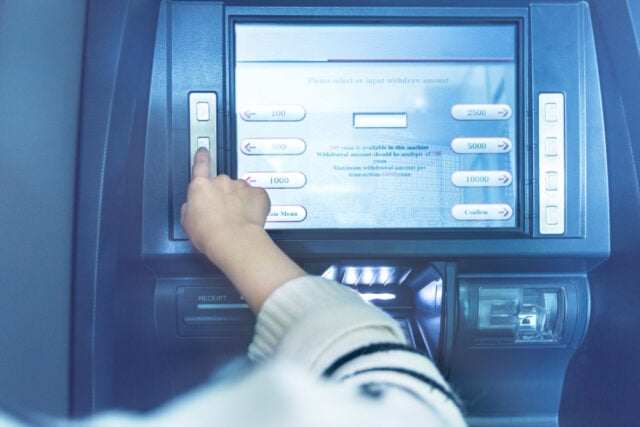
ATM charges can also take a bite out of your wallet. Using an out-of-network ATM often triggers two separate penalties. The ATM owner charges you, and your own bank charges you too. Together, out-of-network ATM fees now climb toward $5 per transaction. Routine monthly maintenance charges add even more strain. These recurring service charges usually run from $5 to $20 each month. Foreign transaction fees can also add three percent to overseas spending.
Thankfully, you do not have to accept these charges as inevitable. Bankrate emphasizes that “most checking fees are avoidable.” A simple first move is turning on low-balance mobile alerts. These push notifications warn you before your balance drops into danger zones. You can also set up direct deposit to eliminate service fees. Bankrate explains that “about half of noninterest checking accounts charge no monthly maintenance fee at all.” Furthermore, Bankrate notes that nearly all remaining accounts waive fees for qualifying deposits.

You also have the legal right to decline overdraft programs. Declining a debit card at checkout can feel awkward. However, a declined purchase is far better than a thirty-dollar penalty. You might also link a savings account for low-cost backup protection. Finally, explore accounts at reputable online banks or local credit unions. Bankrate points out these institutions “typically charge fewer fees than traditional banks.” These small adjustments keep more money in your pocket. Smart banking habits help protect your balance all year long.
Sources Used
Disclaimer
Artificial Intelligence Disclosure & Legal Disclaimer
AI Content Policy.
To provide our readers with timely and comprehensive coverage, South Florida Reporter uses artificial intelligence (AI) to assist in producing certain articles and visual content.
Articles: AI may be used to assist in research, structural drafting, or data analysis. All AI-assisted text is reviewed and edited by our team to ensure accuracy and adherence to our editorial standards.
Images: Any imagery generated or significantly altered by AI is clearly marked with a disclaimer or watermark to distinguish it from traditional photography or editorial illustrations.
General Disclaimer
The information contained in South Florida Reporter is for general information purposes only.
South Florida Reporter assumes no responsibility for errors or omissions in the contents of the Service. In no event shall South Florida Reporter be liable for any special, direct, indirect, consequential, or incidental damages or any damages whatsoever, whether in an action of contract, negligence or other tort, arising out of or in connection with the use of the Service or the contents of the Service.
The Company reserves the right to make additions, deletions, or modifications to the contents of the Service at any time without prior notice. The Company does not warrant that the Service is free of viruses or other harmful components.