The Standoff in the Gulf: War, Chokepoints, and Economic Pressure
Conflict Overview: A Shift Toward Economic Warfare
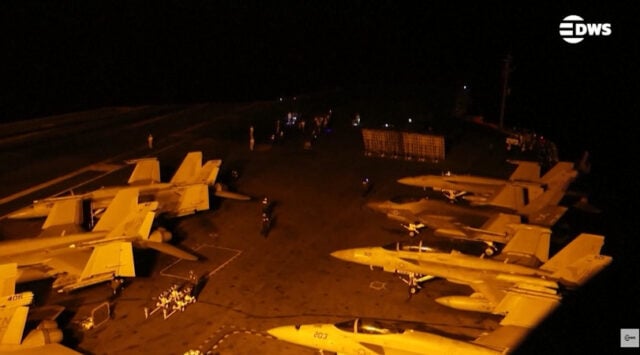
The confrontation surrounding Iran has entered a grinding phase of attrition, with major battle lines shifting from open kinetic strikes toward aggressive economic coercion and maritime brinkmanship. Following months of aerial exchanges and localized operations, direct combat has largely settled into a tense standoff defined by strategic posturing. While diplomatic channels and mediated memorandums have attempted to establish workable ceasefires, negotiations remain precarious. The coalition led by the United States continues to enforce strict containment measures, while Tehran seeks to test the boundaries of international deterrence and maintain strategic leverage across the region.
The Strait of Hormuz: A Bottleneck Under Pressure

At the epicenter of this confrontation sits the Strait of Hormuz, the world’s most critical maritime chokepoint for crude oil and liquefied natural gas (LNG). Because the strait normally accommodates roughly 20% to 25% of global petroleum consumption, repeated disruptions, vessel boardings, and naval standoffs have triggered severe volatility across international energy markets. Iran’s efforts to enforce restrictive passage protocols and assert sovereign oversight over commercial lanes have forced merchant shipping companies to pay exorbitant war-risk insurance premiums or halt voyages altogether. The resulting bottleneck poses severe risks for major Asian energy importers—including China, India, and Japan—as well as European markets vulnerable to natural gas supply shocks.
Economic Risks and Coordinated Financial Pressure on Iran
To counter Tehran’s regional moves without triggering full-scale ground combat, Western and regional powers have rolled out coordinated economic countermeasures. The United States has accelerated a maximum-pressure framework aimed at cutting off Iran from secondary financial lifelines and penalizing third-party entities that facilitate its trade.
Crude Oil Prices Surge as Iran Signals Blockade of Strategic Strait of Hormuz Following Airstrikes
Crucially, the pressure has expanded regionally:
- Trade Severance: Key regional hubs, notably the United Arab Emirates, have moved to freeze trade and financial transactions with Tehran following maritime escalations.
- Import Squeezes: Because the UAE previously accounted for more than a third of Iran’s essential goods imports, these restrictions hit domestic supply chains immediately.
- Currency Volatility: Squeezing foreign currency channels prevents Iran from easily repatriating export revenues, accelerating inflation and currency depreciation inside the country.
Tehran has attempted to mitigate these domestic risks by opening alternative currency corridors with Central Asian partners, yet these channels offer only partial relief against sweeping global banking restrictions.
The Road Ahead
The trajectory of the conflict hinges on whether maritime navigation through the Gulf can be stabilized under a verifiable multilateral framework. As long as commercial traffic through Hormuz remains vulnerable to leverage tactics and retaliatory strikes, economic pressure campaigns will remain the weapon of choice. For Iran, balancing rising domestic economic strains against its regional security posture will define its room for maneuver in the months to come.
Sources Used
- Time Magazine – Iran Hits Back at Trump’s Threat of a ‘Crushing’ Economic Campaign
- Institute for the Study of War (ISW) – Iran Update, August 19, 2026
- Center for Strategic and International Studies (CSIS) – The Strait of Hormuz in 8 Charts
- Encyclopaedia Britannica – 2026 Iran War
- Wikipedia – 2026 Strait of Hormuz Crisis
- Wikipedia – Economic Impact of the 2026 Iran War
Disclaimer
Artificial Intelligence Disclosure & Legal Disclaimer
AI Content Policy.
To provide our readers with timely and comprehensive coverage, South Florida Reporter uses artificial intelligence (AI) to assist in producing certain articles and visual content.
Articles: AI may be used to assist in research, structural drafting, or data analysis. All AI-assisted text is reviewed and edited by our team to ensure accuracy and adherence to our editorial standards.
Images: Any imagery generated or significantly altered by AI is clearly marked with a disclaimer or watermark to distinguish it from traditional photography or editorial illustrations.
General Disclaimer
The information contained in South Florida Reporter is for general information purposes only.
South Florida Reporter assumes no responsibility for errors or omissions in the contents of the Service. In no event shall South Florida Reporter be liable for any special, direct, indirect, consequential, or incidental damages or any damages whatsoever, whether in an action of contract, negligence or other tort, arising out of or in connection with the use of the Service or the contents of the Service.
The Company reserves the right to make additions, deletions, or modifications to the contents of the Service at any time without prior notice. The Company does not warrant that the Service is free of viruses or other harmful components.