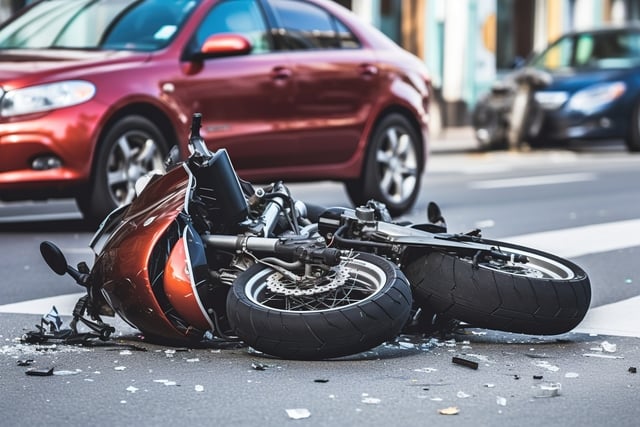
Florida’s motorcycle insurance rules differ from what most riders expect, and Ocala presents its own mix of conditions that make understanding your coverage more than a formality. Marion County roads range from dense urban corridors to rural two-lane stretches, and the state’s legal framework places specific obligations on riders that affect what happens after a crash.
Florida’s Unusual Insurance Landscape for Motorcyclists
Florida does not require motorcycle riders to carry liability insurance the way it does for standard passenger vehicle drivers. If you are involved in a collision and consult an Ocala motorbike accident lawyer, one of the first things examined will be whether you carried any voluntary coverage, since the absence of a policy can limit your legal and financial options significantly.
That said, Florida law does require proof of financial responsibility for motorcyclists. If you cause an accident resulting in injury or property damage, you must be able to cover those costs, which means riding without insurance carries real legal and financial exposure.
Minimum Coverage Thresholds Worth Knowing
Florida’s financial responsibility law sets minimums of $10,000 per person and $20,000 per accident for bodily injury liability, along with $10,000 for property damage liability. These figures apply when a motorcyclist is found at fault for causing harm to another party.

These thresholds are relatively low given the severity of injuries common in motorcycle collisions. Many riders choose higher coverage limits to protect their personal assets from judgments that exceed the statutory minimums.
Personal Injury Protection Does Not Apply to Motorcycles
Florida’s Personal Injury Protection system, commonly called PIP, covers medical expenses and lost wages regardless of fault for most vehicle owners. Motorcycles are explicitly excluded from PIP requirements under Florida Statute § 627.733.
This exclusion means motorcycle riders cannot automatically draw on no-fault benefits after a crash. Medical costs following a collision will generally need to be covered through health insurance, Med-Pay coverage if purchased voluntarily, or through a liability claim against an at-fault driver.
Uninsured and Underinsured Motorist Coverage
Uninsured motorist coverage, often called UM, pays for your injuries when the at-fault driver carries no insurance or insufficient coverage. Florida has one of the highest rates of uninsured drivers in the country, which makes this type of coverage particularly relevant for motorcyclists.
Underinsured motorist coverage functions similarly when the other driver’s liability limits are too low to cover your damages. Purchasing both UM and UIM protection as part of a voluntary motorcycle policy provides a financial backstop that the state’s default framework does not offer.
Helmet Laws and Their Effect on Claims
Florida Statute § 316.211 requires all motorcycle riders under age 21 to wear a helmet. Riders 21 and older may ride without one, provided they carry at least $10,000 in medical benefits coverage. As Florida road fatalities involving helmetless motorcyclists remain a serious safety concern, helmet use can also become an important issue in injury claims.
In personal injury litigation, helmet use can become a factor under Florida’s modified comparative negligence standard. If a rider over 21 chose to ride without a helmet and sustained head injuries, a court could reduce their damages award in proportion to any fault attributed to that decision.
Comparative Fault and How It Shapes Payouts
Florida adopted a modified comparative negligence rule in 2023, which replaced the previous pure comparative fault system. Under the current standard, a plaintiff who is found more than 50 percent at fault for their own injuries cannot recover damages from another party.
This rule applies directly to motorcycle accident cases. Factors such as lane splitting, speed, or failure to signal can affect fault allocation, which in turn affects the amount any injured rider can recover in a civil claim.
What Comprehensive and Collision Coverage Actually Covers
Comprehensive coverage pays for damage to your motorcycle caused by events outside a collision, including theft, fire, vandalism, and certain weather events. Collision coverage pays for damage to your bike resulting from an impact, regardless of who caused it.
Neither of these is legally required under Florida law, but both protect the physical value of your motorcycle. Riders who finance or lease their bikes are often contractually required to carry both types of coverage by their lender.
Keeping Your Coverage Current in Ocala
Motorcycle insurance in Ocala operates within a legal framework that is less protective by default than in many other states. Riders who rely on the state’s minimum requirements may find themselves underprotected after a serious crash, particularly given the exclusion from PIP and the financial responsibility thresholds that have not kept pace with modern medical and repair costs. Voluntarily purchased coverage, including UM, UIM, Med-Pay, and collision protection, fills the gaps the law leaves open, and understanding those gaps before an accident occurs puts you in a stronger position if something goes wrong on the road.
Disclaimer
Artificial Intelligence Disclosure & Legal Disclaimer
AI Content Policy.
To provide our readers with timely and comprehensive coverage, South Florida Reporter uses artificial intelligence (AI) to assist in producing certain articles and visual content.
Articles: AI may be used to assist in research, structural drafting, or data analysis. All AI-assisted text is reviewed and edited by our team to ensure accuracy and adherence to our editorial standards.
Images: Any imagery generated or significantly altered by AI is clearly marked with a disclaimer or watermark to distinguish it from traditional photography or editorial illustrations.
General Disclaimer
The information contained in South Florida Reporter is for general information purposes only.
South Florida Reporter assumes no responsibility for errors or omissions in the contents of the Service. In no event shall South Florida Reporter be liable for any special, direct, indirect, consequential, or incidental damages or any damages whatsoever, whether in an action of contract, negligence or other tort, arising out of or in connection with the use of the Service or the contents of the Service.
The Company reserves the right to make additions, deletions, or modifications to the contents of the Service at any time without prior notice. The Company does not warrant that the Service is free of viruses or other harmful components.