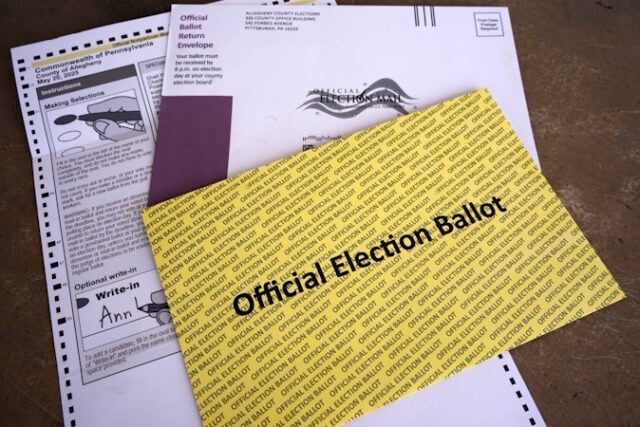
A federal district judge in Washington, D.C., has dealt a severe blow to civil rights groups and the Democratic Party by refusing to halt President Donald Trump’s sweeping executive order that aims to create a federal voter-citizenship list and restrict mail-in voting.
The Judicial Reasoning: “Shadowboxing” and Article III Standing
In his memorandum opinion, Judge Nichols, an appointee of President Trump, aligned closely with arguments presented by the Department of Justice. The administration contended that because the state citizenship lists are still being compiled and the USPS has not yet finalized its regulatory rules, no concrete or immediate injury has occurred.
Nichols ruled that the plaintiffs failed to establish the foundational requirement of Article III standing, which dictates that a party must prove they have suffered an actual, concrete, and imminent injury rather than a hypothetical grievance.
“Because Plaintiffs ‘have failed to carry their burden with respect to establishing that they have a substantial likelihood of standing based on [their alleged] injur[ies],’ they have also failed to show that those injuries are ‘certain enough and great enough to warrant preliminary injunctive relief,'” Judge Nichols wrote.
He added that because the executive order does not directly command the plaintiff organizations to take action, and because no federal agency has executed a final rule that harms their members, the request for an injunction lacked legal maturity.

“The Court recognizes that the Postal Service may ultimately issue a final rule that directly affects Plaintiffs or their members, or that the Government may develop State Citizenship Lists that omit specific individuals due to particularized flaws,” Nichols noted. He emphasized that civil rights groups could renew their motions “if and when those future actions occur,” but concluded that “until then, however, Plaintiffs cannot show that preliminary injunctive relief is warranted.”
During oral arguments leading up to the decision, Justice Department attorney Stephen Pezzi characterized the opposition’s lawsuit as “shadowboxing,” telling the court that it was abstract and premature to challenge a federal database that was still in development. When pressed by Judge Nichols on why it would be lawful for the federal government to disseminate these citizenship lists to local election departments, Pezzi countered that the burden rested entirely on the plaintiffs to prove the illegality of data sharing between federal and state entities.
The executive order at the center of the battle represents the Trump administration’s second major attempt to overhaul election regulations through executive fiat since the president returned to the White House. An initial executive order, which sought to mandate documentary proof of citizenship for all voter registrations nationwide, was largely blocked by multiple federal judges who ruled that the White House had overstepped its constitutional boundaries.
- Federal Citizenship Compilations: The Department of Homeland Security is tasked with synthesizing records from various federal databases to identify adults confirmed to be citizens residing in each state. Under the text of the order, this “State Citizenship List” must be updated and transmitted to state election officials no fewer than 60 days before any regularly scheduled federal election. The administration claims this database is a tool to assist states in purging non-citizens and maintaining clean voter rolls, warning that anyone violating citizenship voting laws will face severe criminal penalties.
The core of the legal battle rests on the Elections Clause of the U.S. Constitution (Article I, Section 4). The clause establishes that the “Times, Places and Manner of holding Elections for Senators and Representatives, shall be prescribed in each State by the Legislature thereof; but the Congress may at any time by Law make or alter such Regulations.”
Jones and other legal experts point out that federal law already strictly prohibits non-citizens from voting in federal elections, a crime punishable by fines, imprisonment, and deportation. Critics argue that forcing a 60-day deadline for state compliance is legally incompatible with existing federal laws, such as the National Voter Registration Act, which bars states from making major alterations to voter rolls within 90 days of a federal election to prevent administrative errors from disenfranchising eligible citizens.
Civil Rights Groups Warn of Administrative Chaos
Attorneys representing the civil rights organizations expressed deep disappointment with Judge Nichols’ ruling, warning that waiting until the order is fully implemented before intervening will trigger unprecedented chaos during the 2026 midterms.
Lalitha Madduri, an attorney representing the Democratic plaintiffs, argued during hearings that the administration’s plan to build an error-free national voter eligibility database in a matter of months is a logistical impossibility. “There isn’t a way to lawfully compile it,” Madduri argued, stating that the federal government lacks a single, comprehensive ledger of citizenship, meaning legitimate voters are highly likely to be omitted due to clerical discrepancies, name changes, or outdated information.
Civil rights leaders emphasize that mail-in voting has been widely used by both political parties for decades and experienced massive expansion during the 2020 pandemic. Despite repeated investigations, academic studies, and state-level audits—including numerous reviews conducted by Republican officials—there has been no evidence of systemic fraud associated with mail-in ballots.
For President Trump and his allies, the ruling is a validation of his executive authority to safeguard American elections. Since his 2020 election loss, Trump has consistently maintained that mail-in voting is vulnerable to manipulation. Throughout his second term, he has signaled an intent to increase federal oversight of election systems, particularly in metropolitan areas managed by political opponents.
While the Trump administration celebrated Judge Nichols’ refusal to grant an injunction, the legal warfare is far from over. Because Nichols dismissed the motion on the grounds of timing and standing rather than definitively ruling on the constitutional merits of the executive branch’s power over elections, the core legal question remains unresolved.
The national battleground now splits into multiple fronts. While the Washington, D.C. case remains active, a separate coalition of voting rights organizations has filed a parallel lawsuit in a Boston federal court, seeking a distinct injunction against the mail-in restrictions. Legal analysts predict that as the 60-day pre-election window approaches and federal agencies begin enforcing these restrictions, plaintiffs will quickly return to court with specific examples of affected voters to satisfy standing requirements.
Sources and Links
- The Guardian: Trump refiles $10bn defamation suit against WSJ over report on Epstein ties – US politics live
- The Associated Press: Federal judge refuses to block Trump order to create federal voter list and limit mail voting
- The Washington Examiner: Judge rejects Dems’ request for injunction to block Trump executive order on citizenship lists
- The Brennan Center for Justice: Analyzing the President’s Executive Order on Mail Voting
- MS. Magazine / The Conversation: Why Trump Can’t Just Decree Changes to Voting by Mail: Former Federal Judge Explains How the President’s EO Is ‘a Solution Looking for a Problem’
- The Durango Herald: Lawyers urge judge to block Trump order that would create eligible voter list, limit mail ballots
Disclaimer
Artificial Intelligence Disclosure & Legal Disclaimer
AI Content Policy.
To provide our readers with timely and comprehensive coverage, South Florida Reporter uses artificial intelligence (AI) to assist in producing certain articles and visual content.
Articles: AI may be used to assist in research, structural drafting, or data analysis. All AI-assisted text is reviewed and edited by our team to ensure accuracy and adherence to our editorial standards.
Images: Any imagery generated or significantly altered by AI is clearly marked with a disclaimer or watermark to distinguish it from traditional photography or editorial illustrations.
General Disclaimer
The information contained in South Florida Reporter is for general information purposes only.
South Florida Reporter assumes no responsibility for errors or omissions in the contents of the Service. In no event shall South Florida Reporter be liable for any special, direct, indirect, consequential, or incidental damages or any damages whatsoever, whether in an action of contract, negligence or other tort, arising out of or in connection with the use of the Service or the contents of the Service.
The Company reserves the right to make additions, deletions, or modifications to the contents of the Service at any time without prior notice. The Company does not warrant that the Service is free of viruses or other harmful components.