By TOM MARQUARDT and PATRICK DARR
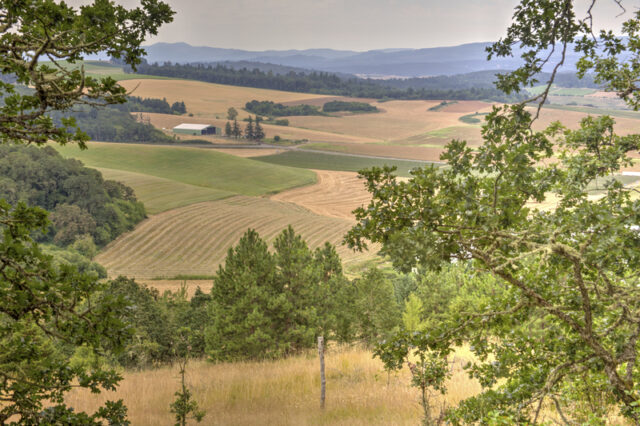
Two decades back, we sat with a handful of Oregon winemakers who were eager to make their case for chardonnay—a harder sell than it sounds in a state where pinot noir and pinot gris had long held the spotlight. The assembly of confident winemakers was sure we’d come around, and consumers would follow. We did come around, but with tempered enthusiasm. The Willamette Valley is still arguing its case, but the argument has grown stronger as better weather and hard-won experience have quietly worked in chardonnay’s favor.
The Willamette Valley’s struggle has its roots in the 1970s and 1980s, when growers chose California clones bred for that state’s heat. Oregon’s cooler climate was less forgiving, so those same late-ripening grapes yielded thin wines that lacked both acidity and depth. The French Dijon clones that arrived in the 1990s were a better fit, and the wines improved markedly. The irony is that the old California clones are now making a comeback, because the Willamette Valley itself has grown considerably warmer.
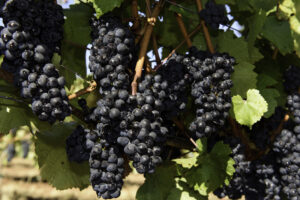
“The California clones may not have been the best choice, but now I think they are offering something to bring to the table for chardonnay,” said Kimberly Abrahams, winemaker at Archery Summit in Dundee Hills.

Abrahams said a warmer climate and cooling winds from the Van Duzer Corridor have dramatically impacted chardonnay’s tilt towards success. “When you have chardonnay planted in the right place in the Willamette Valley, retaining that freshness comes naturally,” Abrahams said. “But because we also have that wind impact, you don’t have thin wines because you have a skin that has protected itself.”
She said the thicker skins give weight to the wines and retain freshness—important qualities for Oregon’s chardonnay to succeed in a competitive world market. While California’s chardonnays tend to be richer and have ripe tropical fruit flavors, Willamette Valley chardonnays are characterized by bright acidity and green apple flavors with a flinty edge and only moderate oak influences.
The state’s search for the right chardonnay recipe is front and center when winemakers gather at the annual Willamette Valley Technical Tasting to analyze each other’s barrel samples, share best practices and discuss successes and failures. The camaraderie that flourished when we visited decades ago lives on today—unlike anything we’ve seen in the competitive Napa Valley. Together, the more than 700 wineries in the Willamette Valley are an unbreakable team whose enthusiasm is infectious. Each time we retaste Oregon chardonnays, we notice a collective improvement.
 Abrahams refused to say chardonnay has yet to hit full stride because “that means we kind of give up,” she said. But she was comfortable the industry is at the 50-yard line. “We’re making progress, but we’re still moving forward. We still have room for that exploration and room for growth.”
She said chardonnay is “very sensitive but very malleable. And so, I think the wine-making influence is strong. Depending on what direction winemakers choose to go, it can really change how the wine is made.”
Among those available influences she cited: whole-cluster pressing, oxidation, racking, barrel fermentation and oak aging. This kind of experimentation and absence of consensus reveals a product still evolving but one that is exciting to follow.
She said that after the last Willamette Valley Technical Tasting, there was the usual introspection. “Where does chardonnay sit this year? Are we pushing reductive crushing (to prevent oxidation) too far? Are we not building enough weight in the wine? People are finding their own identities but still keeping Oregon chardonnay.”
Other winemakers share her enthusiasm. She points to the changes in acres planted to chardonnay. In 1990, chardonnay occupied 1,367 acres in the Willamette Valley. But that level dropped to 950 in 2010 when many wineries gave up on the grape. In 2024, however, chardonnay rebounded to 3,400 acres. Pinot gris has grown steadily and encompasses twice as much acreage, but wineries have regained confidence in the grape’s potential.
Unlike Napa Valley where vineyard land is scarce, there is plenty of dirt available in Willamette Valley. Even at Archery Summit only 55 of its 125 acres are under vine.
Many winemakers gave up on chardonnay or never made it for years. Archery Summit began producing an estate chardonnay in 2017 and the single-vineyard versions followed. In the 2000s, its chardonnay was blended, and eventually the vines were grafted over or ripped out—testimony to the lack of faith in the grape that prevailed in the 2000s. Yet, hope was restored—Archery Summit re-introduced chardonnay in 2021. Only 300-500 cases of its Dundee Hills chardonnay are made from its meager 5 acres planted to the grape variety, but Abrahams is now making small quantities of experimental single-vineyard chardonnays.
Even more significant is the emergence of ultra-premium chardonnays being made by a new generation of winemakers. For instance, 00 chardonnay, also known as Double Zero, sells for more than $200 a bottle if you can find it (we couldn’t). One of its former winemakers, Matt Perry, has teamed up with Simon Colin, a friend from France making wine in Chassagne-Montrachet, to make only chardonnay. The first release of Perry Colin chardonnays, made exclusively from organic and biodynamic fruit, sold out at more than $100 a bottle.
Abrahams paused when asked whether such lofty prices and premium chardonnays will help chardonnay’s image in Oregon. She said, “I wish that I could make wines that every single person could drink all of the time, but that’s just not the reality, unfortunately. It’s important than people are doing their own thing. Rising tides lift all ships.”
If an ultra-premium wine gets top reviews from critics, it’s bound to draw the attention of wary consumers. At a recent recreation of a Judgement of Paris blind tasting in New York City a Flaneur Bon Vivant chardonnay from Willamette Valley beat entries from Meursault and Chablis. Good luck finding a bottle to buy now.
This northern region still has its unpredictable weather swings: a summer heat dome in June 2021 scorched the grapes and reduced yields while a deep freeze the next spring caused serious bud loss. Although most vineyards are dry farmed, irrigation is being considered as the water table drops from declining snowpacks.
Abrahams said the task now is to get Oregon’s chardonnay into the consumer’s glass. She is confident once that happens, they will be impressed enough to buy more.
Here are some Willamette Valley chardonnays to get you excited:
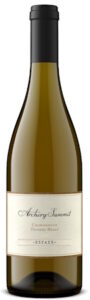
Archery Summit Dundee Hills Chardonnay 2023 ($65). Abrahams has the balance she desires in this chardonnay from one of the top appellations in the valley. Lush apricot aromas are chased by tropical fruit and green apple flavors with a dash of lime and flint.
Willamette Valley Vineyards Dijon Clone Chardonnay 2023 ($29). Green apple and citrus notes cloaked in fresh acidity.
McCollum Heritage 91 Chardonnay 2022 ($50). From the Chehalem Mountains appellation, this lushly textured chardonnay has stone fruit notes and brisk acidity.
Rex Hill Willamette Valley Seven Soils Chardonnay 2022 ($35). Layered peach, honey and spice aromas with lemon curd and ginger flavors. Good acidity.
Wine pick
Quinta Nova Unoaked Red Blend 2022 ($28). This luscious blend of native Portuguese grapes explodes with juicy plum and black cherry flavors. Easy tannins and a youthful appeal.
Disclaimer
Artificial Intelligence Disclosure & Legal Disclaimer
AI Content Policy.
To provide our readers with timely and comprehensive coverage, South Florida Reporter uses artificial intelligence (AI) to assist in producing certain articles and visual content.
Articles: AI may be used to assist in research, structural drafting, or data analysis. All AI-assisted text is reviewed and edited by our team to ensure accuracy and adherence to our editorial standards.
Images: Any imagery generated or significantly altered by AI is clearly marked with a disclaimer or watermark to distinguish it from traditional photography or editorial illustrations.
General Disclaimer
The information contained in South Florida Reporter is for general information purposes only.
South Florida Reporter assumes no responsibility for errors or omissions in the contents of the Service. In no event shall South Florida Reporter be liable for any special, direct, indirect, consequential, or incidental damages or any damages whatsoever, whether in an action of contract, negligence or other tort, arising out of or in connection with the use of the Service or the contents of the Service.
The Company reserves the right to make additions, deletions, or modifications to the contents of the Service at any time without prior notice. The Company does not warrant that the Service is free of viruses or other harmful components.