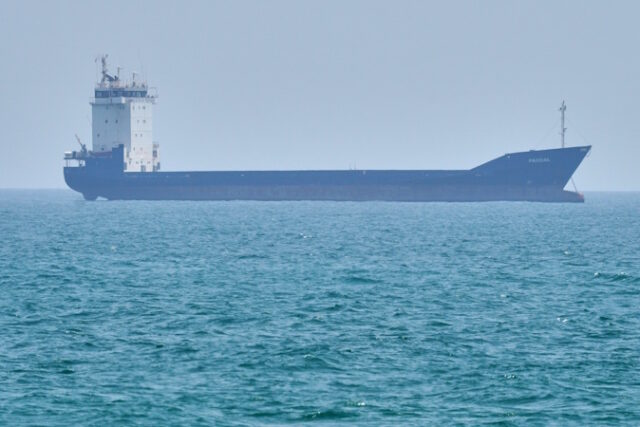
The Strait of Hormuz, a narrow waterway through which one-fifth of the world’s oil consumption passes, has once again become the epicenter of a high-stakes geopolitical standoff. As of April 18, 2026, the international community is bracing for a potential military confrontation that could redefine maritime security for the next decade. According to an exclusive report from the Wall Street Journal, the United States military is currently preparing to board and inspect Iran-linked merchant ships in the coming days, a move that marks a significant escalation in the Pentagon’s efforts to curb Tehran’s maritime influence and alleged smuggling activities.
The timing of this preparation is particularly sensitive. A fragile, multi-party ceasefire that has maintained a tenuous peace across several Middle Eastern conflict zones is scheduled to expire this coming Tuesday. Without a formal extension, regional analysts fear that the combined pressure of U.S. naval interdictions and the resumption of proxy hostilities could ignite a conflict that stretches from the Persian Gulf to the Mediterranean.
The WSJ Disclosure: A New Phase of Maritime Interdiction
The Wall Street Journal report reveals that the U.S. military has moved beyond deterrence and is now actively preparing for kinetic boarding operations. Officials familiar with the planning state that Marines and Navy personnel have been conducting intensive training exercises in the Fifth Fleet’s area of operations, specifically focusing on “visit, board, search, and seizure” (VBSS) missions. These operations are reportedly aimed at vessels suspected of carrying illicit Iranian oil, weapons destined for proxy groups, or components for unmanned aerial vehicles (UAVs).
For years, the U.S. has relied on monitoring and “naming and shaming” vessels that circumvent international sanctions. However, the decision to physically board ships indicates a shift toward a “zero-tolerance” policy. The WSJ highlights that this move is partly a response to Iran’s own history of seizing foreign-flagged tankers in the Strait. By putting American boots on the decks of Iran-linked ships, Washington is signaling that it is prepared to match Tehran’s aggression in the maritime domain.

The Tuesday Deadline: A Region on the Edge
While the naval buildup in the Strait of Hormuz is a direct response to maritime threats, it cannot be viewed in isolation from the broader regional landscape. The ceasefire, which has been in place for the last several months, provided a rare window of relative stability. It halted major offensives in Yemen, reduced cross-border skirmishes in the Levant, and facilitated humanitarian corridors.
However, as the Tuesday expiration looms, diplomatic efforts to extend the truce appear to have stalled. Iranian officials have warned that any “interference” with their commercial shipping will be met with a “crushing response,” potentially utilizing the very proxy groups that have been dormant during the ceasefire. The intersection of a collapsing peace agreement and a new U.S. naval doctrine creates a “perfect storm” for escalation. If the ceasefire ends on Tuesday without renewal, U.S. boarding operations could spark a wider conflagration.
Economic Stakes: The Chokepoint of the World
The global economy remains deeply vulnerable to any disruption in the Strait of Hormuz. At its narrowest point, the shipping lanes are only two miles wide, making them susceptible to mines, fast-attack boat harassment, and land-based missile batteries. If the U.S. begins boarding ships, there is a high probability that Iran will retaliate by attempting to block or harass other commercial traffic.
Market analysts have already begun to price in a “conflict premium.” Oil prices, which had been stable during the ceasefire, jumped 4% following the WSJ report. Shipping insurance rates for vessels traversing the Gulf have reportedly tripled in the last 48 hours. For energy-importing nations in Asia and Europe, a closure or significant slowing of traffic through Hormuz would be catastrophic, potentially triggering a global inflationary spike.
The U.S. Energy Information Administration (EIA) has long classified the Strait of Hormuz as the world’s most important oil chokepoint. In 2025, approximately 21 million barrels of crude oil and petroleum products flowed through the strait daily. Unlike other transit points, there are few viable alternatives for the volume of oil that moves out of the Persian Gulf. Pipelines through Saudi Arabia and the UAE have limited capacity and cannot fully compensate for a total blockade.
Military Posture and Technical Challenges
The technical nature of the proposed U.S. boarding operations poses significant risks. Boarding a ship in contested waters is one of the most dangerous missions a naval unit can undertake. It requires precision timing, aerial cover, and the ability to manage a potentially hostile crew while exposed on an open deck.
The WSJ report suggests that the U.S. is deploying specialized “Expeditionary Sea Base” ships, like the USS Lewis B. Puller, to serve as staging platforms for these operations. These vessels enable rapid launch of helicopters and small boats, providing the necessary infrastructure for sustained interdiction efforts. Facing them is the Islamic Revolutionary Guard Corps Navy (IRGCN), which specializes in asymmetric warfare. The IRGCN’s fleet of fast-attack craft and its arsenal of anti-ship missiles represent a credible threat to U.S. boarding parties and their support ships.
The Role of International Law
From a legal perspective, the U.S. justifies these potential boardings under a combination of UN Security Council resolutions and international maritime law regarding the transport of sanctioned goods and weapons. However, Iran maintains that these actions constitute “piracy” and a violation of its sovereign rights.
The legal ambiguity often centers on the “flag of convenience” system. Many ships linked to Iran fly the flags of nations like Panama or the Marshall Islands. Under international law, the flag state usually has jurisdiction, but the U.S. has increasingly used “counter-proliferation” frameworks to justify interdictions when vessels are suspected of carrying WMD components or violating specific international embargoes.
Diplomatic Deadlock and the Path Forward
Diplomats in Oman and Qatar have been working around the clock to prevent the ceasefire from expiring on Tuesday, but the WSJ’s revelation of the U.S. military’s plans has complicated their efforts. Tehran has reportedly used the news to justify a harder line in negotiations, demanding a total cessation of U.S. “maritime harassment” as a prerequisite for any further peace talks.
Conversely, Washington remains firm. The Biden administration (or current 2026 administration) has indicated that maritime security is non-negotiable. The goal of the boarding operations is not just to seize illicit cargo, but to re-establish a sense of order in a waterway that has seen dozens of “shadow war” incidents over the past few years.
Conclusion: A Ticking Clock
As the sun sets on the weekend, the world looks toward Tuesday with apprehension. The U.S. military’s preparation to board Iran-linked ships is a bold gambit designed to restore deterrence, but it carries the risk of a miscalculation that could spiral out of control.
The Strait of Hormuz has seen many standoffs, but the convergence of active boarding preparations and the expiration of a regional ceasefire creates a uniquely volatile situation. Whether Tuesday marks the start of a new chapter of conflict or a last-minute diplomatic breakthrough remains to be seen. For now, the sailors and Marines in the Persian Gulf remain at the highest state of readiness, waiting for the order that could change the course of regional history.
Sources Used and Links:
- The Wall Street Journal: “U.S. Military Prepares to Board Iran-Linked Ships in Coming Days, Officials Say” – https://www.wsj.com/world/middle-east/u-s-military-prepares-to-board-iran-linked-ships-in-coming-days-officials-say-4dc0a718?mod=hp_lead_pos2
- U.S. Energy Information Administration (EIA): “The Strait of Hormuz is the world’s most important oil chokepoint” – https://www.eia.gov/todayinenergy/detail.php?id=61002
- United Nations Security Council: “Maritime Security and International Law Frameworks” – https://www.un.org/securitycouncil/
- U.S. Naval Institute (USNI) News: “Developments in Fifth Fleet Maritime Interdiction Operations” – https://news.usni.org/
- Reuters: “Middle East Regional Ceasefire Negotiations and Tuesday Deadline” – https://www.reuters.com/world/middle-east/
Disclaimer
Artificial Intelligence Disclosure & Legal Disclaimer
AI Content Policy.
To provide our readers with timely and comprehensive coverage, South Florida Reporter uses artificial intelligence (AI) to assist in producing certain articles and visual content.
Articles: AI may be used to assist in research, structural drafting, or data analysis. All AI-assisted text is reviewed and edited by our team to ensure accuracy and adherence to our editorial standards.
Images: Any imagery generated or significantly altered by AI is clearly marked with a disclaimer or watermark to distinguish it from traditional photography or editorial illustrations.
General Disclaimer
The information contained in South Florida Reporter is for general information purposes only.
South Florida Reporter assumes no responsibility for errors or omissions in the contents of the Service. In no event shall South Florida Reporter be liable for any special, direct, indirect, consequential, or incidental damages or any damages whatsoever, whether in an action of contract, negligence or other tort, arising out of or in connection with the use of the Service or the contents of the Service.
The Company reserves the right to make additions, deletions, or modifications to the contents of the Service at any time without prior notice. The Company does not warrant that the Service is free of viruses or other harmful components.