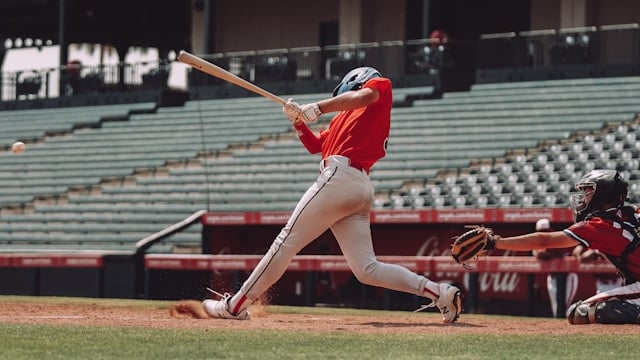
South Florida has earned a reputation as one of the most productive baseball regions in the United States. Across Miami-Dade, Broward, and Palm Beach counties, high school fields regularly produce athletes who move from local diamonds to professional stadiums.
The combination of year-round playing weather, competitive youth leagues, and deeply rooted baseball traditions has turned the region into a consistent pipeline of Major League Baseball talent. Coaches, scouts, and fans closely follow local high school programs because the next MLB star often begins developing in these communities long before national attention arrives.
Why South Florida Produces Elite Baseball Talent
South Florida’s unique environment plays a central role in shaping elite baseball players. Warm weather year-round allows athletes to practice, train, and compete during months when northern programs must move indoors. Players gain thousands of additional repetitions during their teenage years, sharpening both technical ability and competitive instincts.
Youth leagues and travel teams across the region also create an ecosystem where athletes face strong competition from an early age. By the time players reach high school, many have already participated in high-level tournaments and received advanced coaching. The result is a pipeline in which scouts regularly evaluate South Florida prospects as among the most polished young players in the country.

High School Programs That Dominate the Region
Several high schools have built reputations as consistent producers of baseball talent. Programs such as Marjory Stoneman Douglas High School in Parkland have developed a national profile because of their ability to send players to college programs and professional organizations. Strong coaching, structured development, and competitive schedules allow these teams to maintain elite standards year after year.
Schools across Miami-Dade and Broward counties frequently compete for state championships, creating an environment where top prospects regularly challenge each other. The competitive culture of these programs ensures that players entering college baseball or professional systems already possess experience in high-pressure games.
Marjory Stoneman Douglas High School’s MLB Legacy
Marjory Stoneman Douglas High School stands as one of the most prominent examples of South Florida’s baseball pipeline. The Parkland program has produced multiple players who have reached the Major Leagues. Among them is first baseman Anthony Rizzo, a 2007 graduate who was selected in the sixth round of the 2007 MLB Draft by the Boston Red Sox and signed with a $325,000 signing bonus.
The school’s influence continues through newer generations of players. Roman Anthony, an outfielder born May 13, 2004 in West Palm Beach, Florida, debuted in Major League Baseball on June 9, 2025 with the Boston Red Sox.
Meanwhile, third baseman Coby Mayo, born December 10, 2001 in Coral Springs, Florida, made his MLB debut with the Baltimore Orioles on August 2, 2024 and has recorded a .217 batting average with 11 home runs and 28 runs batted in 102 games in two seasons in the majors.
The Coaching Culture Behind the Pipeline
Strong coaching plays a defining role in South Florida’s baseball success. High school coaches across the region emphasize discipline, fundamentals, and mental preparation alongside athletic development. Many programs maintain long-standing coaching staffs that have built trust with players and families over decades.
These coaches also maintain relationships with college recruiters and professional scouts, ensuring that talented athletes gain exposure at the right stages of their development. Training sessions often resemble professional environments, with structured workouts, film review, and advanced performance analysis becoming increasingly common in high-level programs.
Youth Baseball Systems Feeding High School Programs
The path to elite high school baseball often begins years earlier in youth leagues and travel programs. Little League teams, club organizations, and regional tournaments across South Florida provide thousands of young athletes with competitive opportunities. By middle school, many players already participate in year-round training schedules that mirror those of collegiate athletes.
These youth programs create a foundation that high school teams can build upon. Players arrive at varsity tryouts with years of experience facing competitive pitching, working with specialized coaches, and understanding the tactical elements of the game.
A Regional Pipeline to Major League Baseball
South Florida high schools consistently produce MLB talent, with local prospects regularly appearing in rankings for fantasy baseball within years of graduation. From Miami-Dade powerhouses to Broward County programs, the region’s development pipeline feeds both the Marlins organization and teams nationwide, creating hometown heroes that South Florida fans follow from Little League through the majors.
This pipeline strengthens the connection between communities and professional baseball. Local fans often watch players grow from youth tournaments to televised MLB games, creating a sense of pride that extends far beyond the high school fields where those careers began.
The Role of MLB Scouts in South Florida
Professional scouts frequently travel throughout South Florida during the high school season. Major League organizations recognize the region as a valuable source of talent, sending evaluators to games, tournaments, and showcases to identify potential draft prospects.
Scouts often track players over several years, monitoring physical development, pitching velocity, hitting mechanics, and overall baseball intelligence. High school tournaments and state championship games attract large groups of professional evaluators who understand that South Florida programs often feature future professional athletes.
Impact on Local Sports Culture
The success of South Florida baseball programs has shaped the identity of sports culture across the region. Local communities take pride in seeing former high school athletes reach the highest level of the sport. Youth players frequently grow up hearing stories about graduates who advanced to professional baseball.
This cultural influence also drives attendance at high school games, where large crowds gather to support teams competing in important district and state matchups. Baseball becomes more than a school sport. It becomes a community event where families, alumni, and prospects celebrate the tradition of local excellence.
Inspiration for the Next Generation
Young athletes throughout South Florida often view local MLB alumni as role models who prove that professional success can begin in neighborhood fields. Seeing players from nearby schools reach the major leagues reinforces the belief that dedication and talent can lead to extraordinary opportunities.
High school programs emphasize this message by highlighting alumni achievements and inviting former players to speak with current teams. The connection between past and present players creates a cycle of inspiration that continues fueling South Florida’s reputation as one of the most productive baseball regions in the country.
The Future of South Florida’s Baseball Pipeline
The future of South Florida baseball appears poised to continue its remarkable tradition of producing elite athletes. High school programs remain well-funded, youth leagues continue expanding, and professional scouts maintain constant presence throughout the region. These elements ensure that the development pipeline remains active.
As new prospects emerge each season, the same combination of weather, coaching expertise, and competitive youth programs will likely keep South Florida at the forefront of baseball development. Local high school diamonds will continue serving as the starting point for athletes whose journeys may eventually lead to Major League Baseball stadiums across the country.
Disclaimer
Artificial Intelligence Disclosure & Legal Disclaimer
AI Content Policy.
To provide our readers with timely and comprehensive coverage, South Florida Reporter uses artificial intelligence (AI) to assist in producing certain articles and visual content.
Articles: AI may be used to assist in research, structural drafting, or data analysis. All AI-assisted text is reviewed and edited by our team to ensure accuracy and adherence to our editorial standards.
Images: Any imagery generated or significantly altered by AI is clearly marked with a disclaimer or watermark to distinguish it from traditional photography or editorial illustrations.
General Disclaimer
The information contained in South Florida Reporter is for general information purposes only.
South Florida Reporter assumes no responsibility for errors or omissions in the contents of the Service. In no event shall South Florida Reporter be liable for any special, direct, indirect, consequential, or incidental damages or any damages whatsoever, whether in an action of contract, negligence or other tort, arising out of or in connection with the use of the Service or the contents of the Service.
The Company reserves the right to make additions, deletions, or modifications to the contents of the Service at any time without prior notice. The Company does not warrant that the Service is free of viruses or other harmful components.