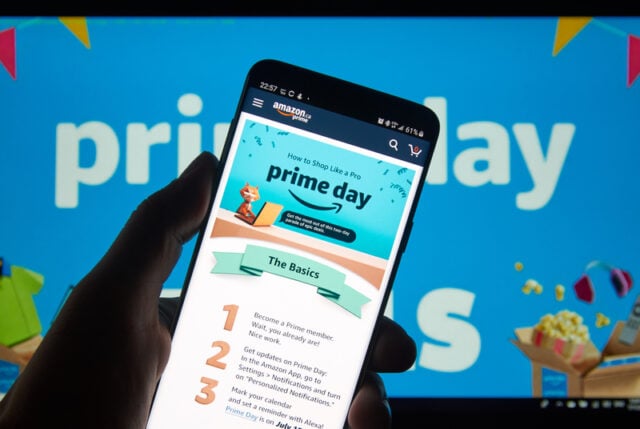
Amazon Prime Day is officially here. Flash deals and countdown timers make it hard to resist filling your cart. At checkout, a tempting financing option appears. Amazon lets you split your total into smaller installments through Affirm. Spreading costs across several months feels completely painless right now. Yet, taking on debt for discounts can quickly backfire. As Lifehacker warns, “they come with a cost that can easily outweigh any big discounts.”
First, installment loans trick your brain. Dividing payments into bite-sized chunks makes huge purchases seem harmless. Lifehacker highlights that seeing a $1,000 gadget for “just $67 per month” easily distorts your budget. That tiny monthly figure blinds you to the full price tag. In turn, Lifehacker points out that “it makes impulse spending easier.” You quickly talk yourself into buying items you never originally intended to buy. A temporary markdown never justifies months of ongoing payments.
Second, your credit score faces genuine risk. Many shoppers assume payment apps operate outside regular credit reporting bureaus. That assumption is no longer accurate. Lifehacker cautions that all Affirm payments “are now reported to the credit bureau Experian.” A single overlooked payment can suddenly drag down your score. Late fees also pile up quickly on overdue balances. That damage makes securing a mortgage or auto loan much tougher later.
Third, you lose out on essential consumer protections. Traditional credit cards often provide dispute rights, return guarantees, and extended warranties. Short-term financing apps do not offer those same valuable safety nets. Lifehacker explains that “BNPL plans generally don’t come with these safeguards.” If a seller delivers a damaged package, you still owe every scheduled installment. You remain fully on the hook while sorting out the dispute.

Before clicking confirm, evaluate the purchase with realistic discipline. Ask yourself if the item is truly an essential need. Next, verify whether you can pay the balance within six weeks. Lifehacker notes that “it’s best to avoid taking on debt for everyday expenses.” If an item is not urgent, wait until you have saved the cash.
High-pressure sales events should never jeopardize your financial stability. Lifehacker insists that “the smarter move is to only buy what you can afford.” Step away from your digital shopping cart before paying. Set up price alerts for items you genuinely require. Saving money first protects your wallet from painful debt. Paying upfront gives you total financial control every single time.
Sources Used
Disclaimer
Artificial Intelligence Disclosure & Legal Disclaimer
AI Content Policy.
To provide our readers with timely and comprehensive coverage, South Florida Reporter uses artificial intelligence (AI) to assist in producing certain articles and visual content.
Articles: AI may be used to assist in research, structural drafting, or data analysis. All AI-assisted text is reviewed and edited by our team to ensure accuracy and adherence to our editorial standards.
Images: Any imagery generated or significantly altered by AI is clearly marked with a disclaimer or watermark to distinguish it from traditional photography or editorial illustrations.
General Disclaimer
The information contained in South Florida Reporter is for general information purposes only.
South Florida Reporter assumes no responsibility for errors or omissions in the contents of the Service. In no event shall South Florida Reporter be liable for any special, direct, indirect, consequential, or incidental damages or any damages whatsoever, whether in an action of contract, negligence or other tort, arising out of or in connection with the use of the Service or the contents of the Service.
The Company reserves the right to make additions, deletions, or modifications to the contents of the Service at any time without prior notice. The Company does not warrant that the Service is free of viruses or other harmful components.