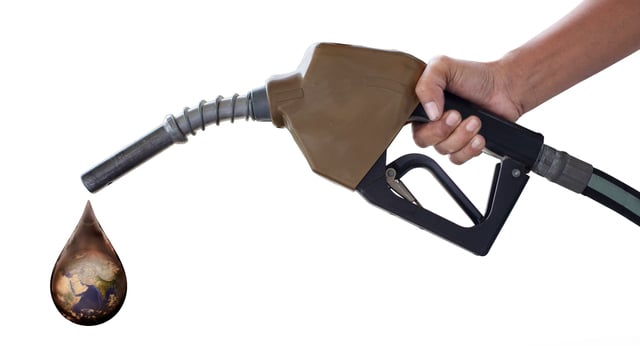
President Donald Trump recently announced what he calls the biggest oil deal in history. He also promises that aggressive energy production will supercharge American economic growth. The White House believes tapping Venezuelan crude will quickly lower prices at the pump. On paper, cheaper fuel sounds like a massive victory for households across the country. Yet market analysts and Federal Reserve watchers urge everyone to take a step back.
The international agreement targets seventeen major oilfields holding sixty-five billion barrels of crude. Under this framework, the United States secures rights to fifty-five percent of the output. Officials hope to acquire this crude at base production cost to rebuild strategic reserves. However, Venezuelan petroleum is thick, sour, and unusually difficult to process. Only specialized Gulf Coast refineries can properly handle this heavy fuel grade. Turning raw crude into usable gasoline requires complex chemistry and heavy financial investment.
This energy strategy ties directly into broader debates over national economic performance. CNBC notes that the Trump administration wants faster growth and lower borrowing costs. Lower energy bills could help cool stubborn inflation and give the Fed room to act. If fuel costs drop, policymakers can cut interest rates without stoking new price spikes. However, central bankers remain cautious about betting on sudden energy windfalls. Monetary policy relies on hard economic data rather than ambitious diplomatic promises.
Rebuilding Venezuela’s damaged energy sector will not happen overnight. Most targeted fields lack basic electricity, working pipelines, and modern drilling equipment. Private energy corporations must spend over $100 billion to upgrade their operations. Furthermore, political stability under interim leader Delcy Rodríguez remains deeply uncertain. Major oil executives remember past asset seizures and demand ironclad legal guarantees before investing.

Global energy markets also dwarf the modest production gains this deal might produce. Venezuela currently pumps around one million barrels of oil each day. Ramping up that volume by a few hundred thousand barrels will take years. International geopolitical shocks can erase those small gains in a single afternoon. For everyday drivers and policymakers alike, true relief remains a long marathon.
Do not expect cheaper gas or immediate interest rate relief this month. Meaningful energy expansion requires patient capital, extensive engineering, and lasting diplomatic stability. Economic reality always moves much slower than bold political headlines suggest.
Sources Used
- National Public Radio (NPR): The U.S.-Venezuela oil deal won’t lower your gas prices. Here’s what you need to know
- CNBC: CNBC Daily Open: Trump, U.S. growth and the Fed
Disclaimer
Artificial Intelligence Disclosure & Legal Disclaimer
AI Content Policy.
To provide our readers with timely and comprehensive coverage, South Florida Reporter uses artificial intelligence (AI) to assist in producing certain articles and visual content.
Articles: AI may be used to assist in research, structural drafting, or data analysis. All AI-assisted text is reviewed and edited by our team to ensure accuracy and adherence to our editorial standards.
Images: Any imagery generated or significantly altered by AI is clearly marked with a disclaimer or watermark to distinguish it from traditional photography or editorial illustrations.
General Disclaimer
The information contained in South Florida Reporter is for general information purposes only.
South Florida Reporter assumes no responsibility for errors or omissions in the contents of the Service. In no event shall South Florida Reporter be liable for any special, direct, indirect, consequential, or incidental damages or any damages whatsoever, whether in an action of contract, negligence or other tort, arising out of or in connection with the use of the Service or the contents of the Service.
The Company reserves the right to make additions, deletions, or modifications to the contents of the Service at any time without prior notice. The Company does not warrant that the Service is free of viruses or other harmful components.