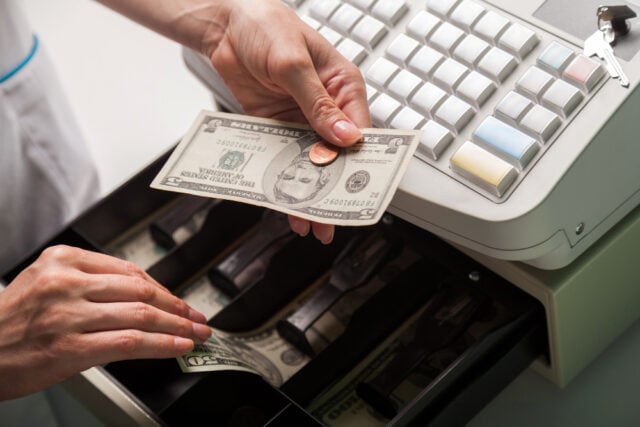
Walk into almost any coffee shop or grocery store today, and you will hear a steady rhythm of tap, insert, and beep. Digital payments, debit cards, and reward-heavy credit cards have taken over checkout counters across America. In fact, card transactions make up over three-quarters of everyday consumer purchases, while physical cash has settled at roughly 14% of overall payment volume. By pure transaction volume, cash clearly lags behind the digital convenience of a quick swipe.
Yet despite years of breathless predictions declaring the death of paper bills, cash refuses to disappear. There is a fascinating disconnect between how we pay and how we feel about our money. Even as credit cards climb in popularity—propelled by cash-back perks and mobile digital wallets—a vast majority of consumers remain fiercely attached to physical bills. According to Federal Reserve payment studies, nine out of ten Americans plan to continue using cash well into the future.
So, why does cash still command such stubborn loyalty?

First, psychology plays a massive role. Handing over crisp dollar bills triggers an immediate awareness of spending that tapping plastic or glancing at a phone screen simply cannot replicate. For millions navigating tight budgets, cash envelope methods provide foolproof discipline—once that $20 bill leaves your palm, it is gone.
Second, cash offers unmatched reliability and privacy. When severe weather knocks out power grids, point-of-sale terminals crash, or cellular networks drop, physical currency still works without a hitch. Cash requires no battery, no Wi-Fi connection, and no tracking algorithm. Furthermore, as more independent retailers introduce 3% credit card surcharges at the register, paying in cash has become an effortless way to score an instant discount.
Beyond everyday purchases, Americans increasingly view cash as an essential safety net. Nearly half of households store cash at home for emergencies, with reserve balances climbing steadily year over year. Whether it is tipping service workers, shopping at neighborhood yard sales, or keeping an emergency stash in the glove compartment, physical money delivers peace of mind.
While credit and debit cards will keep dominating high-speed commerce, physical currency is far from obsolete. Cash may lag in swipe counts, but its tangible security, universal reliability, and psychological value keep it firmly planted in our pockets.
Sources Used:
- Federal Reserve Financial Services: 2026 Diary of Consumer Payment Choice
- Federal Reserve Financial Services: 2025 Diary of Consumer Payment Choice
- WalletHub: Cash vs. Credit Card Spending Statistics
- Federal Reserve Bank of Richmond: Speaking of the Economy: Consumer Payment Trends
Disclaimer
Artificial Intelligence Disclosure & Legal Disclaimer
AI Content Policy.
To provide our readers with timely and comprehensive coverage, South Florida Reporter uses artificial intelligence (AI) to assist in producing certain articles and visual content.
Articles: AI may be used to assist in research, structural drafting, or data analysis. All AI-assisted text is reviewed and edited by our team to ensure accuracy and adherence to our editorial standards.
Images: Any imagery generated or significantly altered by AI is clearly marked with a disclaimer or watermark to distinguish it from traditional photography or editorial illustrations.
General Disclaimer
The information contained in South Florida Reporter is for general information purposes only.
South Florida Reporter assumes no responsibility for errors or omissions in the contents of the Service. In no event shall South Florida Reporter be liable for any special, direct, indirect, consequential, or incidental damages or any damages whatsoever, whether in an action of contract, negligence or other tort, arising out of or in connection with the use of the Service or the contents of the Service.
The Company reserves the right to make additions, deletions, or modifications to the contents of the Service at any time without prior notice. The Company does not warrant that the Service is free of viruses or other harmful components.