By TOM MARQUARDT and PATRICK DARR
Cabernet franc always feels like the grape world’s Jekyll and Hyde. When everything aligns, it’s utterly beautiful—aromatic, well-built, herbaceous and lively. When things go south, you’re left with Mr. Hyde: an overly green, astringent bitterness that hangs around like a bad mood. The culprit is a natural compound called pyrazine: in high concentrations it gives off green-pepper, jalapeño or asparagus notes; in moderation, it morphs into red pepper and savory herbs de Provence—thyme, rosemary, sage, mint, even oregano.
Steven Kent Mirassou knows that duality well. A literature major by training, he fell in love with the classics like Robert Louis Stevenson’s “Dr. Jekyll and Mr. Hyde” before joining his family’s 172-year-old California winery as its sixth generation to make wine. The family 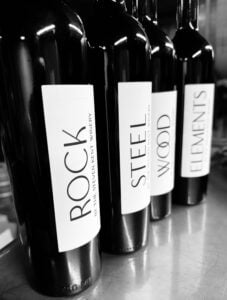 sold the label to E. & J. Gallo in 2003, prompting Steven to launch the Steven Kent Winery in Livermore Valley back in 1996. It didn’t take him long to realize that Livermore’s conditions were perfect for cultivating cabernet franc’s gentler side.
Few people match his passion for the variety. He was still focused on cabernet sauvignon when a Kermit Lynch tasting in Berkeley introduced him to Loire’s Chinon, made entirely from cabernet franc. “The angels sang,” he recalls. “No other grape variety approaches cabernet franc as the most interesting. There’s pure fruit, an expression of time and place. I haven’t found anything that has matched it since,” he said.

Today he’s Livermore Valley’s biggest cabernet franc evangelist. He and his wife founded the Cab Franc Guild and host the annual CabFranc-a-Palooza festival showcasing a hundred cabernet francs worldwide. Just last year the Livermore Valley Wine Community declared cabernet franc the region’s signature grape.
Much of Mirassou’s success stems from Livermore’s unique climate and terroir. Unlike most California valleys, its east-west orientation funnels cool ocean breezes through the vineyards, producing diurnal shifts up to 50°F at 400- to 1,000-foot elevations. That wide swing slows ripening, deepens aromas and preserves freshness, all while keeping alcohol around 13 percent instead of ballooning into alcoholic “fruit bombs” found elsewhere in California. The soils—ancient streambeds of gravel akin to Bordeaux’s Graves—drain effortlessly. On top of that, careful canopy management and extended hang time ensure the fruit escapes aggressive pyrazines and reaches full phenolic ripeness.
All those factors have set the stage for success. Mirassou now crafts about 10 Steven Kent Winery cabernet francs from different Livermore sites, but his most intriguing project is the Elements series. Now in its second vintage, each wine is vinified identically then aged 12 months in one of three vessels—stainless steel, concrete, neutral oak or a blend of all three. It’s rare to taste the vessel’s impact so directly; the experiment excites consumers and teaches the winemaking team what it prefers and why.
“Every time we work with the grape, different lights are flashing. Every time we get to shine a light on this grape variety, the more we learn and get to celebrate. That was the impetus to Elements,” he says.
Personally, we find the concrete-aged version most expressive, though neutral oak proves the crowd-pleaser in his tasting room. It is also Mirassou’s favorite, so much so he sees an expansion of its production. You can pick up the full Elements set for about $150 on the Steven Kent website.
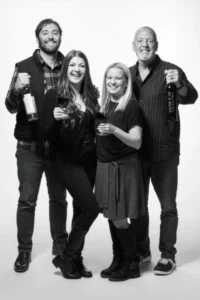
Steven is proud of his family’s involvement as new generations line up to keep the winemaking legacy alive. His wife, Beth, is the winery’s assistant winemaker and cellarmaster; his son, Aidan, is assistant winemaker, and his daughter, Sara, is the director of hospitality.
Livermore Valley needed a grape to rally behind, and now they have an indefatigable cheerleader to lead the way. As Mirassou says, you don’t want to be known for every grape variety; drawing attention to just one provides Livermore Valley the attention it deserves.
Other cab francs
Ehlers Estate Napa Valley La Perdiz Cabernet Franc 2023 ($82). Winemaker Adam Casto has been experimenting with this grape variety in various forms, but the La Perdiz
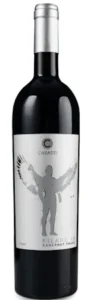
needs no experimentation. A solid performance with opulent floral aromas with blueberry and blackberry notes. With 30 percent merlot added, it has round and luscious character but firm tannins to make it a blockbuster wine for aging or current consumption.
Casadei Filare 18 Cabernet Franc 2022 ($70). Tuscany is not a place you think of for cabernet franc, but this version is a world-class standout. Made entirely of cabernet franc, it has a full body, generous spice and fruit aromas with a full, hedonistic mouthfeel and hints of olives and dried rosemary. It can age for a decade, but the soft tannins make it enjoyable now.
Barrel Oak Winery and Brewery Cabernet Franc Estate Middleburg, Virginia 2022 ($39). We really liked this red wine. Flavors of black cherry and a bit of vanilla along with a hint of herbs. The wine finished with a wave of olives and herbs.
Le Vigne Estate Cabernet Franc 2021 ($50). Sourcing grapes from one block in the estate’s di Domenico vineyard, the winemaker has created a deep and luscious wine with plum and cherry notes, brisk acidity and hints of black pepper and dried herbs.
Wine picks
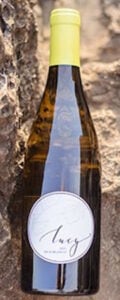
Lucy Pico Bianco 2025 ($26). This blend of pinot gris and pinot blanc is another inventive creation of the Pisoni Family. Coastal breezes keep the acidity fresh. Lots of stone fruit notes with a bit of minerality. Terrific summer wine for the person looking for something different. A dollar of every bottle sold goes to the Monterey Bay Aquarium.
Passerelles Touraine Oisly Sauvignon Blanc 2024 ($30). One of the best sauvignon blancs we have tasted this year, this Loire Valley gem is wonderfully textured with bright acidity and oodles of charming floral and mineral notes.
Spottswoode Lyndenhurst Cabernet Sauvignon Napa Valley 2023 ($110). Blended with merlot and a little cabernet franc, petite verdot and malbec, this generous and velvety cabernet sauvignon shows off layers of red and black fruit with a dash of spice. Fine tannins make it a good wine to enjoy now with a steak.
Disclaimer
Artificial Intelligence Disclosure & Legal Disclaimer
AI Content Policy.
To provide our readers with timely and comprehensive coverage, South Florida Reporter uses artificial intelligence (AI) to assist in producing certain articles and visual content.
Articles: AI may be used to assist in research, structural drafting, or data analysis. All AI-assisted text is reviewed and edited by our team to ensure accuracy and adherence to our editorial standards.
Images: Any imagery generated or significantly altered by AI is clearly marked with a disclaimer or watermark to distinguish it from traditional photography or editorial illustrations.
General Disclaimer
The information contained in South Florida Reporter is for general information purposes only.
South Florida Reporter assumes no responsibility for errors or omissions in the contents of the Service. In no event shall South Florida Reporter be liable for any special, direct, indirect, consequential, or incidental damages or any damages whatsoever, whether in an action of contract, negligence or other tort, arising out of or in connection with the use of the Service or the contents of the Service.
The Company reserves the right to make additions, deletions, or modifications to the contents of the Service at any time without prior notice. The Company does not warrant that the Service is free of viruses or other harmful components.