The Great Market Paradox
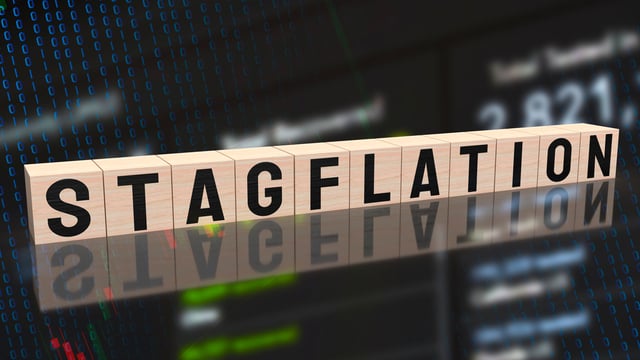
If you compare what professional money managers are telling pollsters with what they are actually doing with their capital, you might find yourself doing a double take. On paper, macroeconomic unease is everywhere. Inflation refuses to cool down completely, global growth is slowing to a crawl, and the specter of a 1970s-style economic slump remains a constant talking point across Wall Street trading desks. Yet, when you look at portfolio allocations, those same managers are charging headfirst into equities.
This striking disconnect was front and center in the latest Bank of America Global Fund Manager Survey. As Barron‘s highlighted in its live market coverage, “Most investors expect the global economy to experience stagflation, or weak growth combined with high inflation, in the next 12 months,” while noting that “a net 14% of investors expect stronger economic growth over the next 12 months, down from 21% last month.”
In classic economic theory, expecting stagflation prompts portfolio managers to play strict defense: park capital in cash, load up on short-dated Treasury bills, and reduce exposure to riskier equities. But today’s reality tells a completely different story. The survey revealed that fund managers’ cash holdings have plummeted to an ultra-lean 3.5%, marking one of the lowest cash cushions recorded in decades. Meanwhile, net equity allocations have surged to over a 50% net overweight stance. In short, institutional investors are nearly fully deployed, riding equity momentum while simultaneously professing skepticism about the broader economic climate.
Stagflation Is A Looming Economic Risk—Here’s What It May Mean For Your Money

Why the apparent contradiction? Much of it comes down to career risk and the powerful momentum behind key secular growth themes, such as artificial intelligence infrastructure and resilient megacap balance sheets. When benchmark indices continue to break records, money managers cannot afford to sit on the sidelines holding low-yielding cash, regardless of their macro doubts. As long as corporate earnings reports hold up, institutional allocators feel compelled to keep dancing while the music is playing.
Still, seasoned Wall Street strategists are sounding notes of caution about this high-wire act. Bank of America investment strategists, including Michael Hartnett, have pointed out that the rare simultaneous run in equities, rising government debt burdens, and sticky bond yields creates genuine structural vulnerabilities. If economic growth decelerates further while stubborn price pressures keep central banks from delivering deep interest rate cuts, the bond market could face sudden turbulence, which in turn could pressure rich stock valuations.
Another risk bubbling under the surface is corporate capital expenditure. With technology giants committing hundreds of billions of dollars to data centers and advanced chips, investors are beginning to question how quickly those massive outlays will generate bottom-line cash flow. If corporate balance sheets stretch too far just as borrowing costs stay elevated, volatility could return quickly.
For everyday investors observing this dynamic, the key takeaway is not necessarily to head for the exits, but to keep a level head. Chasing crowded institutional trades without a clear risk-management strategy can leave portfolios vulnerable. Maintaining broad diversification across quality businesses with strong balance sheets, solid cash flow generation, and defensive real assets remains the smartest way to navigate an unpredictable economic climate. Market pros may continue to worry about stagflation in surveys, but until the trend breaks, their money is staying firmly at work in the market.
Disclaimer
Artificial Intelligence Disclosure & Legal Disclaimer
AI Content Policy.
To provide our readers with timely and comprehensive coverage, South Florida Reporter uses artificial intelligence (AI) to assist in producing certain articles and visual content.
Articles: AI may be used to assist in research, structural drafting, or data analysis. All AI-assisted text is reviewed and edited by our team to ensure accuracy and adherence to our editorial standards.
Images: Any imagery generated or significantly altered by AI is clearly marked with a disclaimer or watermark to distinguish it from traditional photography or editorial illustrations.
General Disclaimer
The information contained in South Florida Reporter is for general information purposes only.
South Florida Reporter assumes no responsibility for errors or omissions in the contents of the Service. In no event shall South Florida Reporter be liable for any special, direct, indirect, consequential, or incidental damages or any damages whatsoever, whether in an action of contract, negligence or other tort, arising out of or in connection with the use of the Service or the contents of the Service.
The Company reserves the right to make additions, deletions, or modifications to the contents of the Service at any time without prior notice. The Company does not warrant that the Service is free of viruses or other harmful components.