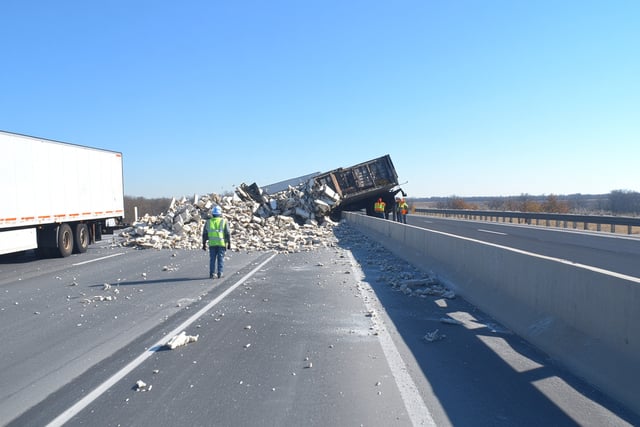
In 2024, North Carolina recorded 5,728 commercial truck crashes, leading to 130 fatalities and 4,183 injuries across the state. Preliminary data for 2025 reflects over 1,100 additional collisions and more than 800 injuries. While commercial trucking remains vital to the regional economy, these severe highway accidents routinely leave individuals and families facing life-altering financial and physical challenges.
Determining liability after a collision is rarely simple because multiple entities often share legal responsibility beyond the driver. Complex corporate structures, federal safety standards, and third-party contractors can all play a role in how a crash occurs. Partnering with a North Carolina truck accident lawyer ensures a comprehensive investigation into driver logs, cargo load sheets, and maintenance records. Pinpointing every negligent party provides the foundation for seeking full accountability and securing fair financial recovery.
Early Accountability
Critical records can vanish soon after impact, including logbooks, inspection files, dispatch notes, cargo papers, and electronic vehicle data. A truck accident lawyer may examine those materials, compare them with crash findings, and identify which person or business controlled the hazard that led to injury.
The Truck Driver
A driver may bear legal blame when unsafe choices cause a collision. Speeding, fatigue, distraction, impairment, sudden lane movement, or tailgating can all create severe danger. Commercial operators must follow traffic laws, rest limits, and safety standards. One careless decision behind the wheel can support claims for treatment costs, lost wages, and pain.

The Motor Carrier
The trucking company may also face liability for its own conduct. Carriers must screen drivers, monitor service hours, train staff, and keep accurate safety records. Pressure to meet unrealistic schedules can increase the risk of fatigue. Ignored warnings, poor supervision, or weak hiring practices may show fault separate from the driver’s actions.
Vehicle Owners
The truck or trailer may belong to a separate owner. Lease agreements can divide duties between several businesses, which makes ownership records important. An owner may be responsible for inspections, registration, equipment condition, or scheduled repairs. If worn tires, weak brakes, or broken lights contributed, those records may reveal missed obligations.
Maintenance Providers
Repair shops and maintenance contractors can share responsibility when poor work causes mechanical failure. Heavy trucks place intense stress on brakes, steering parts, tires, couplings, and suspension systems. A skipped inspection or incomplete repair can turn wear and tear into a catastrophe. Invoices, service notes, and technician findings often show what was found, fixed, or ignored.
Cargo Loaders
Cargo problems can make a tractor-trailer difficult to control. Freight may shift, fall, spill, or exceed legal weight limits. Loaders must secure goods, balance weight, and follow rules for straps, containers, liquids, and hazardous materials. A rollover, jackknife, or roadway spill may trace back to careless loading practices.
Manufacturers
A defective component can cause a crash even when the driver acts with care. Brakes, tires, lights, underride guards, steering assemblies, and trailer parts may fail because of design flaws or production defects. These claims often require engineering review, recall research, and testing. Damaged parts should be preserved before repairs begin.
Freight Brokers
Freight brokers arrange shipments between companies and carriers. Their conduct may matter if they chose an unsafe carrier despite clear warning signs. Prior violations, poor safety ratings, or insurance gaps can raise serious questions. Broker liability depends on contracts, selection practices, and the level of control exercised over the shipment.
Government Entities
Road conditions can also contribute to a serious crash. Missing signs, broken traffic signals, poor drainage, unsafe construction zones, or faulty road design may create hazards for large trucks. Claims involving public agencies usually have strict notice rules and shorter deadlines. Early review is important when roadway conditions appear connected to the event.
Shared Fault
Many truck crashes result from several failures acting together. A fatigued driver, an overloaded trailer, and a missed brake defect can combine and contribute to one collision. In that situation, multiple parties may share financial responsibility. Careful evidence review helps assign fault accurately. North Carolina rules are strict, so disputed blame requires close attention.
Key Evidence
Useful proof may include police reports, photographs, witness statements, driver logs, electronic control data, inspection records, repair invoices, dispatch messages, and video footage. Medical documentation helps link injuries to the crash. Preservation letters can help stop routine deletion of company records before investigators have time to review them.
Why Legal Responsibility Matters
Truck crash injuries often require surgery, rehabilitation, medication, imaging, mobility support, and future care. One insurance policy may be too small to cover all those losses. Identifying every responsible party can reveal additional coverage and a clearer account of what happened. That process also shows how each unsafe act contributed to preventable harm.
Conclusion
Legal responsibility after a serious truck crash depends on duty, control, conduct, and proof. The driver may be one part of a broader safety failure involving a carrier, owner, repair shop, loader, manufacturer, broker, or public agency. Prompt investigation helps protect records and clarify fault. With strong evidence, injured people can seek accountability from every party whose choices led to the crash.
Disclaimer
Artificial Intelligence Disclosure & Legal Disclaimer
AI Content Policy.
To provide our readers with timely and comprehensive coverage, South Florida Reporter uses artificial intelligence (AI) to assist in producing certain articles and visual content.
Articles: AI may be used to assist in research, structural drafting, or data analysis. All AI-assisted text is reviewed and edited by our team to ensure accuracy and adherence to our editorial standards.
Images: Any imagery generated or significantly altered by AI is clearly marked with a disclaimer or watermark to distinguish it from traditional photography or editorial illustrations.
General Disclaimer
The information contained in South Florida Reporter is for general information purposes only.
South Florida Reporter assumes no responsibility for errors or omissions in the contents of the Service. In no event shall South Florida Reporter be liable for any special, direct, indirect, consequential, or incidental damages or any damages whatsoever, whether in an action of contract, negligence or other tort, arising out of or in connection with the use of the Service or the contents of the Service.
The Company reserves the right to make additions, deletions, or modifications to the contents of the Service at any time without prior notice. The Company does not warrant that the Service is free of viruses or other harmful components.