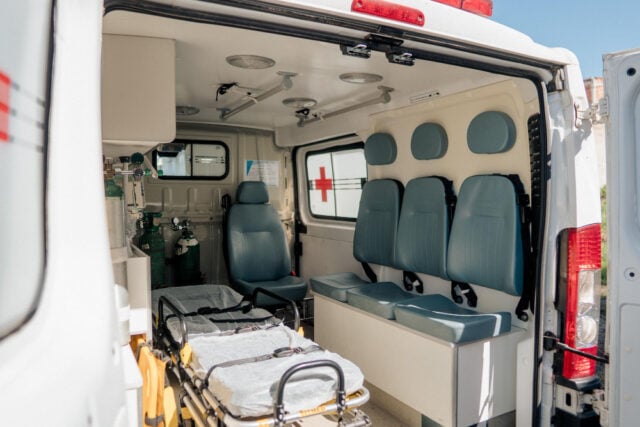
When someone needs to get to a dialysis appointment, a discharge, or a follow-up after surgery, the journey itself is easy to overlook. A ride is a ride, the thinking goes, so why not book whatever is cheapest and fastest. Anyone who has actually moved a patient with mobility or medical needs knows better. The difference between a safe transport and a risky one is not the distance covered. It is the equipment on board and the training of the people using it.
This matters more than ever as populations age and more care shifts to outpatient settings. Millions of trips happen every year that are not emergencies but are not ordinary errands either. Understanding what proper medical transport requires helps families, facilities, and operators make the right call.
Why the Vehicle Is Only Half the Story
A clean, comfortable vehicle is a fine starting point, but it is not what makes a transport safe. What matters is whether the vehicle is built and equipped to carry a patient who cannot simply hop in and buckle up.

That means wheelchair ramps or lifts that remove the need to lift a person manually. It means secure mounting points so a wheelchair or stretcher does not shift in transit. It means room for a caregiver to sit beside the patient and monitor them along the way. A standard car offers none of this, which is why a medical transport is defined by its fit-out far more than by its make or model.
The Equipment That Does the Heavy Lifting
At the center of any serious patient transport is the cot or stretcher, and this is where quality genuinely changes outcomes. Modern powered cots take the strain of lifting off the crew, raising and lowering a patient at the touch of a control rather than through a manual heave that risks injury to everyone involved. Reliable Stryker EMS equipment is built around exactly this principle, pairing powered lift with secure fastening so a patient stays stable and supported from pickup to destination.
Good equipment protects two groups at once. It protects the patient, who is moved smoothly and held securely rather than jostled or dropped. And it protects the crew, whose backs and shoulders take a punishing toll over a career of manual lifts. The operators who invest in proper cots, fasteners, and loading systems are not splurging. They are reducing injuries, insurance claims, and the human cost of doing the job the hard way.
Training Turns Equipment Into Safety
Equipment alone is not enough. A powered cot in untrained hands is just an expensive piece of metal. The value appears when skilled crews know how to load and unload safely, how to secure a patient correctly, and how to respond if something changes mid-journey.
This is the quiet advantage professional transport holds over an improvised ride. A trained two-person team can manage a transfer that would be unsafe or impossible for a lone driver with no medical background. They know the difference between a routine trip and one where a patient’s condition needs watching, and they have the tools to act on that knowledge.
Comfort Is Part of the Clinical Picture
It is tempting to treat comfort as a luxury layered on top of safety, but for many patients the two are inseparable. Someone recovering from surgery, living with chronic pain, or frail with age experiences a rough ride not as a minor annoyance but as genuine distress that can set back their recovery.
Proper suspension, a well-padded cot, secure positioning, and a calm, skilled crew turn a dreaded journey into a manageable one. That comfort is not indulgence. It is part of delivering care that respects the person being transported.
What Facilities and Families Should Look For
Choosing a transport provider comes down to a few practical checks. Ask what equipment the vehicles actually carry, and whether cots and lifts are powered and well maintained. Ask about crew training and whether transports are staffed by a team rather than a single driver. Ask how patients are secured, because the answer reveals how seriously a provider takes safety.
The cheapest option is rarely the safest, and with patient transport the stakes are too high to gamble on an untrained driver in an unequipped car. A provider that has invested in proper equipment and trained people is signaling exactly how it intends to treat the person in its care.
Frequently Asked Questions
What is the difference between emergency and non-emergency medical transport?
Emergency transport responds to urgent, life-threatening situations with ambulances and paramedics. Non-emergency medical transport handles scheduled trips for people who need medical-aware transport, such as to appointments or discharges, but are not in crisis.
Why can’t a rideshare replace medical transport?
Rideshare drivers are not medically trained and their personal vehicles lack wheelchair access, secure mounting, and patient-handling equipment. For anyone with real mobility or medical needs, that gap makes a rideshare unsafe.
What equipment should a proper medical transport vehicle have?
At minimum, wheelchair ramps or lifts, secure mounting points, and quality cots or stretchers, ideally powered to reduce manual lifting. Trained crew to operate it all is just as important as the hardware.
Why do powered cots matter so much?
They raise and lower patients mechanically rather than by manual lifting, which keeps the patient stable and protects crews from the back and shoulder injuries that come with repeated manual transfers.
How do I choose a safe transport provider?
Ask about the equipment on board, crew training, team staffing, and how patients are secured. A provider that has invested in proper gear and trained people is the one most likely to keep your loved one safe.
The Bottom Line
Safe patient transport is not about the badge on the vehicle. It is about whether that vehicle carries the right equipment and whether trained people know how to use it. Powered cots, secure fastenings, proper access, and skilled crews are what turn a simple ride into genuine care. When the person traveling is vulnerable, those details are not extras. They are the whole point.
Disclaimer
Artificial Intelligence Disclosure & Legal Disclaimer
AI Content Policy.
To provide our readers with timely and comprehensive coverage, South Florida Reporter uses artificial intelligence (AI) to assist in producing certain articles and visual content.
Articles: AI may be used to assist in research, structural drafting, or data analysis. All AI-assisted text is reviewed and edited by our team to ensure accuracy and adherence to our editorial standards.
Images: Any imagery generated or significantly altered by AI is clearly marked with a disclaimer or watermark to distinguish it from traditional photography or editorial illustrations.
General Disclaimer
The information contained in South Florida Reporter is for general information purposes only.
South Florida Reporter assumes no responsibility for errors or omissions in the contents of the Service. In no event shall South Florida Reporter be liable for any special, direct, indirect, consequential, or incidental damages or any damages whatsoever, whether in an action of contract, negligence or other tort, arising out of or in connection with the use of the Service or the contents of the Service.
The Company reserves the right to make additions, deletions, or modifications to the contents of the Service at any time without prior notice. The Company does not warrant that the Service is free of viruses or other harmful components.