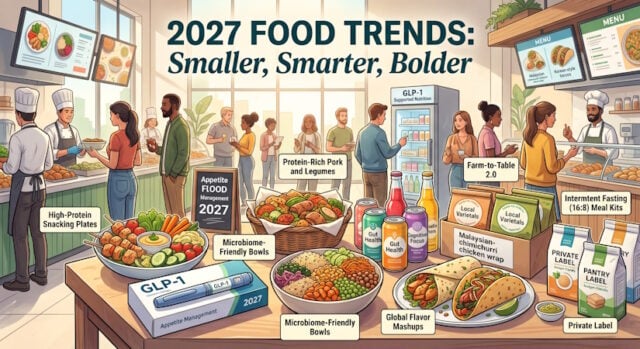
Curious about what dining will look like tomorrow? Our eating habits are shifting faster than ever. The Food Institute notes that “new product lines are getting presented, and marketing campaigns are being built.” Health goals, tighter budgets, and bolder cravings are steering these major changes. Here’s what to expect on your plate.
Weight-loss medications are shaking up meal sizes across the country. As The Food Institute highlights, “those taking GLP-1s are snacking less and focusing on nutrient-dense foods.” People simply want smaller portions that pack a nutritional punch. Restaurants are actively listening to this major consumer shift. Diners now seek high-protein mini meals rather than massive, heavy entrees. TikTok’s popular “girl dinner” concept has evolved into structured modular snacking. Every single bite must now work harder to satisfy.
Protein ruled past years, but fiber is taking the crown next. Shoppers want ingredients that support gut health, steady energy, and mental focus. The Food Institute reports that “fiber is expected to be a highly sought-after functional benefit.” You will soon spot chicory root and legumes in everyday snacks. Prebiotic sodas and gut-friendly baked goods are popping up everywhere. Consumers also want food that boosts daily cognitive performance. Satiety and mental clarity now guide grocery runs.
While portions may shrink, bold flavors are expanding rapidly. Diners crave adventurous dishes with memorable taste profiles. The Food Institute emphasizes that “global mash-ups, in general, appear poised to gain popularity.” Think Malaysian rendang paired with zesty Latin chimichurri. Indonesian, Lebanese, and West African cuisines are also taking the culinary spotlight. Rich Korean street food and tangy Filipino sauces bring delicious excitement to weeknight dinners. People want accessible global flavors without breaking their weekly budget.

Shoppers are also rethinking their primary protein sources. High grocery prices are forcing creative pantry swaps. The Food Institute observes that “pork is in a great position to increase its market share.” It offers versatile preparation and solid economic value. Eggs remain a beloved kitchen staple for good reason. Meanwhile, affordable whitefish and chickpea pasta offer delicious, budget-friendly nutrition. Alternative protein powders are also stepping up to replace pricey dairy whey.
Inflation continues to influence how families stock their kitchens. Shoppers are making deliberate trade-offs at the register. The Food Institute reveals that “private-label brands should continue to benefit from consumers’ value-consciousness.” Store brands now deliver impressive quality alongside welcome savings. Shoppers happily skip luxury brands if store labels match the flavor. At the same time, consumers gladly pay extra for transparent, local sourcing. Clear product value matters more than fancy packaging.
Our relationship with food is becoming more intentional and balanced. We want convenience, deep flavor, and real nutritional benefits in every meal. The Food Institute confirms that “early food adopters are actively trying to eat healthier.” Eating well does not mean sacrificing delicious taste. Instead, it invites exciting culinary experiments into our daily routines at home. Our dinner tables are ready for these vibrant transformations. Which of these tasty trends are you most excited to try first?
Sources Used
- Source Name: The Food Institute Link: https://foodinstitute.com/consumerinsights/27-food-trends-watch-2027/
Disclaimer
Artificial Intelligence Disclosure & Legal Disclaimer
AI Content Policy.
To provide our readers with timely and comprehensive coverage, South Florida Reporter uses artificial intelligence (AI) to assist in producing certain articles and visual content.
Articles: AI may be used to assist in research, structural drafting, or data analysis. All AI-assisted text is reviewed and edited by our team to ensure accuracy and adherence to our editorial standards.
Images: Any imagery generated or significantly altered by AI is clearly marked with a disclaimer or watermark to distinguish it from traditional photography or editorial illustrations.
General Disclaimer
The information contained in South Florida Reporter is for general information purposes only.
South Florida Reporter assumes no responsibility for errors or omissions in the contents of the Service. In no event shall South Florida Reporter be liable for any special, direct, indirect, consequential, or incidental damages or any damages whatsoever, whether in an action of contract, negligence or other tort, arising out of or in connection with the use of the Service or the contents of the Service.
The Company reserves the right to make additions, deletions, or modifications to the contents of the Service at any time without prior notice. The Company does not warrant that the Service is free of viruses or other harmful components.