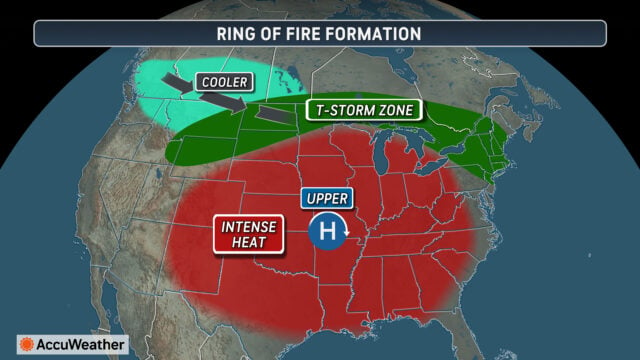
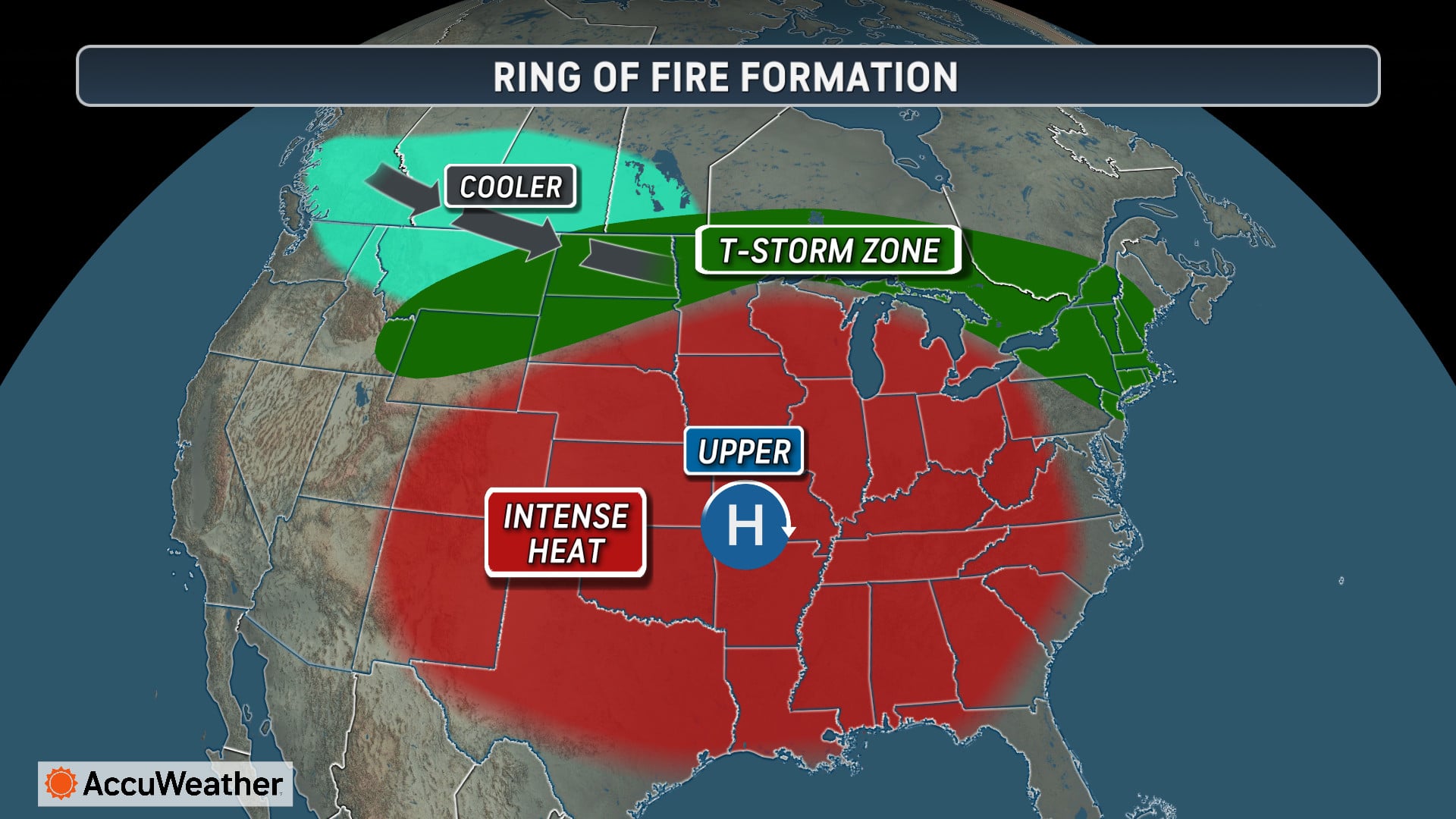
As extreme heat grips parts of the United States each summer, “heat dome” has become one of the most talked-about weather terms. But what exactly is a heat dome, and how is it different from an ordinary hot spell? AccuWeather expert meteorologists explain how heat domes develop and the impacts they can have beyond soaring temperatures.
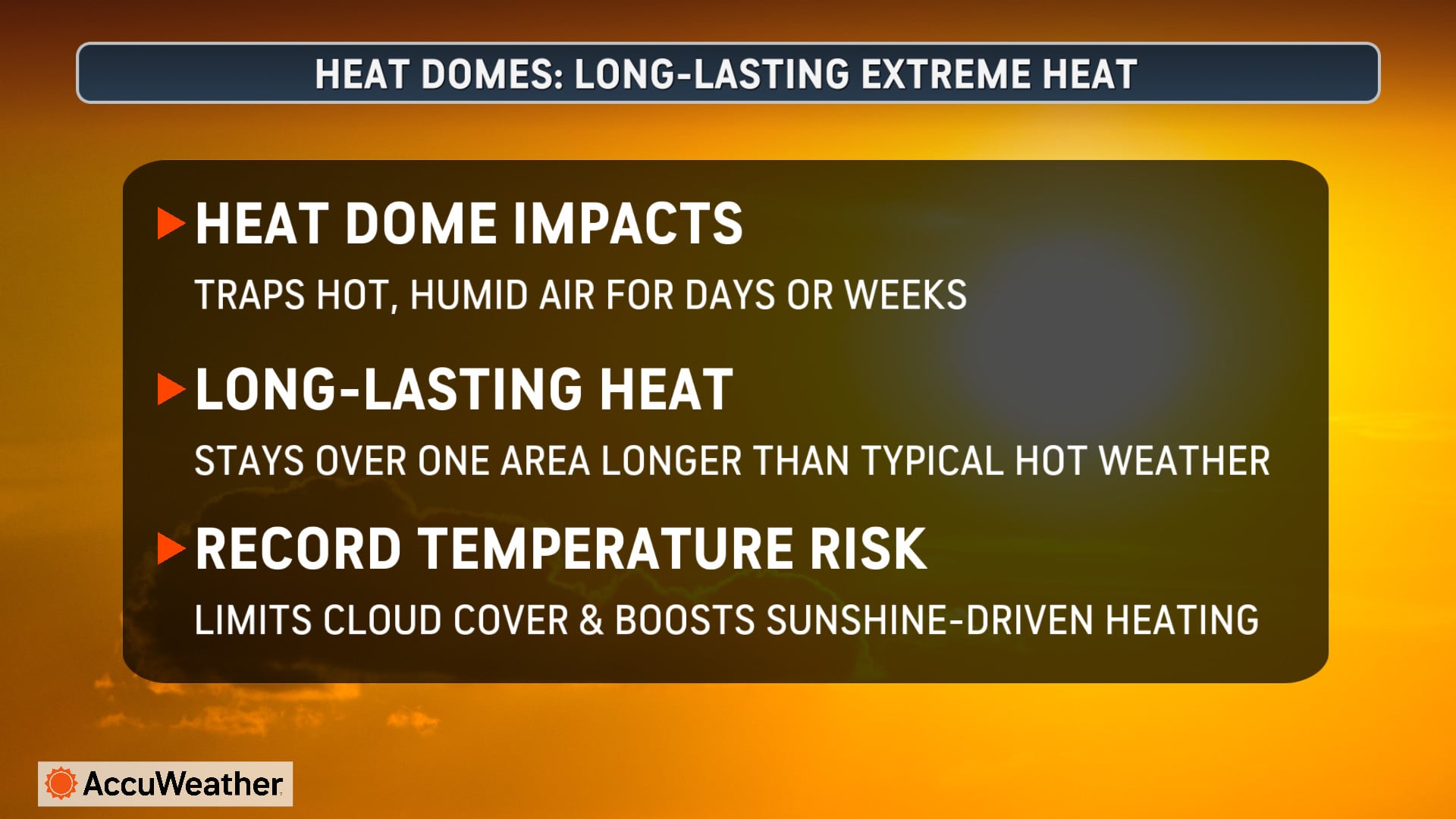
“The persistence and long-lasting nature in a particular area is the key difference between the impacts of a heat dome and a typical stretch of hot weather which might last a short duration,” said AccuWeather Chief Meteorologist Jonathan Porter. “Heat domes can prevent clouds from forming, resulting in abundant sunshine that boosts temperatures, potentially toward record levels.”
See the latest forecast for this Heat Dome for the United States from AccuWeather

Heat Dome vs. Heat Wave
Although the terms are often used together, they describe different things.
- Heat Dome: The large-scale weather pattern responsible for trapping heat over an area for a week or more
- Heat Wave: A period of unusually hot weather, typically three or more consecutive days above a location’s heat threshold
“To qualify as a heat wave in cities such as New York, Chicago, St. Louis, Minneapolis, Los Angeles, and San Francisco, it requires the daily temperature to reach or exceed 90 degrees on three consecutive days,” Porter said. “The threshold in cities in other areas that over average hotter is higher; in Miami and New Orleans it is 95 degrees, Austin is 105, Phoenix is 110.”
What Happens During a Heat Dome?
A heat dome acts like a lid on the atmosphere, trapping heat over the same region for an extended period.
Under a heat dome:
- Clouds, rain and thunderstorms are suppressed
- Sunshine remains nearly uninterrupted, allowing temperatures to climb day after day
- Soil dries out more quickly, increasing drought risk
- Light winds allow pollutants to build up, worsening air quality, particularly in urban areas
“The lack of cloud cover, rain and any cooler air flow from the northern latitudes allows air temperatures to warm rapidly,” said Porter. “Additionally, heat domes promote excessive evaporation, so the soil dries out more quickly.”
Beyond the Heat: Why It Matters
AccuWeather expert meteorologists say that heat domes have become more intense in recent years, with many producing record-breaking temperatures.
“We have observed over the last 10 years or so that heat domes are becoming more intense, often breaking records in recent years,” Porter said. “There is growing research that points toward increased persistence of blocking patterns associated with heat domes in a warming atmosphere, which allows a hot pattern to linger for longer periods.”
Extreme Heat During a Heat Dome Can:
- Increase demand on electrical grid, raising the risk of power outages
- Buckle roads, bridges and railroad tracks
- Cause flight delays or cancellations when temperatures exceed aircraft operating limits
- Reduce air quality by trapping pollutants near the ground
- Increase the risk of rapidly developing drought
Travel Smart During a Heat Dome
If you’re traveling to an area experiencing extreme heat, preparation can make all the difference.
- Drink water consistently
- Schedule outdoor activities during the morning or evening
- Wear loose-fitting, breathable clothing
- Seek shade and air conditioning whenever possible
- Monitor the UV Index and AccuWeather Real Feel® and RealFeel Shade™ temperatures
- Learn the warning signs of heat exhaustion and heat stroke
“Heat waves kill more Americans on average than tornadoes, hurricanes, floods, and lightning,” said Porter. “The danger is often underestimated because heat frequently worsens existing medical conditions.”
The AccuWeather HeatWave Severity Index™, which factors in duration and intensity of these types of events, can compare heatwaves over time.
AccuWeather Heatwave Counter and Severity Index™
The exclusive AccuWeather HeatWave Counter and Severity Index™ measures heat waves by duration and intensity. Heat waves are defined as three or more consecutive days in which the temperature exceeds a location-specific threshold. In New York City, Chicago and Philadelphia, this threshold is set at 90 degrees Fahrenheit. In Raleigh, this threshold is set at 95 degrees Fahrenheit. The severity depends on the duration of the heat wave and the extent to which temperatures exceed the threshold.
AccuWeather RealFeel®
AccuWeather RealFeel® Temperature combines more than a dozen factors to provide an accurate measure of how representative the current or forecast weather conditions really “feel” to an appropriately dressed person.
Disclaimer
Artificial Intelligence Disclosure & Legal Disclaimer
AI Content Policy.
To provide our readers with timely and comprehensive coverage, South Florida Reporter uses artificial intelligence (AI) to assist in producing certain articles and visual content.
Articles: AI may be used to assist in research, structural drafting, or data analysis. All AI-assisted text is reviewed and edited by our team to ensure accuracy and adherence to our editorial standards.
Images: Any imagery generated or significantly altered by AI is clearly marked with a disclaimer or watermark to distinguish it from traditional photography or editorial illustrations.
General Disclaimer
The information contained in South Florida Reporter is for general information purposes only.
South Florida Reporter assumes no responsibility for errors or omissions in the contents of the Service. In no event shall South Florida Reporter be liable for any special, direct, indirect, consequential, or incidental damages or any damages whatsoever, whether in an action of contract, negligence or other tort, arising out of or in connection with the use of the Service or the contents of the Service.
The Company reserves the right to make additions, deletions, or modifications to the contents of the Service at any time without prior notice. The Company does not warrant that the Service is free of viruses or other harmful components.