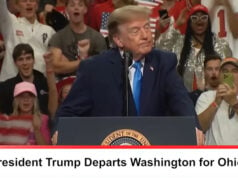
A fragile ceasefire in the Middle East has collapsed into a dangerous cycle of escalating violence. In a series of aggressive statements issued via social media and national television, U.S. President Donald Trump warned that the American military would strike Iran “very hard tonight.” He further threatened to eventually seize Kharg Island, the central hub of Iran’s oil export industry, in an effort to take full control of the Islamic Republic’s energy economy.
The United States will be hitting Iran (Whose Navy, Air Force, Radar, Anti Aircraft, and all other forms of Defense, together with most its offensive capability, are GONE!), VERY HARD TONIGHT. At some point in the not too distant future, we will be taking Kharg Island, and other… pic.twitter.com/RPeL3khVrr
— Commentary Donald J. Trump Truth Social Posts On X (@TrumpTruthOnX) June 11, 2026
The latest escalation marks a dramatic intensification of a conflict that has disrupted global shipping lanes, closed regional airspace, and sent shockwaves through international commodity markets. With peace talks currently deadlocked, the threat of direct U.S. control over Iranian energy infrastructure introduces an unpredictable dynamic to the geopolitical landscape.

Escalation in the Gulf
The modern theater of operations reignited fiercely after a period of intense diplomatic maneuvering failed to yield a permanent agreement. According to reports from The Guardian and The Times of Israel, President Trump utilized his Truth Social platform to announce a major expansion of the air campaign.
“At some point in the not too distant future, we will be taking Kharg Island, and other oil infrastructure points, and assume total control of their Oil and Gas Markets,” Trump declared. He explicitly drew a parallel to past foreign policy actions, claiming the strategy would mirror U.S. maneuvers regarding Venezuela’s energy sector.
Following his social media posts, Trump appeared on Fox News’ Fox & Friends program to reinforce his position. He confirmed that the U.S. military had dropped an estimated $250 million worth of ordnance on Iranian targets during previous sorties. While Trump indicated to interviewers that he would “rather not” target civilian infrastructure like bridges and electric power plants due to the impact on regular citizens, he promised that upcoming operations would be “bigger, more powerful” if Tehran refused to capitulate to American terms.
The Strategic Importance of Kharg Island
The focal point of Trump’s long-term threat is Kharg Island, a small continental island located in the northeastern corner of the Persian Gulf, roughly 25 kilometers off the coast of Iran. Despite its modest geographical size, the island is the economic lifeblood of the Iranian state.
Historically handling approximately 90% of Iran’s crude oil exports, Kharg Island features massive storage tank farms and deep-water loading terminals capable of processing millions of barrels of oil per day. For any adversary looking to apply maximum pressure on Tehran, dominating or neutralizing Kharg Island is the ultimate economic chokehold.
According to military analysts cited by Axios, recent U.S. strikes have intentionally avoided completely leveling the island’s primary commercial oil infrastructure, choosing instead to target surrounding air defense systems and Islamic Revolutionary Guard Corps (IRGC) installations. This deliberate targeting strategy leaves the valuable energy assets intact, preserving them for potential future capture or utilization as a massive bargaining chip.
Stalled Peace Negotiations and the Strait of Hormuz
The immediate catalyst for the renewed bombing campaign is the collapse of diplomatic tracks managed by international intermediaries. The Trump administration has put forward a rigid framework aimed at forcing concessions regarding Iran’s regional alignment and nuclear development. However, Iran’s Foreign Ministry rejected the American proposals, labeling them “excessive and unreasonable,” while state-affiliated media networks like the Fars News Agency insisted that Tehran will not retreat from its established red lines.
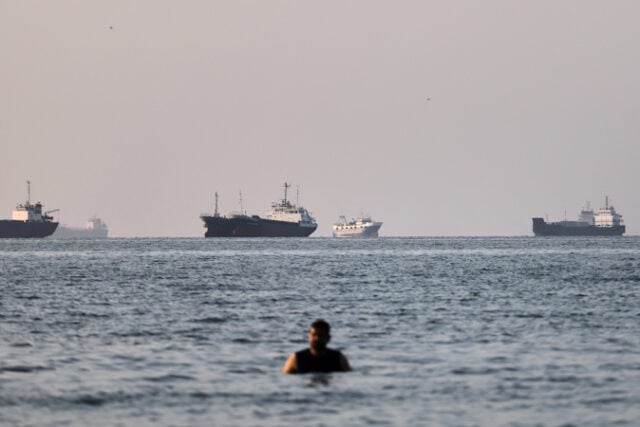
Central to the gridlock is the highly volatile situation surrounding the Strait of Hormuz. In response to ongoing U.S. naval blockades and combined U.S.-Israeli strikes, Iran’s Revolutionary Guards announced that the vital maritime corridor would remain “closed until further notice.” The IRGC warned that any commercial vessel attempting to navigate the waterway would be treated as “cooperating with the enemy.”
The closure of the strait has virtually paralyzed regional commercial shipping. While data from maritime tracking firms like TankerTrackers indicates that neighboring Arab states have resorted to covert, “dark” ship-to-ship oil transfers to keep global supplies flowing and prevent prices from spiking to $200 a barrel, the formal shipping channels remain highly hazardous. The U.S. military confirmed it recently fired missiles to disable a tanker off the coast of Oman that was allegedly attempting to bypass the embargo to move Iranian crude.
Regional Fallout and International Reaction
The fallout from the renewed conflict has immediately impacted neighboring nations. Commercial flight paths across the Middle East have been severely disrupted, with countries like Kuwait briefly shutting down their airspace due to the crossfire of missile defense engagements. Furthermore, regional states hosting American military bases find themselves caught awkwardly between Washington’s offensive capabilities and Tehran’s retaliatory threats.
The human and diplomatic cost continues to mount. International merchant crews have increasingly been caught in the crossfire; an Indian government official confirmed this week that three Indian sailors were killed when their commercial vessel was struck during a recent exchange in the Sea of Oman.
Reacting to the latest wave of American airstrikes, the Iranian Foreign Ministry stated that the continued bombardment has “effectively rendered the ceasefire meaningless.” While stops short of an outright declaration of full-scale war, Iranian diplomats warned that Washington would bear sole responsibility for the “very dangerous consequences of the escalation.”
Meanwhile, traditional American allies are viewing the situation with a mixture of support and caution. Italian Prime Minister Giorgia Meloni signaled that European nations must remain prepared to implement harsh new economic sanctions should Tehran continue its current path. However, deep anxieties remain regarding whether the American public truly has the appetite for a protracted ground campaign or an extended military occupation of foreign energy hubs, a nuance President Trump himself acknowledged during his Fox News appearance.
Sources and Links:
- CNBC / CNBC Africa: Trump says U.S. will destroy Iran’s oil wells, Kharg Island without deal to ‘immediately’ reopen Hormuz Strait
- Iran International: Live – Trump threatens to seize Iranian islands, oil infrastructure
- The Guardian: Middle East crisis live: Trump threatens ‘very hard’ attack on Iran tonight and says US will seize Kharg island
- Global Banking & Finance Review: Trump: US to Hit Iran Hard, Take Over Oil & Gas Infrastructure
- The Times of Israel: Trump: US will hit Iran ‘VERY HARD’ tonight, may soon seize Kharg Island and Tehran’s oil market
- Axios: Trump threatens to seize Kharg island as U.S. strikes continue
- The Straits Times: Trump tells Fox News he’d like to take Iran’s Kharg Island
- WHQR / NPR: Trump vows to hit Iran ‘very hard tonight’ and later take over its oil and gas sectors
Disclaimer
Artificial Intelligence Disclosure & Legal Disclaimer
AI Content Policy.
To provide our readers with timely and comprehensive coverage, South Florida Reporter uses artificial intelligence (AI) to assist in producing certain articles and visual content.
Articles: AI may be used to assist in research, structural drafting, or data analysis. All AI-assisted text is reviewed and edited by our team to ensure accuracy and adherence to our editorial standards.
Images: Any imagery generated or significantly altered by AI is clearly marked with a disclaimer or watermark to distinguish it from traditional photography or editorial illustrations.
General Disclaimer
The information contained in South Florida Reporter is for general information purposes only.
South Florida Reporter assumes no responsibility for errors or omissions in the contents of the Service. In no event shall South Florida Reporter be liable for any special, direct, indirect, consequential, or incidental damages or any damages whatsoever, whether in an action of contract, negligence or other tort, arising out of or in connection with the use of the Service or the contents of the Service.
The Company reserves the right to make additions, deletions, or modifications to the contents of the Service at any time without prior notice. The Company does not warrant that the Service is free of viruses or other harmful components.