In an abrupt shift in the months-long Middle East conflict, U.S. President Donald Trump announced on social media late Saturday that he called off planned military strikes on Iran, choosing instead to pause armed operations following intense diplomatic interventions from regional allies.
Writing on Truth Social, Trump declared that while the United States remained “locked and loaded” with military capabilities “not seen since World War II,” he agreed to hold off on ordering new attacks after receiving urgent requests from neighboring governments. Trump stated that officials from Gulf nations—including Saudi Arabia, Qatar, and the United Arab Emirates—indicated that the initial “parameters of a deal” had been reached with Tehran. According to the president, any acceptable agreement must include the “immediate, complete, and total opening” of the Strait of Hormuz and a permanent end to Iran’s nuclear threat, concluding his post with a directive for all parties to “get to work.”

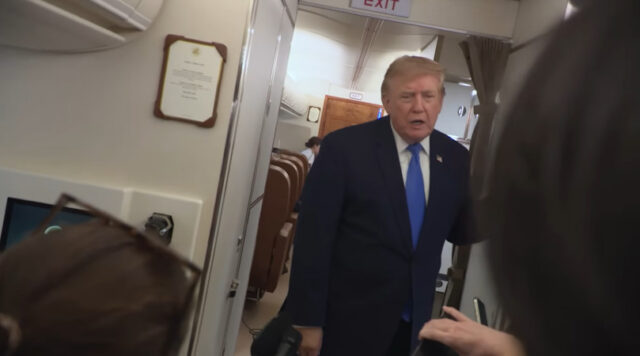
Speaking to reporters aboard Air Force One on Sunday, Trump confirmed that formal negotiations were scheduled to resume on Monday. He noted that while American forces were poised to execute a massive strike on Iranian infrastructure, he yielded to requests from regional partners who argued that a diplomatic breakthrough was within reach. The decision followed a high-stakes telephone conversation between Trump and Saudi Crown Prince Mohammed bin Salman, during which Saudi leadership voiced deep concern that striking Iranian targets could spark an uncontrollable regional conflagration and devastate global energy supplies.
The tactical pivot comes after days of intense saber-rattling across Washington and the Middle East. Tensions spiked after a June 17 ceasefire memorandum crumbled, leading to renewed Iranian drone and missile strikes against commercial vessels navigating near Omani waters. With roughly one-fifth of the world’s daily petroleum supply passing through the Strait of Hormuz, the effective closure of the maritime chokepoint has triggered severe energy market disruptions globally, prompting seven OPEC+ nations, led by Saudi Arabia and Russia, to issue urgent calls for immediate regional de-escalation.
Despite Trump’s optimistic projection of an imminent breakthrough, significant skepticism and operational confusion persist. Israeli government officials and leadership at U.S. Central Command reportedly learned of the canceled operation directly through Trump’s public social media post rather than standard advance military notifications. Meanwhile, Iranian officials firmly rejected Washington’s characterization of events. Iranian defense representatives denied asking for strikes to be called off, describing Trump’s statements as psychological warfare and warning that Tehran’s armed forces remain at maximum readiness to deliver a decisive, proportional response to any foreign aggression.
As diplomats from Qatar and Oman scramble to finalize a sustainable framework for international shipping routes, international observers remain cautious. With oil markets hanging in the balance, world leaders are watching closely to see whether this sudden diplomatic pause will yield a lasting resolution or merely postpone another round of conflict.
Sources
- Associated Press (AP News): Trump says Mideast allies have reached outlines of deal to end Iran war, says US to stop new strikes
- Financial Times: Donald Trump says he cancelled Iran strikes at request of Middle East nations
- Financial Times: Trump says Iran talks to resume after US called off major attack
- Times of India: Israel, US military learnt Trump cancelled Iran strike through social media: Report
- Times of Israel: Iran denies it asked Trump not to strike or agreed to deal to split control of Hormuz
- PBS NewsHour: Trump frequently announces he’s halting strikes in Iran. But they keep happening
- Fox News: Trump says Iran has agreed to ‘total’ reopening of Strait of Hormuz
Disclaimer
Artificial Intelligence Disclosure & Legal Disclaimer
AI Content Policy.
To provide our readers with timely and comprehensive coverage, South Florida Reporter uses artificial intelligence (AI) to assist in producing certain articles and visual content.
Articles: AI may be used to assist in research, structural drafting, or data analysis. All AI-assisted text is reviewed and edited by our team to ensure accuracy and adherence to our editorial standards.
Images: Any imagery generated or significantly altered by AI is clearly marked with a disclaimer or watermark to distinguish it from traditional photography or editorial illustrations.
General Disclaimer
The information contained in South Florida Reporter is for general information purposes only.
South Florida Reporter assumes no responsibility for errors or omissions in the contents of the Service. In no event shall South Florida Reporter be liable for any special, direct, indirect, consequential, or incidental damages or any damages whatsoever, whether in an action of contract, negligence or other tort, arising out of or in connection with the use of the Service or the contents of the Service.
The Company reserves the right to make additions, deletions, or modifications to the contents of the Service at any time without prior notice. The Company does not warrant that the Service is free of viruses or other harmful components.