By TOM MARQUARDT and PATRICK DARR
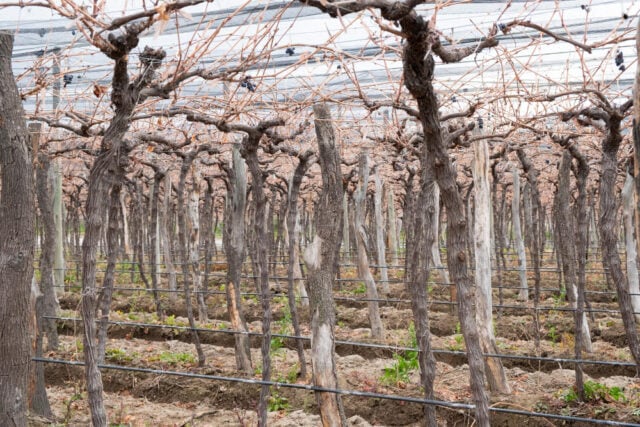
Wines crafted from old-vine grapes hold a particular fascination for us. These ancient, gnarled survivors have weathered decades of drought, disease, floods, fires, and changing political landscapes, yet still transform their hard-won fruit into what can only be described as divine elixir.
Humans first cultivated grape vines 11,000 years ago, but those ancient varietals bear little resemblance to today’s vineyards. Successive catastrophes have reshaped viticulture repeatedly. The phylloxera root louse devastated European vineyards in the late 19th century before wreaking similar havoc in California between 1960-1980. Insect infestations and recent West Coast wildfires have further culled vine populations.
Today’s oldest living vine grows in Slovenia, dating back to the 17th century, while northeastern Italy boasts a 350-year-old specimen. This context makes the term “old vines” (or “vielles vignes” in France) relative when appearing on wine labels.

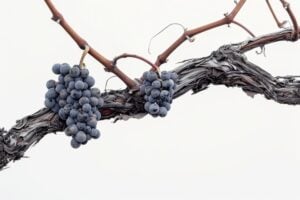 Among California’s most venerable plantings are zinfandel vines from the 1860s-1870s. Immigrants favored this versatile grape for its abundant yield across diverse soils and climates. They used phylloxera-resistant St. George rootstock, whose deep-searching roots eliminated the need for irrigation systems.
So, what constitutes “old” in today’s world of wine?
Andy Robinson, winemaker at Seghesio Family Vineyards, admitted there is no official definition, but he adheres to the 50-year rule.
“This supports the non-profit Historic Vineyard Society, established in 2011 to catalog old-vine vineyards in the state,” he said.
The grapes that make up Seghesio’s Old Vine Zinfandel come from vineyards more than 50 years old. “But 80 percent of the volume is from vineyards over 75 years of age, and the oldest 10 percent are over 130 years.” That’s old for California.
You can spot an old vine by its thick, twisted trunk grown close to the earth—a testament to decades of survival against the elements. When crafted into wine, these ancient zinfandel grapes yield an intense elixir: rich and jammy, bursting with wild blackberry flavors and exotic spices. These powerful wines typically reach 15-18 percent alcohol, creating robust bottles that reward patient cellaring. Be careful when you reach for that second or third glass, but this difference in alcohol will hit you like a ton of brix.
Robinson added, “The structure seems fuller and more complete and often more integrated with the acidity. This seems to result in wines that age gracefully and take on more complexity as they age.”
Zinfandel seemed to have a streak in the 1980s and 1990s when producers such as Bonny Doon, Ridge, Quivira, and Rafanelli developed a cult following. These were popular versions so jammy and sweet that you could spread them on toast. Helen Turley brought greater attention to the variety in recent years, but zinfandel doesn’t have the same following today, even though it is the third-most-planted grape variety in California.
These fruit-forward wines are best matched with ketchup-based sauces like you find on barbecued ribs, pasta or pizza.
Many producers have recognized the change in public opinion and have tamed the jammy, alcoholic character. Petit sirah is often blended with the zinfandel to provide structure.
Here are a few Zinfandels we like:
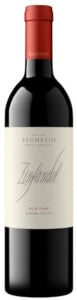
Seghesio Family Vineyards Old Vine Zinfandel Sonoma County 2023 ($40). Intense raspberry and blackberry flavors with a soft mouthfeel firmed up with balanced acidity.
Marietta Cellars Roman Zinfandel Family Series 2020 ($28). We have been following Marietta since the 1980s when Chris Bilbro was making wines with the help of cellarmaster Roman Cisnero for whom this wine is named. Cisnero has been there for three decades, so he knows zinfandel’s evolution better than most. This zin is blended with barbara and petit sirah. We also love Marietta’s Angeli zinfandel and its reasonably priced field blend called Old Vines Red.
Bogle Old Vine Reserve Zinfandel 2022 ($28). Approached with moderate tannins and raspberry jam, cherry character and a hint of black pepper.
St. Francis Winery & Vineyards Old Vine Zinfandel Sonoma County 2021 ($22). This producer makes a series of old-vine zins that cost twice as much and are more complex, but this one is a good value. Rich and juicy.
Lynmar Estate
We often get quizzical looks when wine enthusiasts mention a winery we’ve never heard of. “But you’re wine writers!” they protest. The reality? California alone boasts 4,700 wine properties, many so boutique their bottles never leave their tasting rooms.
That’s why discovering Lynmar Estate felt like finding hidden treasure. Nestled in Russian River Valley, home to a mere 187 wineries, Lynmar is making very good chardonnay and pinot noir. Our oversight seems inexcusable in retrospect.
Better late than never, though. Its 2022 Susanna’s Vineyard Chardonnay and 2021 Quail Hill Pinot Noir stunned us with the complexity and balance. These signature varietals represent most of its modest, annual 12,000-case production.
San Francisco native Lynn Fritz purchased his first 35 acres of Quail Hill Vineyard in 1980 as a family retreat with no intention of operating a winery. He sold the existing grapes to several producers, including luminaries Merry Edwards when she was at Matanzas Creek and Tony Soter when he made wine at Etude. When those single-vineyard wines did well, he decided to make his own wines from a converted barn. Starting with the 1994 vintage, Fritz and winemaker Daniel Moore were producing Quail Hill Vineyard pinot noir with a chardonnay soon to follow. Today, Lynmar’s portfolio includes three additional vineyard sites.
In 2008, Lynn and Anisya Fritz abandoned careers in logistics and higher education to move to Quail Hill. Their hands-on approach has elevated the wines to new heights.
“We are a small, family winery, and that sense of family extends to our employees and our guests, many of whom we have known for decades,” Anisya explained.
Here are tasting notes from two terrific wines:
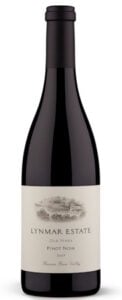
Lynmar Estate Quail Hill Vineyard Pinot Noir 2021 ($79). Farmed for more than four decades, this special vineyard surrounding the winery has varied soil and slope, making for an ecletic wine made from 14 pinot noir clones. Bright cherry notes with a touch of tea and herbs.
Lynmar Estate Susanna’s Vineyard Chardonnay 2022 ($71). Broad pear and pineapple flavors with citrus and floral aromas. Soft on the palate but with balanced acidity.
Wine picks
La Crema Monterey Pinot Gris 2024 ($20). This is a fresh and lively expression of the popular pinot gris grape variety. It makes for a good sipper on those early spring days on the patio or a good complement to shrimp or grilled chicken.
Cuvaison Napa Valley Estate Chardonnay 2024 ($35). You get a lot of depth for your money in this delightful quaff. Using a diverse clonal mix, the producer has a balanced wine with fresh stone fruit flavors with a hint of vanilla.
Trapiche Oak Cask Malbec Mendoza 2025 ($11). Copious blackberry and plum flavors with a touch of vanilla and cocoa powder. Good value.
Disclaimer
Artificial Intelligence Disclosure & Legal Disclaimer
AI Content Policy.
To provide our readers with timely and comprehensive coverage, South Florida Reporter uses artificial intelligence (AI) to assist in producing certain articles and visual content.
Articles: AI may be used to assist in research, structural drafting, or data analysis. All AI-assisted text is reviewed and edited by our team to ensure accuracy and adherence to our editorial standards.
Images: Any imagery generated or significantly altered by AI is clearly marked with a disclaimer or watermark to distinguish it from traditional photography or editorial illustrations.
General Disclaimer
The information contained in South Florida Reporter is for general information purposes only.
South Florida Reporter assumes no responsibility for errors or omissions in the contents of the Service. In no event shall South Florida Reporter be liable for any special, direct, indirect, consequential, or incidental damages or any damages whatsoever, whether in an action of contract, negligence or other tort, arising out of or in connection with the use of the Service or the contents of the Service.
The Company reserves the right to make additions, deletions, or modifications to the contents of the Service at any time without prior notice. The Company does not warrant that the Service is free of viruses or other harmful components.