If you woke up this morning feeling a strange sense of déjà vu, you aren’t alone. The news cycle feels less like a progression of events and more like a high-stakes thriller that’s stuck on a loop. As of April 19, 2026, the U.S.-Iran conflict—the “2026 Iran War” as historians are already calling it—has entered a volatile new phase. We’ve gone from “maybe a ceasefire” to “definitely a ship seizure” in less time than it takes for a gallon of gas to hit five bucks.
Let’s be real for a second: the world is tired. But the markets? They’re wide awake and panicking. Between the U.S. Navy taking custody of Iranian cargo and Energy Secretary Chris Wright telling us that “cheap” gas is a 2027 problem, there’s a lot to untangle. Grab a coffee—you’re going to need it.
Video from CENTCOM
High Seas Drama: The Seizure of the Century
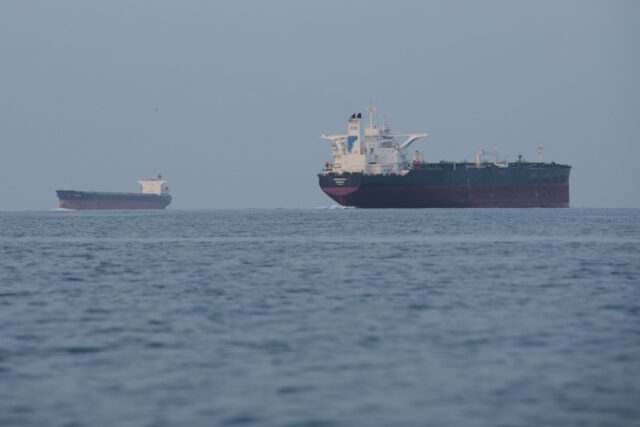
The headlines were immediate, but the details are still trickling in like a leaky faucet. Over the weekend, the USS Spruance, a U.S. Navy destroyer, intercepted and seized an Iranian-flagged cargo vessel in the Gulf of Oman.
According to President Trump, the vessel was attempting to evade a U.S. naval blockade. The scene, by all accounts, was something out of a summer blockbuster. The Spruance didn’t just ask nicely; it fired on the ship to bring it to a halt. As of Sunday evening, U.S. Marines are physically on board, “seeing what’s on board!”—to quote the President’s latest social media update.

Why this matters:
- The Blockade: This isn’t just a random search. The U.S. is enforcing a strict maritime blockade to prevent Iran from exporting its remaining oil and importing military supplies.
- The Goods: If the ship was carrying “dual-use” technology or missiles, the U.S. gets a massive propaganda win. If it was carrying grain or medical supplies? Well, that’s a different, much messier story.
- The Precedent: Seizing a sovereign vessel during a precarious ceasefire is like bringing a flamethrower to a frozen lake. It’s effective, but the ice is going to crack.
Iran’s Retaliation: More Than Just Words?
Tehran didn’t take long to fire back—rhetorically, at least. Iran’s top joint military command, Khatam al-Anbiya, immediately accused the United States of a blatant ceasefire breach. They’ve labeled the seizure “armed piracy” and warned that the armed forces of the Islamic Republic will “soon respond.”
We’ve heard this before, but this time the context is different. Iran has already shown it’s willing to close the Strait of Hormuz—the world’s most critical energy artery—whenever it feels backed into a corner. By Sunday night, reports indicated that traffic through the Strait had halted again.
“We warn that the armed forces of the Islamic Republic of Iran will soon respond and retaliate against this armed piracy by the U.S. military.” — Khatam al-Anbiya Spokesperson
The “swift response” could take many forms:
- Swarms in the Strait:
SEO
Using small, fast-attack boats to harass U.S. warships.
- Cyber Warfare: We’ve already seen attempts on Western infrastructure earlier this year.
- Proxy Strikes: Looking at you, Hezbollah. While the Lebanon-Israel truce is technically holding, it’s hanging by a very frayed thread after a French peacekeeper and two Israeli soldiers were killed recently.
The Ceasefire Carousel: Welcome to Islamabad 2.0
If the military situation is a mess, the diplomatic situation is a tragedy. On April 8, Pakistan brokered a 10-day ceasefire. Everyone breathed a sigh of relief. That relief lasted about as long as a TikTok trend.
The ceasefire is set to expire this Wednesday, and the “Islamabad Talks” are in shambles. President Trump has ordered negotiators back to Pakistan for a second round, but Iran is playing hard to get. State media in Tehran is reporting that there are “no plans” to attend, citing the ship seizure as proof that the U.S. isn’t acting in good faith.
The Sticking Points
| Issue | U.S. Position | Iranian Position |
| Strait of Hormuz | Must be “open, free, and clear.” | Will remain closed until the blockade is lifted. |
| The Deal | Wants a “fair and reasonable” 15-point plan. | Wants sanctions lifted and reconstruction funds. |
| Military Action | Threatens to “knock out every bridge and power plant.” | Demands an end to “U.S. piracy.” |
Pakistan is currently turning Islamabad’s “Red Zone” into a fortress, hoping the two sides will show up for a “blind date” that could save the global economy.
Market Mayhem: Your Wallet is Feeling the Burn
While politicians argue, the markets are doing what they do best: freaking out.
Oil prices saw a massive jump as soon as news of the ship seizure and the Hormuz closure hit the wires. Brent crude futures surged roughly 7%, hovering near $97 a barrel, with some spot benchmarks hitting as high as $130. To put that in perspective, we are seeing the largest supply disruption in the history of the global oil market.
The Ripple Effect:
- Stock Futures: The S&P 500 futures fell nearly 1%. Investors hate uncertainty, and “war with the possibility of global energy collapse” is the ultimate uncertainty.
- The Dollar vs. The Rest: The U.S. dollar is rising as a safe haven, while the Euro and Yen are taking a beating.
- Stagflation: This is the word economists whisper in their nightmares. It’s when you have low growth (recession) combined with high inflation. With energy prices this high, everything from your groceries to your Amazon delivery is about to get more expensive.
The $3 Gas Dream: Secretary Wright Drops a Reality Bomb
If you were hoping for a break at the pump this summer, Energy Secretary Chris Wright has some news for you. And it isn’t great.
Speaking on State of the Union this Sunday, Wright admitted that while gas prices have likely peaked (thank heavens?), the road back to sub-$3 gasoline is long and winding.
“Under $3 a gallon is pretty tremendous in inflation-adjusted terms. We’ll get back there for sure… [but] that might not happen until next year.” — Energy Secretary Chris Wright
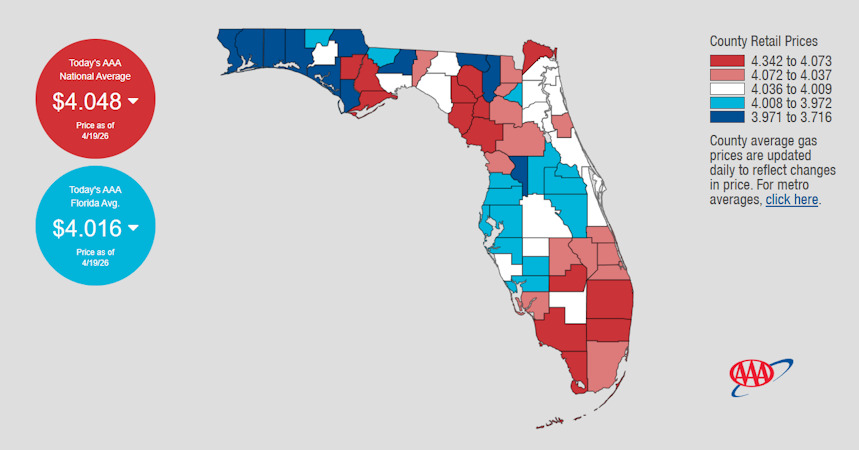
Currently, the national average for a gallon of regular gas is sitting around $4.05 to $4.10. Just a year ago, we were looking at $3.16. That’s a nearly 30% jump that is eating into every household budget in America. Wright’s timeline—aiming for 2027 for real relief—is a much more cautious take than Treasury Secretary Scott Bessent’s “summer of $3 gas” prediction.
It seems the administration is trying to manage expectations as the midterm elections loom. It’s hard to campaign on “Everything is great!” when it costs $80 to fill up a sedan.
Why 2026 Feels Different
This isn’t the 1970s, but it’s close. We have more domestic production now, sure, but the global market is so interconnected that a sneeze in the Strait of Hormuz gives the entire world a fever.
The 2026 Iran War (which kicked off in earnest back on February 28) has redefined modern conflict. We aren’t just seeing missiles; we’re seeing a total economic siege. QatarEnergy has already declared force majeure on LNG exports. Major Asian airlines are rerouting flights because the Middle East hubs are too dangerous. Even the “grocery supply” in the Gulf states is at an emergency level because they rely on the Strait for 80% of their food.
The Bottom Line
We are in a “wait and see” period that is costing us billions. If the Islamabad talks happen and a deal is struck, we might see those $3 gas prices by Christmas. If they don’t? Well, Secretary Wright’s “next year” might start looking like “next decade.”
The U.S. is doubling down on its blockade, Iran is doubling down on its “supervision” of the Strait, and the rest of us are just trying to figure out how to afford the commute to work. Stay tuned—this ship is far from docked.
Sources Used and Links:
- The Times of Israel: Iran accuses US of ceasefire breach, vows retaliation over attack on ship (April 19, 2026) – Link
- The Hindu: Iran-Israel war LIVE: No plan for Tehran to attend new talks with U.S. in Pakistan (April 19, 2026) – Link
- The Guardian: Middle East crisis live: Iran accuses US of ceasefire breach and vows to retaliate over seizure of ship (April 19, 2026) – Link
- KSL News: US energy chief says gas prices could stay above $3 per gallon until next year (April 19, 2026) – Link
- Seeking Alpha: Energy secretary says $3 gasoline may not return until 2027 (April 19, 2026) – Link
- Wikipedia: Economic impact of the 2026 Iran war – Link
- IEA (International Energy Agency): Oil Market Report – April 2026 – Link
- Hawaii Public Radio (NPR): U.S.-Iran ceasefire expires this week with no deal in sight (April 19, 2026) – Link
Disclaimer
Artificial Intelligence Disclosure & Legal Disclaimer
AI Content Policy.
To provide our readers with timely and comprehensive coverage, South Florida Reporter uses artificial intelligence (AI) to assist in producing certain articles and visual content.
Articles: AI may be used to assist in research, structural drafting, or data analysis. All AI-assisted text is reviewed and edited by our team to ensure accuracy and adherence to our editorial standards.
Images: Any imagery generated or significantly altered by AI is clearly marked with a disclaimer or watermark to distinguish it from traditional photography or editorial illustrations.
General Disclaimer
The information contained in South Florida Reporter is for general information purposes only.
South Florida Reporter assumes no responsibility for errors or omissions in the contents of the Service. In no event shall South Florida Reporter be liable for any special, direct, indirect, consequential, or incidental damages or any damages whatsoever, whether in an action of contract, negligence or other tort, arising out of or in connection with the use of the Service or the contents of the Service.
The Company reserves the right to make additions, deletions, or modifications to the contents of the Service at any time without prior notice. The Company does not warrant that the Service is free of viruses or other harmful components.