The landscape of global retail has undergone a seismic shift, and if you feel like your wallet is being pulled in a dozen different directions, you aren’t alone. The latest Alvarez & Marsal (A&M) Consumer Sentiment Survey for 2026 has pulled back the curtain on a marketplace in transition—one where the old rules of “brand prestige” are being unceremoniously dumped in favor of a “value-first” survivalist mindset.
For decades, marketing departments relied on the emotional tether between a consumer and a logo. In 2026, that tether hasn’t just frayed; it has snapped. According to A&M’s data, we are witnessing a permanent reset in how, where, and why people spend their hard-earned money. From the grocery aisle to digital subscriptions, the “A&M 2025/2026 Retail Pulse” confirms that the modern consumer is more informed, more cynical, and more mobile than ever before.
The Death of the Brand?
The most startling takeaway from the A&M research is the precipitous drop in brand loyalty. We used to be “Nike people” or “Apple people.” Today, we are “whatever-is-on-sale-and-actually-works” people. This isn’t just about being “cheap”—it’s about a fundamental re-evaluation of what a brand is worth in an era of hyper-inflation and digital transparency.
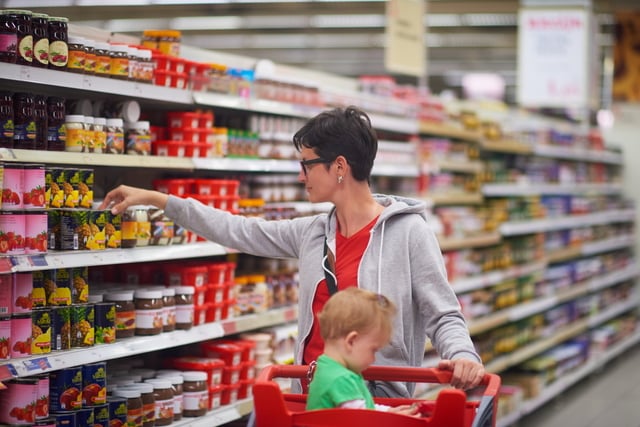
A&M’s findings show that a staggering number of consumers are switching to private-label (store-brand) essentials. This trend, which began as a necessity during the supply chain shocks of years past, has become a voluntary preference. Why pay a 30% “brand tax” for a bottle of detergent when the generic version has the same chemical composition? Consumers are no longer convinced that a higher price tag equals higher quality.

The Trust Gap and “Greenwashing”
One major driver for this exodus from big brands is a growing “trust gap.” A&M points to the rising skepticism around corporate social responsibility. A 2025 study on “greenwashing” found that nearly 84.1% of consumers would view a major brand negatively if its sustainability claims were found to be inaccurate (Mandalika Journal, 2025). When brands like Nike announce massive “Move to Zero” initiatives, they face a public that is increasingly ready to cry foul if the actions don’t match the PR. This skepticism is killing loyalty; if a consumer doesn’t trust your “values,” they certainly won’t pay extra for your “value.”
The GaaS Revolution: Everything is a Subscription
One of the more technical but fascinating shifts identified in the A&M 2025/2026 data is the transition to Games-as-a-Service (GaaS) and recurring revenue models (Alvarez & Marsal, 2025). While this started in the software and gaming industries, it has bled into every corner of the consumer world.
The survey notes that while recurring revenue “de-risks” a company’s financial profile by creating predictable cash flow, it also creates “subscription fatigue” for consumers. We are now “renting” everything from our car’s heated seats to our morning coffee via monthly apps. A&M’s research suggests that while these models offer stability for firms, they are creating a “policy-induced fragility”—where one bad policy update or platform shift (like a change in Apple’s tracking rules) can cause millions of consumers to cancel their subscriptions in a single weekend (Preprints.org, 2026).
The Permanent Online Migration
The ghost of the 2020 pandemic still haunts our spending habits, but in a way that is now fully structural. Earlier A&M reports estimated that over 17.2 million European consumers would permanently shift from offline to online shopping (Alvarez & Marsal, 2020). By 2026, that prediction has been vindicated and exceeded.
The geography of consumption has changed. We aren’t just shopping online; we are shopping differently. The rise of “Smart Data” has empowered consumers—especially those in low-income brackets—to bypass traditional retail loyalty “penalties.” By using automated comparison tools and data-sharing schemes, consumers are finding the absolute lowest price in real-time, effectively ending the era of the “uninformed shopper” (Social Market Foundation, 2025).
The “Why” Behind the Change: The Triple Threat
So, what is driving this radical shift in behavior? A&M identifies three primary catalysts:
- Cost of Living Fatigue: Even as inflation stabilizes, the cumulative effect of years of price hikes has exhausted the consumer’s “discretionary” buffer. Spending is now concentrated on “essentials,” while “extras” are scrutinized with forensic intensity.
- Digital Literacy: The average consumer is now a data-pro. Between AI-driven price trackers and social media “de-influencers” who tell you what not to buy, the information advantage has shifted from the retailer to the shopper.
- Value Realignment: A move away from “stuff” toward “experience” and “utility.” If an item doesn’t solve a problem or provide a verified sustainable benefit, the 2026 consumer simply isn’t interested.
The Retailer’s Survival Guide
For brands and retailers, the A&M survey isn’t just a warning—it’s a roadmap. To survive the “Loyalty Winter” of 2026, companies must:
- Embrace Private Labels: Don’t fight the generic; own it. Retailers who develop high-quality “in-house” brands are winning the margin war.
- Radical Transparency: Authenticity is the only currency left. Brands that can prove their sustainability and ethical claims with hard data will win back the trust that was lost to greenwashing.
- Hyper-Personalization: If you want a consumer to stay, you have to make them feel like you know them. But beware: A&M warns that this must be balanced with privacy. Consumers want the deal, but they don’t want to feel “hunted” by their data.
Sources Used and Links:
- Alvarez & Marsal (A&M) Insight Center: “Consumer Sentiment Survey 2025/2026” and “Retail Pulse Reports.” https://www.alvarezandmarsal.com/insights
- Preprints.org (2026): “Systematic De-Risking and Policy-Induced Fragility in the Games-as-a-Service Era.” https://www.preprints.org/manuscript/202602.0681/download/final_file
- Social Market Foundation (2025): “Smart Enough? Using Data to Help Consumers in the Cost of Living Crisis.” https://www.smf.co.uk/wp-content/uploads/2025/12/Smart-enough-December-2025.pdf
- Mandalika Journal of Community Services (2025): “The Impact of Greenwashing Towards Brand Trust and Brand Loyalty: A Study of Nike Move to Zero Initiatives.” https://journal.institutemandalika.com/index.php/mjbms/article/download/133/125
- Pure – University of Birmingham (2021): “COVID-19 and the immediate and longer-term impacts on the retail and hospitality industries” (citing A&M data). https://pure-oai.bham.ac.uk/ws/portalfiles/portal/146523122/brysonj2021covid19.pdf
- MDPI (2026): “California’s Homelessness Assistance System” (referencing A&M audit and structural economic findings). https://www.mdpi.com/2076-0760/15/2/115
- Reserve Bank of Australia (RBA) Bulletin (2026): “Recent Changes in Credit Markets and Their Implications for Monetary Policy.” https://www.rba.gov.au/publications/bulletin/2026/feb/recent-changes-in-credit-markets-and-their-implications-for-monetary-policy.html
Disclaimer
Artificial Intelligence Disclosure & Legal Disclaimer
AI Content Policy.
To provide our readers with timely and comprehensive coverage, South Florida Reporter uses artificial intelligence (AI) to assist in producing certain articles and visual content.
Articles: AI may be used to assist in research, structural drafting, or data analysis. All AI-assisted text is reviewed and edited by our team to ensure accuracy and adherence to our editorial standards.
Images: Any imagery generated or significantly altered by AI is clearly marked with a disclaimer or watermark to distinguish it from traditional photography or editorial illustrations.
General Disclaimer
The information contained in South Florida Reporter is for general information purposes only.
South Florida Reporter assumes no responsibility for errors or omissions in the contents of the Service. In no event shall South Florida Reporter be liable for any special, direct, indirect, consequential, or incidental damages or any damages whatsoever, whether in an action of contract, negligence or other tort, arising out of or in connection with the use of the Service or the contents of the Service.
The Company reserves the right to make additions, deletions, or modifications to the contents of the Service at any time without prior notice. The Company does not warrant that the Service is free of viruses or other harmful components.