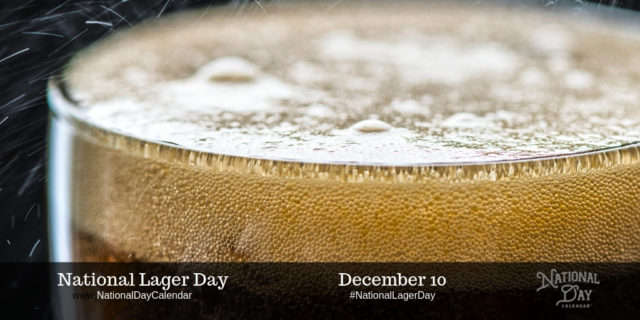
There is little doubt as to why beer is believed to be the third most popular drink behind water and tea, and while lager is typically characterized as a light, Summer beer we believe that every season deserves to be celebrated with a few of your favorite things.
Lagers are distinguished from other beers as using a cold-conditioning process.
- Born in the 19th century Bavaria Lager was the result of brewers experimenting with the benefits of storing beer for long periods in cold environments. Brewed using a bottom-fermenting yeast this beer would then be transported to places where the temperature remained low, first in cellars, and then transported to the caves of the Alps.
- Deep within this frozen cellars of the Earth they would be packed in ice from the mountains or lakes and left to “lager” over the summer. The word Lager itself speaks of this method, being derived from the German word for “to store”, Lagern.
- In the 19th century, even this process resulted in a much darker Lager than we’re used to today, partially as a result of the heavier waters of the area, but the refinement of the process lead to the beautiful golden beverage many Lager lovers drink today.
- Lager styles include Pilsners, Helles, Dunkels, Bocks, Schwarzbiers and Oktoberfests (to name a few).
- The first US lager was brewed in 1840 by John Wagner, who had a small brewery in the back of his house on St. John Street in Philadelphia. Wagner brought the first lager yeast to the United States from a brewery in Bavaria.
- The Pilgrims landed at Plymouth Rock, not because it was their intended destination (they were on course to sail well south), but they settled on the destination up north simply because they ran out of beer.
- Most lagers are fairly light in color, highly carbonated with a medium hop flavor. The original German lager was dark in color.
- Beer is the 3rd most consumed beverage in the world behind water and tea.
- King Gambrinus is known as the “patron saint of beer” (not to be confused with St. Arnold, the patron saint of brewing).
- The oldest known written recipe is for beer.
- Lager beer is the dominant beer style throughout the brewing world today, except in England where Ale is the primary style of beer consumed in England.
- Cenosillicaphobia is the fear of an empty glass.
- Once you know that lagers can be diverse, unique, and engaging, it’s worth exploring all of their subtle (and not-so-subtle) differences. Pouring your lager into a glass that helps concentrate its aroma and gives you a clear look at its color will heighten the sensory experience and take your National Lager Day to the next level.
- In 2010, the world’s oldest drinkable beer was found on a Baltic Sea shipwreck. The ship is believed to have sailed over 200 years ago.
- Craft Beer is good for your bones! Beer has high levels of silicon, which promotes strong bones.
- Frosty glasses will cause your beer to foam
- Ancient Egyptian texts have been found that contain over 100 medicinal uses for beer.
- In the 1600s, midwives created super-strong beer to ease the pain of labour!
- “Hangover” in Norwegian is directly translated to “carpenters in the head”.
- You can use beer to shine up any old copper items.
Sources:

Disclaimer
Artificial Intelligence Disclosure & Legal Disclaimer
AI Content Policy.
To provide our readers with timely and comprehensive coverage, South Florida Reporter uses artificial intelligence (AI) to assist in producing certain articles and visual content.
Articles: AI may be used to assist in research, structural drafting, or data analysis. All AI-assisted text is reviewed and edited by our team to ensure accuracy and adherence to our editorial standards.
Images: Any imagery generated or significantly altered by AI is clearly marked with a disclaimer or watermark to distinguish it from traditional photography or editorial illustrations.
General Disclaimer
The information contained in South Florida Reporter is for general information purposes only.
South Florida Reporter assumes no responsibility for errors or omissions in the contents of the Service. In no event shall South Florida Reporter be liable for any special, direct, indirect, consequential, or incidental damages or any damages whatsoever, whether in an action of contract, negligence or other tort, arising out of or in connection with the use of the Service or the contents of the Service.
The Company reserves the right to make additions, deletions, or modifications to the contents of the Service at any time without prior notice. The Company does not warrant that the Service is free of viruses or other harmful components.