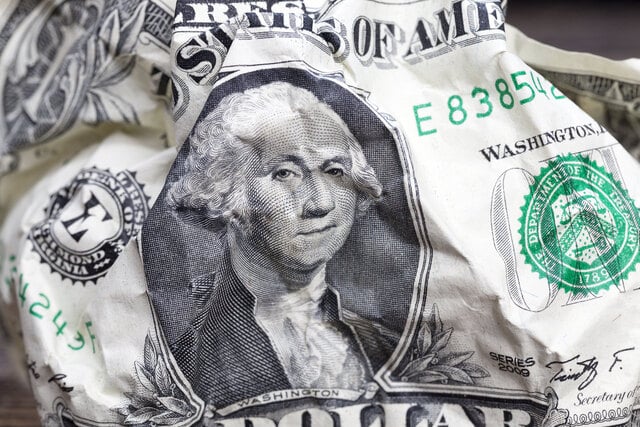
As of May 2026, the global financial landscape is grappling with a reality that many analysts once dismissed as a distant theoretical concern: a sustained, structural softening of the United States dollar. For decades, the “Greenback” stood as an unassailable pillar of stability, the default safe haven for investors and the undisputed medium for international trade. However, a combination of aggressive domestic fiscal spending, a shifting Federal Reserve monetary policy landscape, and a concerted effort by emerging economies to diversify their reserves has led to a significant retreat of the USD.
Currently, the dollar is coming off a challenging 2025—a year in which it depreciated by roughly 8% in trade-weighted terms. As we move through the second quarter of 2026, market participants are pricing in an additional 3% downside. While the currency remains the world’s primary reserve asset, the “U.S. exceptionalism” that fueled its post-pandemic rally has largely evaporated, replaced by a more cautious, multi-polar view of global finance.
The Fiscal Weight: Debt, Deficits, and the 100% Threshold
The most immediate pressure on the dollar comes from within the United States. Following the legislative passage and implementation of the “One Big Beautiful Bill” in 2025, federal spending has reached levels that have made even long-term institutional investors uneasy. According to the Congressional Budget Office (CBO) report released in February 2026, the federal budget deficit for the 2026 fiscal year is projected to reach $1.9 trillion.
More significantly, the total federal debt held by the public has now surpassed 101% of Gross Domestic Product (GDP). This psychological and economic threshold has historically been associated with reduced fiscal flexibility and increased vulnerability to interest rate shocks. While the CBO suggests that debt could fall to 97% by the end of the fiscal year through aggressive growth and primary surpluses, the market remains skeptical. The primary deficit—excluding interest payments—is still hovering around 2.6% of GDP.

The sheer volume of Treasury issuance required to fund these deficits has saturated the market. As foreign central banks, particularly those in Asia and the Middle East, moderate their purchases of U.S. debt, the private sector has been forced to absorb the supply. This requires higher yields to attract buyers, which in turn increases the government’s interest expense—now totaling over 23% of federal outlays. This “debt spiral” narrative, while often exaggerated, has nevertheless served as a persistent headwind for the dollar’s valuation.
Monetary Policy: The Fed’s Restrictive “Holding Pattern”
The Federal Reserve’s role in the dollar’s decline is a study in complexity. In 2024 and 2025, high interest rates were a primary support for the USD, as they offered a significant yield advantage over the Euro and the Japanese Yen. However, as of May 2026, that yield differential has narrowed. The effective federal funds rate currently sits at 3.64%, and the Federal Open Market Committee (FOMC) has signaled a prolonged “holding pattern.”
Unlike previous cycles where the Fed was the first and fastest to adjust, it now finds itself hemmed in. Inflation, while having softened from its peaks, remains stubbornly above the 2% target, largely driven by service-sector costs and the “echo effects” of recent tariff policies. J.P. Morgan Global Research suggests that the Fed may stay on hold for the remainder of 2026, with the next move possibly being a hike in 2027 if labor markets remain tight and energy prices—volatile due to ongoing conflicts in the Middle East—spike again.
Because the Fed is no longer leading the world in rate hikes, and other central banks like the ECB have turned more bullish on their own growth prospects, the “carry trade” that once favored the dollar has lost its luster. Investors are increasingly looking toward non-U.S. assets, where they see better valuation and the potential for currency appreciation as the dollar’s premium continues to normalize.
The Rise of the Multi-Polar Financial Order
Beyond interest rates and spreadsheets, a seismic shift is occurring in the geopolitical underpinnings of the global financial system. The 2026 landscape is defined by the expansion of the BRICS bloc (Brazil, Russia, India, China, and South Africa, plus new members) and their push for “de-dollarization.”
While a single, unified “BRICS currency” remains more of a long-term ambition than a current reality, the group has made significant strides in bypassing the dollar for bilateral trade. The announcement of a blockchain-based payment system earlier this year has provided a technological bridge for nations looking to settle trades in local currencies. China, in particular, has leveraged its trade war with the U.S. and the resulting sanctions as a catalyst to promote the Renminbi.
Data from the St. Louis Fed and the IMF indicates that the USD’s share of global foreign exchange reserves has inched lower, falling to roughly 56-57% from its peak of 70% in 2000. While this is a gradual decline rather than a collapse, it reflects a broader diversification strategy by central banks. The Euro now accounts for 20% of reserves, and while the Renminbi’s share is still small at roughly 2-3%, its growth trajectory in energy markets—traditionally the domain of the “petrodollar”—is a development that currency strategists are watching with intense scrutiny.
Trade Policy and the “Tariff Echo”
Trade policy has acted as a double-edged sword for the dollar over the past 18 months. Theoretically, the imposition of broad tariffs should support a domestic currency by reducing imports and improving the trade balance. However, the 2025-2026 experience has been different. The retaliatory measures from trading partners and the resulting increase in domestic inflation have dampened the expected benefits.
The Supreme Court’s recent rulings on tariff authority and the subsequent lapse in certain discretionary appropriations last fall created a period of policy uncertainty that weighed heavily on the dollar. Furthermore, the 2025 reconciliation act, while boosting real GDP growth to a projected 4% in 2026, has also increased deficit projections by $0.1 trillion above initial estimates. This “growth at any cost” fiscal strategy has raised concerns that the U.S. economy is overheating, creating a “twin deficit” (fiscal and trade) that historically puts downward pressure on the currency.
Impact on Global Markets: Gold and Asset Rebalancing
The weakening dollar has reverberated through every asset class. Gold has been a primary beneficiary, with prices surging to all-time highs as it regains its status as the ultimate hedge against sovereign currency debasement. Central banks, particularly in the Global South, have shifted a portion of their reserve accumulation from U.S. Treasuries to physical bullion.
In the equity markets, the “U.S. exceptionalism” that drove the S&P 500 to record heights for a decade is being challenged. With American stocks perceived as expensive and the dollar providing a headwind for repatriated earnings, global investors are rebalancing their portfolios. Capital is flowing toward European and emerging market equities, which are seen as offering better value in a “weaker dollar” environment.
For U.S. based investors, this shift necessitates a rethink of portfolio construction. Diversifying into non-dollar denominated assets has transitioned from a niche strategy to a fundamental requirement for maintaining purchasing power. As J.P. Morgan Global Research observes, the dollar is likely entering a “prolonged phase of cyclical weakness,” requiring a more sophisticated approach to currency hedging.
The Reserve Reality: Dominance vs. Disruption
It is important to provide context: the dollar’s retreat is not a disappearance. Despite its current woes, no other currency possesses the depth, liquidity, and legal infrastructure of the USD. The Euro is hampered by its own fragmented fiscal policy, and the Renminbi is restricted by China’s capital controls.
The dollar accounted for 89% of all foreign exchange transactions in 2025. This “network effect” means that for most of the world, trading in dollars remains the path of least resistance. However, the current weakening trend suggests that the world is no longer willing to pay the “dollar premium” out of habit. The U.S. must now compete on economic fundamentals rather than relying on its historical status as the “only game in town.”
Outlook for 2027 and Beyond
Looking ahead, the trajectory of the dollar will depend on three pivotal factors: the Federal Reserve’s ability to navigate a “soft landing” while inflation remains sticky, the political will in Washington to address the widening fiscal deficit, and the success (or failure) of the BRICS-led blockchain payment initiatives.
Current projections suggest that while the USD may not face a “secular decline,” the days of the super-strong dollar are likely over for this cycle. As global trade becomes more regionalized and digital payment systems offer alternatives to the traditional SWIFT network, the dollar will have to find its new “fair value” in a multi-polar world. For now, the “Greenback” is down, but not out—it is simply learning to share the stage.
Sources Used and Links:
- J.P. Morgan Global Research: “Currency volatility: Will the US dollar regain its strength?” https://www.jpmorgan.com/insights/global-research/currencies/currency-volatility-dollar-strength
- TD Economics: “The US Dollar in 2025: Down, but not out” https://economics.td.com/domains/economics.td.com/documents/reports/vr/The_US_Dollar_in_2025.pdf
- Morningstar: “What a Weaker US Dollar Means for Investors in 2026 and Beyond” https://www.morningstar.com/economy/what-weaker-us-dollar-means-investors-2026-beyond
- Investing News Network (INN): “How Would a New BRICS Currency Affect the US Dollar?” https://investingnews.com/brics-currency/
- StreetStats: “Fed Funds Rate Forecast 2026-2031” https://streetstats.finance/rates/fedfunds
- J.P. Morgan Global Research: “What’s The Fed’s Next Move?” https://www.jpmorgan.com/insights/global-research/economy/fed-rate-cuts
- Committee for a Responsible Federal Budget (CRFB): “Trump CEA Projections Tracker” https://www.crfb.org/blogs/trump-cea-projections-tracker
- Congressional Budget Office (CBO): “The Budget and Economic Outlook: 2026 to 2036” https://www.cbo.gov/publication/61882
- GIS Reports: “Dollar remains the world’s reserve currency” https://www.gisreportsonline.com/r/dollar-remains-worlds-reserve-currency/
- Federal Reserve Bank of St. Louis: “The U.S. Dollar’s Role as a Reserve Currency” https://www.stlouisfed.org/open-vault/2026/feb/us-dollar-role-as-reserve-currency
Disclaimer
Artificial Intelligence Disclosure & Legal Disclaimer
AI Content Policy.
To provide our readers with timely and comprehensive coverage, South Florida Reporter uses artificial intelligence (AI) to assist in producing certain articles and visual content.
Articles: AI may be used to assist in research, structural drafting, or data analysis. All AI-assisted text is reviewed and edited by our team to ensure accuracy and adherence to our editorial standards.
Images: Any imagery generated or significantly altered by AI is clearly marked with a disclaimer or watermark to distinguish it from traditional photography or editorial illustrations.
General Disclaimer
The information contained in South Florida Reporter is for general information purposes only.
South Florida Reporter assumes no responsibility for errors or omissions in the contents of the Service. In no event shall South Florida Reporter be liable for any special, direct, indirect, consequential, or incidental damages or any damages whatsoever, whether in an action of contract, negligence or other tort, arising out of or in connection with the use of the Service or the contents of the Service.
The Company reserves the right to make additions, deletions, or modifications to the contents of the Service at any time without prior notice. The Company does not warrant that the Service is free of viruses or other harmful components.