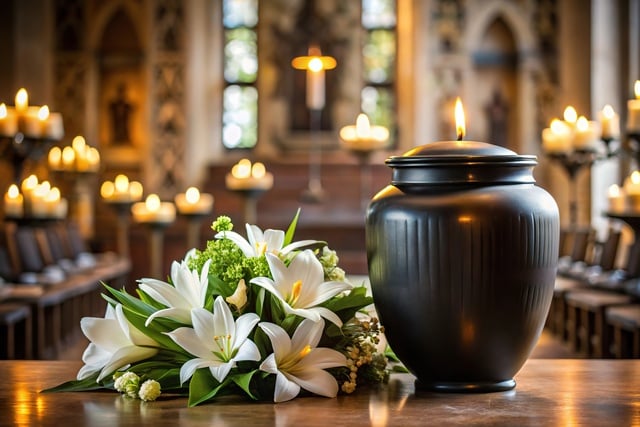
Let’s be honest: death isn’t exactly the most popular topic at the dinner table. But lately, the way we think about the “final chapter” has been undergoing a massive, culture-wide makeover. If you’ve noticed more people talking about urns, memorial gardens, or even “water cremation” rather than mahogany caskets and six-foot-deep plots, you’re not alone. We are officially living in the era of the great cremation boom.
As of 2026, the statistics tell a clear story. In the United States, the cremation rate has climbed to over 63%, more than double the rate of traditional burials. Just a few decades ago, choosing cremation was seen as an “alternative” or even a “frugal” choice. Today, it’s the baseline. By 2045, experts project that a staggering 82% of Americans will opt for cremation. But why the sudden shift? It’s not just one thing—it’s a perfect storm of economics, environmentalism, and a fundamental change in how we define a “good” goodbye.
The Rise of Radical Pragmatism
If we’re going to talk about why cremation is winning, we have to start with the “elephant in the room”: the price tag. In 2026, the average traditional funeral—complete with a viewing, a casket, a hearse, and a burial plot—frequently clears the $10,000 mark. In some metropolitan areas, you’re looking closer to $15,000 once you factor in the cemetery fees and the headstone.
Compare that to direct cremation, which typically runs between $1,000 and $3,600. For many families, that $7,000 to $9,000 difference isn’t just “savings”—it’s the difference between financial stability and a mountain of debt. We’ve entered a phase that industry experts call “radical pragmatism.” People aren’t necessarily being cheap; they’re being smart. They’re realizing that a multi-thousand-dollar box that’s destined to be buried in the ground might not be the best use of a loved one’s legacy.

Instead, families are redirecting those funds. We’re seeing a rise in “Celebrations of Life” that happen weeks or months after the passing. Rather than spending $8,000 on a funeral service on a Tuesday morning that half the family can’t fly in for, families are choosing direct cremation and using the saved money to host a meaningful gathering at a favorite park, a rented beach house, or even a destination that held special meaning for the deceased. It shifts the focus away from the “disposal” of the body and toward celebrating the person.
The “Green” Revolution in Death Care
Beyond the wallet, there’s a growing “green” conscience driving this trend. For years, we didn’t really think about the environmental impact of a traditional burial. But the data in 2026 is hard to ignore. Every year, traditional burials in the U.S. put roughly 2.5 million gallons of toxic embalming fluid into the soil. Add to that the millions of tons of steel, copper, and concrete used for caskets and vaults, and you have a massive industrial footprint for something meant to be “natural.”
Cremation, while not perfectly carbon-neutral (traditional flame cremation uses natural gas and emits CO₂), is seen by 61% of consumers as the more eco-friendly choice. It saves land—a resource that is becoming increasingly scarce in major cities where “cemetery sprawl” is a real issue.
But the real excitement in 2026 is around “Green Cremation” or Aquamation (alkaline hydrolysis). If flame cremation is the old school, Aquamation is the high-tech, gentle successor. It uses a water-based process to accelerate natural decomposition, using 90% less energy than fire and producing zero direct emissions. It’s now legal in over half of the U.S. states and is quickly becoming the go-to for those who want their final act on Earth to be a sustainable one. There’s also “Human Composting” (Natural Organic Reduction), which turns remains into nutrient-rich soil. It might sound a bit sci-fi, but for a generation that grew up recycling and composting, it feels like a beautiful way to return to the earth.
A World on the Move
There’s also a logistical reason for the rise of cremation: we just don’t stay in one place anymore. In the past, you lived, died, and were buried in the same town as your parents and grandparents. The “family plot” was a physical anchor.
In 2026, our families are spread across the globe. You might live in Florida, your sister in London, and your parents in Oregon. A burial plot in a city where no one lives anymore can feel more like a burden than a tribute. Who will visit? Who will maintain the stone?
Cremation offers “legacy portability.” An urn—whether it’s a beautiful piece of handcrafted ceramic or a simple biodegradable vessel—can travel. It allows families to keep their loved ones close, even if they move houses or states. And for those who prefer to “let go,” scattering ashes in a place of significance offers a sense of freedom that a cemetery plot simply can’t match. It’s about having the “luxury of time” to decide what to do, rather than being forced into a decision within 48 hours of a loss.
Shifting Traditions and New Meanings
Finally, we can’t ignore the cultural and religious shift. Many religions that once strictly required burial have softened their stance or seen their followers move toward more personal interpretations of faith. The focus has shifted from the preservation of the physical body to the honoring of the spirit.
Today’s “funeral” looks very different than it did 20 years ago. It’s less about black veils and somber organ music and more about storytelling. We’re seeing more people arrange their own services online—nearly 36% of arrangements are now done digitally—which gives individuals more control over how they want to be remembered. Transparency is the new standard; people want to know exactly what they’re paying for and exactly what’s happening behind the scenes.
The rise in cremation isn’t a sign that we care less about our dead. In many ways, it’s a sign that we’re caring more. We’re moving away from “off-the-shelf” traditions and toward rituals that are as unique as the lives they represent. Whether it’s turning ashes into a diamond, planting them with a tree, or simply keeping them on a mantel in a beautiful urn, we are finding new, more meaningful ways to keep the memory alive.
The casket industry might be on “life support,” as some experts joke, but the industry of memory is thriving. We’re just choosing to pack those memories into smaller, more flexible, and more thoughtful containers.
Sources Used and Links:
- US Funeral & Cremation Industry Brief (January 5, 2026): https://us-funerals.com/us-funeral-cremation-industry-brief-january-5-2026/
- US Funerals Online – 2026 Cremation Rate Report: https://us-funerals.com/2026-us-cremation-rate/
- Pulvis Art Urns – 5 Reasons for the Rise of Cremation in 2026: https://www.pulvisurns.com/blogs/news/5-reasons-for-the-rise-of-cremation-in-2026
- Popular Science – 80% of Americans may opt for cremation by 2045: https://www.popsci.com/health/cremation-popularity-america/
- AP Newsroom – Your climate impact doesn’t end when you die: https://newsroom.ap.org/detail/YourclimateimpactdoesntendwhenyoudieMorepeopleareconsideringgreenerdeathoptions/bf1db1d207fa47eda4971a9363a51ee5/video
- Earth Funeral – The Environmental Impact Of Funeral Choices: https://earthfuneral.com/reports/the-environmental-impact-of-funeral-choices
- Coherent Market Insights – U.S. Aquamation Market Trends & Forecast 2026-2033: https://www.coherentmarketinsights.com/industry-reports/us-aquamation-market
- After.com – Average Costs of Direct Cremation: 2026 Pricing: https://www.after.com/articles/direct-cremation
- Evermore Directory – How Much Does a Funeral Cost in 2026?: https://funeralhomedirectories.com/blog/funeral-costs-2026
Disclaimer
Artificial Intelligence Disclosure & Legal Disclaimer
AI Content Policy.
To provide our readers with timely and comprehensive coverage, South Florida Reporter uses artificial intelligence (AI) to assist in producing certain articles and visual content.
Articles: AI may be used to assist in research, structural drafting, or data analysis. All AI-assisted text is reviewed and edited by our team to ensure accuracy and adherence to our editorial standards.
Images: Any imagery generated or significantly altered by AI is clearly marked with a disclaimer or watermark to distinguish it from traditional photography or editorial illustrations.
General Disclaimer
The information contained in South Florida Reporter is for general information purposes only.
South Florida Reporter assumes no responsibility for errors or omissions in the contents of the Service. In no event shall South Florida Reporter be liable for any special, direct, indirect, consequential, or incidental damages or any damages whatsoever, whether in an action of contract, negligence or other tort, arising out of or in connection with the use of the Service or the contents of the Service.
The Company reserves the right to make additions, deletions, or modifications to the contents of the Service at any time without prior notice. The Company does not warrant that the Service is free of viruses or other harmful components.