In the current landscape of American governance, few narratives are as compelling or as consequential as the political evolution of Florida Governor Ron DeSantis. Once a fierce rival to Donald Trump during a bruising primary season, DeSantis has transitioned into a pivotal figure within a unified Republican front. This transformation is not merely a story of personal reconciliation but a masterclass in strategic realignment, where the “Florida Model” of governance serves as a primary engine for a broader national movement. As the country looks toward the mid-2020s, the synergy between the executive power in Tallahassee and the leadership in Washington D.C. has become the cornerstone of modern conservative strategy.
The Foundation of a Strategic Alliance
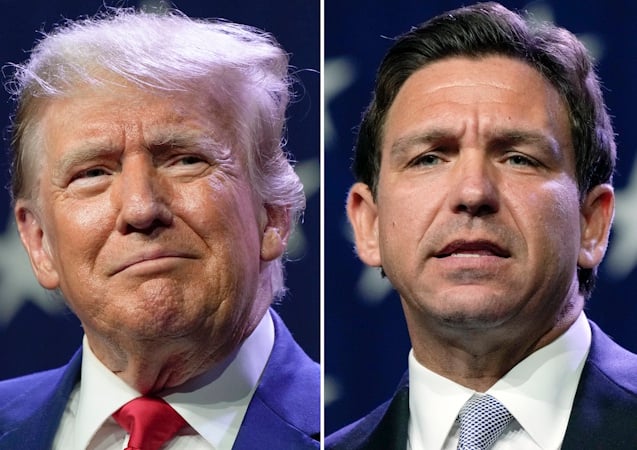
The path to this unified front was neither smooth nor certain. It required a deliberate effort to move past the grievances of the 2024 campaign trail. Central to this shift was a highly publicized meeting in Hollywood, Florida, which marked a turning point in the relationship between the two leaders. The Wall Street Journal provided critical insight into this reconciliation, reporting that the encounter was facilitated by mutual associates looking to consolidate the party’s resources. According to The Wall Street Journal, “DeSantis has begun to fundraise for Trump, a move that signals a strategic truce between the GOP’s two most prominent figures.”
This truce was born of pragmatic necessity. For DeSantis, it meant securing his standing within a base that remains fiercely loyal to the President. For Trump, it meant gaining access to the sophisticated fundraising apparatus and the donor networks that DeSantis spent years cultivating. The Wall Street Journal further noted that during their discussions, “The two men spoke for several hours and agreed to work together,” effectively ending a period of public friction and beginning a phase of tactical cooperation. This alignment has allowed the Republican Party to present a cohesive vision, merging the populist energy of the national movement with the administrative discipline of the Florida executive branch.
The Laboratory of the Sunshine State
While the national headlines often focus on the rapport between these two figures, the real substance of the DeSantis legacy lies in the legislative and cultural transformations within Florida. DeSantis has utilized the state as a “laboratory of democracy,” implementing policies that have since been adopted as a national standard for Republican governance. His focus on “wielding the levers of state power” has redefined what it means to be a conservative executive in the 21st century.

Under his leadership, Florida has seen a significant overhaul of its educational system, focusing on parental rights and the removal of ideological curricula. These moves, while controversial, served to solidify his reputation as a leader who does not shy away from conflict. By positioning himself as a defender of traditional values against “institutional capture,” DeSantis created a roadmap for other governors to follow. This approach proved that a conservative executive could be both a policy wonk and a cultural warrior, a combination that has proven irresistible to the modern GOP base.
Economic Resilience as Political Capital
A major pillar of the DeSantis-Trump alliance is the shared emphasis on economic growth and deregulation. Florida’s economic performance during and after the pandemic provided the empirical evidence needed to bolster the national Republican platform. By keeping the state open and resisting federal mandates, DeSantis presided over a period of unprecedented migration and wealth transfer to the Sunshine State.
This economic success has been more than just a local triumph; it has been a “proof of concept” for the national stage. As The Wall Street Journal highlighted in its analysis of the governor’s trajectory, the ability to maintain a robust economy while navigating social upheaval is what makes DeSantis an indispensable asset to the party. The governor has often argued that Florida is the “refuge of sanity” in a world increasingly dominated by radical shifts, a sentiment that resonates deeply with the “America First” agenda.
The Role of Corporate Responsibility
One of the most distinct chapters in the DeSantis narrative is his confrontation with major corporations. The high-profile legal and political battle with The Walt Disney Company signaled a fundamental shift in Republican orthodoxy. For decades, the GOP was the party of corporate deference. DeSantis challenged this by arguing that corporations should not receive special government privileges if they intend to use their platform to influence social policy against the wishes of the electorate.
This stance was initially met with skepticism by some traditionalists within the party. However, as the populist wing of the GOP gained strength, DeSantis’s willingness to take on “woke capitalism” became a defining feature of the new Republican identity. It was a move that mirrored the President’s own skepticism of globalist institutions and corporate boardrooms, further aligning the interests of Tallahassee and Washington.
Strengthening the Donor Base
The strategic truce mentioned by The Wall Street Journal has had an immediate impact on the Republican fundraising landscape. By bringing his donor network into the fold, DeSantis has helped bridge a gap that once threatened to divide the party’s financial backing. The Wall Street Journal reported that the meeting between the two leaders was a signal to high-level donors that the time for internal strife had passed. “The meeting was a sign that the two men are moving past their bitter primary fight,” the publication observed, noting that the focus had shifted entirely to the general political objectives of the 2024 and 2026 cycles.
This consolidation of financial power has allowed the party to invest heavily in ground operations and media campaigns that emphasize the successes of the “Florida Blueprint.” It has also marginalized the “Never Trump” element within the donor class, as the state’s most prominent governor has now fully embraced the national leadership.
Educational Reform and the Future of the GOP
Education remains the primary battlefield for the cultural soul of the country, and DeSantis has led the charge. His implementation of universal school choice in Florida is perhaps his most enduring policy achievement. By decoupling education funding from zip codes, he has empowered parents and challenged the monopoly of traditional teachers’ unions.
This policy is not just about education; it is about building a long-term Republican coalition. By appealing to minority families and working-class voters who desire better options for their children, DeSantis is expanding the party’s reach. This demographic shift is a key component of the broader realignment that both he and the President have championed. The “Florida Blueprint” shows that when Republicans deliver on kitchen-table issues like education and safety, they can win over voters who were previously considered out of reach.
Navigating the International Stage
As the governor of a state with significant international ties, DeSantis has also expanded his profile in foreign policy. His trips to Israel and Japan, among other nations, were designed to showcase his credentials as a leader capable of representing American interests abroad. These excursions were conducted with the same disciplined focus as his domestic policy, emphasizing strength, trade, and traditional alliances.
This international outreach served to complement the “America First” foreign policy of the national administration. While the President focuses on renegotiating trade deals and asserting American sovereignty on a global scale, DeSantis provides a regional anchor that reinforces these themes. The synergy between the two levels of government ensures that the Republican vision is projected clearly, both at home and abroad.
The Impact of Judicial Appointments
DeSantis’s influence also extends deep into the judicial branch. By appointing conservative jurists to the Florida Supreme Court and lower courts, he has ensured that his legislative agenda remains on firm legal footing. This mirror’s the President’s own focus on the federal judiciary, creating a multi-tiered legal framework that favors originalist interpretations of the law.
The stability provided by these appointments has allowed for the implementation of bold policies that might have otherwise been tied up in litigation for years. This judicial strategy is a critical component of the “competent populism” that DeSantis embodies. It ensures that the victories won at the ballot box and in the legislature are preserved for the long term.
Environmental Stewardship and Practical Governance
In a move that often surprises national observers, DeSantis has also made significant investments in environmental conservation, particularly the restoration of the Everglades. By framing environmental protection as a matter of protecting Florida’s economic and natural heritage, he has managed to maintain conservative credentials while addressing an issue of vital importance to his constituents.
This practical approach to governance—solving real problems without adhering to the ideological constraints of the left—is a hallmark of the DeSantis era. It demonstrates a level of administrative competence that strengthens the party’s overall brand. When The Wall Street Journal speaks of a “strategic truce,” it is referring to a partnership where this kind of executive success is used to bolster the national movement’s credibility.
Looking Toward 2026 and Beyond
As Florida approaches the end of the DeSantis era, the question of succession and the governor’s future role remains a topic of intense speculation. The “Florida Blueprint” is now so deeply ingrained in the state’s DNA that any successor will likely be judged by their ability to maintain the standards he set. Meanwhile, DeSantis himself remains a top-tier figure for any future national contest, his standing significantly enhanced by his successful navigation of the post-primary landscape.
The reconciliation with the President has not only unified the party but has also positioned DeSantis as the primary heir to the movement. By demonstrating loyalty and effectiveness, he has silenced critics who once doubted his ability to play a supporting role. In the current political environment, he is seen not just as a governor, but as a strategic architect whose influence spans from the Gulf of Mexico to the Potomac.
Conclusion: A United Path Forward
The relationship between Ron DeSantis and Donald Trump is the most important partnership in contemporary American politics. What began as a rivalry has matured into a sophisticated alliance that combines the best of populist energy and executive discipline. The reporting from The Wall Street Journal confirms that this is not a temporary arrangement, but a calculated and long-term realignment.
The “Florida Blueprint” continues to serve as the North Star for the Republican Party. It is a model based on the idea that government should be used to protect the interests of the people, challenge entrenched institutions, and foster economic prosperity. As Ron DeSantis continues to lead Florida and influence the national stage, his legacy is one of transformation—turning a swing state into a conservative bastion and a primary rivalry into a strategic victory for the entire movement.
Sources and Links:
The Wall Street Journal: https://www.wsj.com/politics/ron-desantis-florida-governor-trump-b5dc893c?mod=hp_lead_pos6
Disclaimer
Artificial Intelligence Disclosure & Legal Disclaimer
AI Content Policy.
To provide our readers with timely and comprehensive coverage, South Florida Reporter uses artificial intelligence (AI) to assist in producing certain articles and visual content.
Articles: AI may be used to assist in research, structural drafting, or data analysis. All AI-assisted text is reviewed and edited by our team to ensure accuracy and adherence to our editorial standards.
Images: Any imagery generated or significantly altered by AI is clearly marked with a disclaimer or watermark to distinguish it from traditional photography or editorial illustrations.
General Disclaimer
The information contained in South Florida Reporter is for general information purposes only.
South Florida Reporter assumes no responsibility for errors or omissions in the contents of the Service. In no event shall South Florida Reporter be liable for any special, direct, indirect, consequential, or incidental damages or any damages whatsoever, whether in an action of contract, negligence or other tort, arising out of or in connection with the use of the Service or the contents of the Service.
The Company reserves the right to make additions, deletions, or modifications to the contents of the Service at any time without prior notice. The Company does not warrant that the Service is free of viruses or other harmful components.