

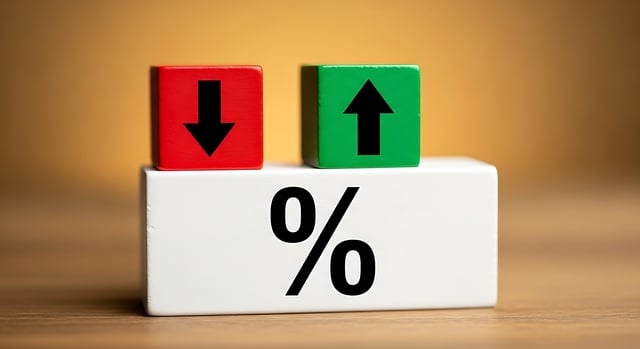
The Federal Reserve is widely expected to raise interest rates at its Dec. 8-9 meeting, and policymakers may consider a “supersized” half-percentage-point rate hike — an option that would send shockwaves through markets and weigh on 401(k) balances.
The CME Group’s FedWatch tool places the odds of a quarter-point increase at 87%, with a 13% chance of a larger, half-point hike. In their latest comments, several voting members of the Federal Open Market Committee, or FOMC, have hinted at preferring the more aggressive option.
Must Read
- You’re probably eligible to save money on car insurance. Compare rates for your ZIP code with this free — and fast — tool from Money.
- These 6 hacks can help retirees save money on things they’re already buying.
- A $10,000 investment 10 years ago would be worth over $30,000 today. It wasn’t a stock. See how investors are adding gold to their IRAs with Goldco’s free guide.
“It may be possible to move more rapidly this winter than the FOMC has moved so far this fall,” Dallas Fed President Lorie Logan said at a conference in Houston on Tuesday.

The latest consumer price index (CPI) report showed that prices rose 0.4% in October, exceeding economists’ forecasts. Due to the 2025 government shutdown, an annual inflation rate could not be calculated. Annual inflation was last reported at 3.7% for September.
What a rate hike would mean for 401(k)s
Retirement savers with 401(k)s invested partly in stocks are nervously waiting to see what the Fed will do next. Historically, higher interest rates have put downward pressure on stock valuations, particularly for growth-oriented companies whose future earnings become less attractive when borrowing costs rise. That could hurt retirement savers with significant exposure to stocks, especially technology shares.
The Fed controls the fed funds rate, which influences how much banks charge each other for short-term loans. Changes to that benchmark can ripple through the economy, affecting everything from mortgage rates and credit card borrowing costs to the yields banks offer on certificates of deposit (CDs).
At the same time, the Fed’s rate decisions affect the borrowing environment for corporations. Companies that rely heavily on financing, including startups and tech companies, can be among the most vulnerable to higher rates.
The Nasdaq suffered its worst single-day drop in over a year on Nov. 5 as it fell 5.5% amid questions about the future of AI. (Since then, the Nasdaq has bounced back.) Politicians often credit positive performance of 401(k)s to their leadership. After his party’s midterm defeat, President Donald Trump has continued to tout stock market gains over the past two years, while blaming the Democrats for recent volatility.
“Right after the election, [the stock market] went down $3 trillion. That was because of the result of the election, because the stock market does not want to see Democrats. And your 401(k)s have gone way down because of the ridiculous result,” Trump told reporters at the White House Monday.
Administration officials are now arguing that a half-point rate hike would be a mistake, predicting that oil prices will fall as conflicts settle.
Christopher Phelan, chairman of the White House Council of Economic Advisers, acknowledged in a Bloomberg Television interview Tuesday the CPI report was “not a good number,” but he argued that diesel and gas were largely responsible.
Average gas prices finally dropped below $4 this week, according to AAA. But will fuel prices keep falling — and actually stay down? Many analysts expect the war with Iran to continue and say that high oil prices and inflation will persist. Savers are advised to continue their routine 401(k) contributions, even when interest rates are increasing.
“The big driver of inflation has been oil prices, and we don’t think the Iran conflict will end anytime soon,” Skyler Weinand, chief investment officer at Regan Capital, wrote in a note Tuesday. “Stocks have taken a beating of late and have seen a large rotation out of AI plays and into more durable and defensive sectors like healthcare… but earnings should continue to benefit from high levels of government and corporate spending.”
Disclaimer
Artificial Intelligence Disclosure & Legal Disclaimer
AI Content Policy.
To provide our readers with timely and comprehensive coverage, South Florida Reporter uses artificial intelligence (AI) to assist in producing certain articles and visual content.
Articles: AI may be used to assist in research, structural drafting, or data analysis. All AI-assisted text is reviewed and edited by our team to ensure accuracy and adherence to our editorial standards.
Images: Any imagery generated or significantly altered by AI is clearly marked with a disclaimer or watermark to distinguish it from traditional photography or editorial illustrations.
General Disclaimer
The information contained in South Florida Reporter is for general information purposes only.
South Florida Reporter assumes no responsibility for errors or omissions in the contents of the Service. In no event shall South Florida Reporter be liable for any special, direct, indirect, consequential, or incidental damages or any damages whatsoever, whether in an action of contract, negligence or other tort, arising out of or in connection with the use of the Service or the contents of the Service.
The Company reserves the right to make additions, deletions, or modifications to the contents of the Service at any time without prior notice. The Company does not warrant that the Service is free of viruses or other harmful components.







 retirement accounts.)