On Wednesday, the landscape of international relations underwent a seismic shift as the United States formally initiated a pressure campaign to dismantle the decades-old global aid framework. In a sweeping move that signals the definitive end of the post-WWII development consensus, the Trump administration has begun pushing nations to sign a “Trade Over Aid” declaration, a document that prioritizes market-based investment and corporate expansion over traditional humanitarian assistance.
The Rubio Directive: A Monday Deadline
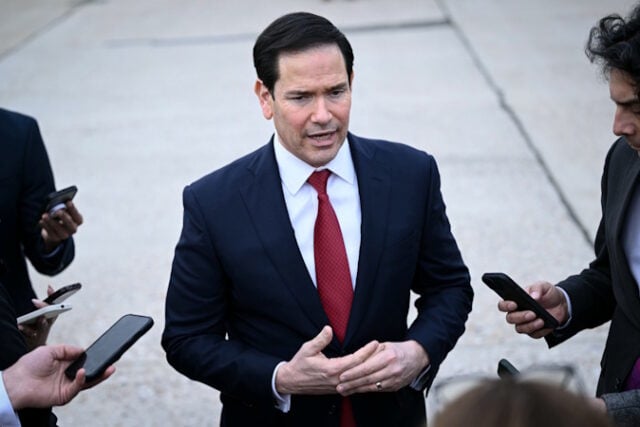
The spearhead of this new policy is a formal “démarche”—an official diplomatic call to action—issued by Secretary of State Marco Rubio. In a cable sent on April 15, 2026, to every U.S. embassy and consular post worldwide, Rubio ordered American diplomats to secure the backing of foreign governments for the “Trade Over Aid” initiative by the following Monday.
The urgency of the request underscores the administration’s desire to present a united front before the United Nations holds its spring summit at the end of April. The Washington Post reported that the cable characterizes the initiative as an opportunity to leverage the international system for domestic gain, noting that “Secretary of State Marco Rubio called it an opportunity to use the U.N. system to ‘promote America First values and create business opportunities for U.S. companies.’”
For foreign capitals, the message is clear: the era of no-strings-attached American assistance is over. The cable reportedly instructs diplomats to inform their counterparts that the U.S. will no longer be the “world’s benefactor” in the traditional sense, but rather its “primary venture partner.”

A “Golden Age” Philosophy
The rhetoric underpinning the “Trade Over Aid” push is rooted in the administration’s “Golden Age” economic narrative. The internal diplomatic notes argue that the traditional model of foreign aid has not only failed to alleviate poverty but has actively hindered it by fostering corruption and government inefficiency.
The declaration itself, which the U.S. expects allies and developing nations to sign, contains a sharp-tongued critique of global charity. “For decades, government aid has been flowing from developed to developing countries with only limited impact,” the text asserts. It goes on to claim that private business, rather than government intervention, is the sole architect of successful modern economies.
By framing aid as a failed experiment, the administration provides a moral and economic justification for the radical budget cuts it has pursued since 2025. The dismantling of the U.S. Agency for International Development (USAID) is no longer just a cost-cutting measure; it is being presented as a liberation of developing nations from the “shackles of dependency.”
The Rise of the “Trade Over Aid” Caucus
At the United Nations, U.S. Ambassador Mike Waltz has been laying the groundwork for what is being called the “Trade Over Aid Caucus.” This group is intended to be a voting bloc of nations that agree to prioritize deregulation and private-sector solutions in development projects.
“On the development side, we are heavily engaging the private sector,” Waltz told the Senate Foreign Relations Committee recently. “Let’s lower barriers to capital, drive foreign investment and create jobs, not dependency. We’re calling that trade over aid.”
The caucus is expected to advocate for the merger of various UN agencies and the elimination of programs that do not show a direct “return on investment” for donor nations. This transactional approach to diplomacy has become the hallmark of the administration’s foreign policy, where every dollar spent abroad must be tied to a specific benefit for American workers or strategic interests.
The “Great Aid Recession” and Global Skepticism
While the U.S. is leading the charge, it is not acting entirely alone. Other major donor nations, including the United Kingdom, France, and Germany, have already begun scaling back their own foreign assistance budgets in response to domestic economic pressures and a shifting political climate in Europe. Analysts have dubbed this phenomenon the “Great Aid Recession.”
However, the American demand for a formal declaration has met with significant resistance in many parts of the world. In Sub-Saharan Africa, where the African Growth and Opportunity Act (AGOA) has recently faced turbulence due to the administration’s tariff policies, leaders are wary. The shift toward trade-only relationships is seen by many as a “bait and switch” that removes essential health and education funding while offering trade deals that often favor larger, more established American corporations.
The humanitarian stakes are immense. Some international development experts have warned that a total withdrawal of traditional aid could have catastrophic consequences. Preliminary studies cited by NGOs suggest that a sweeping rollback of global health funding—particularly in the fight against malaria and HIV/AIDS—could result in millions of preventable deaths over the next decade.
Transactional Strings and Health Deals
The “trade over aid” philosophy extends beyond infrastructure and industry into public health. The administration has begun rolling out “transactional strings” for health-related deals. Instead of providing vaccines or medical supplies as part of a humanitarian package, the U.S. is increasingly looking to link medical assistance to favorable trade terms or the protection of American pharmaceutical intellectual property.
Critics within the State Department, speaking on the condition of anonymity, have expressed concern that this approach treats human life as a bargaining chip. “It’s solidifying our stance on dropping aid completely and letting companies enrich themselves on newer markets,” one official noted. This sentiment reflects a growing divide between the administration’s political appointees and the career diplomatic corps, who argue that America’s “soft power” is being liquidated for short-term financial gains.
The Economic Angle: America First in Emerging Markets
From the White House’s perspective, the “Trade Over Aid” initiative is a vital component of its broader trade strategy. By forcing nations to deregulate and open their markets in exchange for “economic partnership,” the U.S. hopes to secure a dominant position in the emerging markets of the 21st century.
This is particularly relevant in the context of the administration’s ongoing competition with China. While Beijing has used its “Belt and Road Initiative” to build infrastructure through state-backed loans, Washington is betting that a private-sector-led approach will be more sustainable and better aligned with American interests. The goal is to create an environment where American tech, energy, and agricultural firms can operate without the “interference” of local government regulations or competing aid-funded programs.
The administration argues that this will create a “virtuous cycle” of growth. American companies provide the capital and technology, while the host nations provide the labor and markets. In this view, the “Golden Age” of the American economy is something that can—and should—be exported, but only to those willing to play by Washington’s new rules.
Institutional Resistance and the “Board of Peace”
As the deadline for the “trade over aid” declaration approaches, the United Nations is bracing for a confrontation. The administration has already signaled its willingness to bypass traditional UN structures if they prove too slow to adapt.
The creation of the “Board of Peace”—an international body set up by the United States to adjudicate global conflicts and development disputes outside the traditional UN framework—is seen as a direct challenge to the Security Council and the General Assembly. By tying participation in the Board of Peace to the “Trade Over Aid” initiative, the administration is effectively building a parallel international system.
This “parallelism” is designed to give the U.S. maximum leverage. Nations that sign the declaration and join the caucus will receive preferential trade treatment and access to American capital markets. Those that refuse may find themselves isolated, not only from American aid but from the global financial system that Washington still largely controls.
Conclusion: A Pivot Point for Humanity
The coming weeks will determine whether the “Trade Over Aid” initiative becomes the new global standard or a flashpoint for international discord. The signing event scheduled for the end of April in New York will be the first major test of whether the world is ready to follow America into this post-aid era.
For the Trump administration, the goal is nothing less than a “remaking of the world order” to better reflect the realities of the 21st century. By demanding trade over aid, Washington is betting that the power of the market is a more effective tool for development—and a more powerful weapon for diplomacy—than the altruism of the past.
However, as diplomats across the globe prepare their responses to Secretary Rubio’s cable, the central question remains: what happens to those who have nothing to trade? In the “Golden Age” of market-driven diplomacy, the cost of being “unprofitable” has never been higher. Whether this shift leads to a new era of global prosperity or a “great recession” of human welfare is a gamble that the United States has decided the entire world must now take.
Sources:
- The Washington Post – https://www.washingtonpost.com/national-security/2026/04/15/trump-un-trade-over-aid/
Disclaimer
Artificial Intelligence Disclosure & Legal Disclaimer
AI Content Policy.
To provide our readers with timely and comprehensive coverage, South Florida Reporter uses artificial intelligence (AI) to assist in producing certain articles and visual content.
Articles: AI may be used to assist in research, structural drafting, or data analysis. All AI-assisted text is reviewed and edited by our team to ensure accuracy and adherence to our editorial standards.
Images: Any imagery generated or significantly altered by AI is clearly marked with a disclaimer or watermark to distinguish it from traditional photography or editorial illustrations.
General Disclaimer
The information contained in South Florida Reporter is for general information purposes only.
South Florida Reporter assumes no responsibility for errors or omissions in the contents of the Service. In no event shall South Florida Reporter be liable for any special, direct, indirect, consequential, or incidental damages or any damages whatsoever, whether in an action of contract, negligence or other tort, arising out of or in connection with the use of the Service or the contents of the Service.
The Company reserves the right to make additions, deletions, or modifications to the contents of the Service at any time without prior notice. The Company does not warrant that the Service is free of viruses or other harmful components.