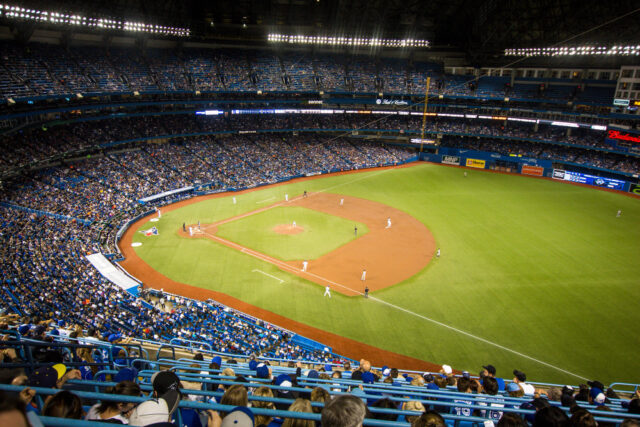
The smell of freshly cut grass, the crack of a wooden bat, and the familiar sight of a home plate umpire leaning over a catcher’s shoulder are all hallmarks of a tradition that has spanned over 150 years. But as the 2026 Major League Baseball season prepares to kick off this Wednesday, March 25, that tradition is getting a high-tech upgrade. After years of experimentation in the Minor Leagues and a flurry of final approvals from the Joint Competition Committee last September, the Automated Ball-Strike (ABS) Challenge System is officially making its regular-season debut.
This isn’t just a minor rule tweak; it is perhaps the most significant technological shift in the sport’s history. As the New York Yankees prepare to face the San Francisco Giants in a season opener streamed exclusively on Netflix, all eyes won’t just be on the players, but on the invisible digital rectangle hovering over home plate.
The Hybrid Approach: Why “Challenges” Won the Day
For years, the debate over “robot umpires” was binary: either keep the human element, errors and all, or let a computer call every single pitch. MLB has chosen a middle path that Commissioner Rob Manfred believes preserves the “pace and rhythm” of the game while eliminating the “egregiously wrong” calls that have historically incensed fans and players alike.

Under the new 2026 rules, human umpires will continue to call every pitch. However, each team faces two challenges. If a pitcher, catcher, or batter feels the umpire missed a call, they can trigger a near-instantaneous review. If the challenge is successful (the call is overturned), the team keeps its challenge. If the call stands, the challenge is lost.
To prevent teams from running out of options in the most critical moments, a “reset” rule has been implemented for extra innings. At the start of each extra frame, if a team has zero challenges remaining, they are granted one. This ensures that a 12th-inning showdown won’t be decided by a missed call simply because a manager used his challenges in the third inning.
The Tech Behind the Curtain: Hawk-Eye and 5G
The “robot” in the room isn’t a literal android behind the plate; it’s a sophisticated network of 12 Hawk-Eye Innovations cameras strategically placed around the perimeter of each ballpark. These cameras track the ball with a margin of error of roughly one-sixth of an inch—about half the width of an M&M.
Running on a T-Mobile 5G private network, the system processes the ball’s trajectory and location relative to a customized strike zone for each batter. The result is transmitted to a central booth, then displayed on the stadium’s videoboard and broadcast on television within approximately 15 seconds.
The strike zone itself has been standardized to remove the “personality” of individual umpires. In 2026, the ABS zone is a two-dimensional plane located at the midpoint of home plate (8.5 inches from the front and back). Its width is fixed at the standard 17 inches of the plate, but its height is dynamic:
- The Top: 53.5% of the batter’s measured height.
- The Bottom: 27% of the batter’s measured height.
This move to a 2D zone at the midpoint is a strategic choice. Earlier tests with a 3D zone—which included the “corners” and the front of the plate—resulted in “cliff-hanger” strikes that many players felt were unnatural. By measuring at the midpoint, MLB aims to mirror the zone most players have trained for their entire lives.
The Human Element: “Tapping the Hat”
One of the more charming, albeit strange, additions to the 2026 season is the physical signal for a challenge. Because the system is designed for speed, a challenge must be initiated immediately after the pitch. A player (batter, catcher, or pitcher) must tap their hat or helmet to signal to the home plate umpire that they are appealing.
Crucially, players are prohibited from looking at the dugout for a signal. This prevents the game from grinding to a halt while video coordinators analyze the replay. The decision must be “instinctual,” based on the player’s immediate perception of where the ball crossed the zone.
“You want to get the egregious calls fixed,” said Cy Young winner Justin Verlander during Spring Training. “But you also want to make sure the game keeps moving. This system lets the players police the biggest moments without a computer taking over the whole show.”
Strategic Implications: The Death of Framing?
Perhaps no player is more affected by this change than the catcher. For decades, “pitch framing”—the art of subtly moving the glove to make a ball look like a strike—has been a valued skill. With the ABS system ready to override a human’s perception, some fear this “dark art” will vanish.
However, data from the 2025 Triple-A season suggests otherwise. Because teams only have two challenges, umpires still call roughly 98% of the pitches in a given game without any digital interference. Catchers like the Brewers’ William Contreras have noted that while they might not frame a pitch four inches off the plate anymore, they still need to “sell” the borderline calls to keep the umpire in a rhythm for the other 290 pitches that won’t be challenged.
In fact, 2025 data showed that the defense (pitchers and catchers) was slightly more successful at overturning calls than the offense, boasting a 53.5% success rate compared to the hitters’ 49.5%. Catcher Gabriel Moreno of the Diamondbacks emerged as a “challenge specialist” in Spring Training, showing an uncanny ability to know exactly when a ball just grazed the 27% height line.
The Minor League Proving Ground
The road to the March 25 opener was paved in the Minor Leagues. The Automated Ball-Strike system was first introduced in the independent Atlantic League in 2019, then moved to the Florida State League and eventually to all of Triple-A by 2023.
The 2025 Triple-A season was the final laboratory. Analysis from that year showed that while umpire accuracy remained high—roughly 93.5%—the ABS challenge system successfully corrected nearly 20% of all missed calls. The average game had 4.25 challenges, meaning the “tech” interrupted the flow of the game about 4 times every 3 hours.
While the ball-strike system is now “Major League ready,” other experiments remain in the Minors. For the 2026 season, Triple-A will begin testing robot-checked swing reviews. Using a 45-degree angle threshold, cameras will determine if a batter “offered” at a pitch, a rule that remains one of the most subjective in the books. If successful, we could see “robot swing umpires” in the Big Leagues as early as 2028.
Exceptions and Logistics
Fans attending specific international or “spectacle” games this year should note that the ABS system will not be universal. MLB has confirmed the system will not be operational for the following 2026 events due to the logistical challenges of installing the 12-camera Hawk-Eye array in temporary or non-MLB venues:
- The Mexico City Series (Arizona vs. San Diego) on April 25-26.
- The Field of Dreams Game (Philadelphia vs. Minnesota) in Iowa on August 13.
- The Little League Classic (Atlanta vs. Milwaukee) in Williamsport on August 23.
For the rest of the 162-game slate, however, the digital eyes will be watching.
Conclusion: A New Era of Accountability
As we stand three days away from the 2026 Opening Day, the atmosphere in clubhouses is a mix of excitement and trepidation. For the fans, it means the end of the “umpire show” where a single bad call in the ninth inning could ruin a season. For the players, it’s a tool of accountability.
“The goal,” as Commissioner Manfred recently put it, “is to use technology as a safety net, not a replacement.” Whether the ABS Challenge System becomes a seamless part of the game or a source of new frustrations remains to be seen. But one thing is certain: when the first pitch is thrown this Wednesday, the “human element” of baseball will have a very powerful, very precise digital partner.
Sources and Links
- MLB.com: Ball-Strike Challenge System for 2026
- Associated Press (AP): MLB season preview: Robot umpires, Dodgers try for 3 in row, Rays return to Trop
- Sports Business Journal: MLB to officially add ABS challenge system for 2026 season
- Fine Day Radio: Major League Baseball Introduces Automated Strike Zone Technology for 2026 Season
- Fox Sports: MLB Moves Check-Swing Robot Umps Challenges, Experimental Rules to Triple-A
Disclaimer
Artificial Intelligence Disclosure & Legal Disclaimer
AI Content Policy.
To provide our readers with timely and comprehensive coverage, South Florida Reporter uses artificial intelligence (AI) to assist in producing certain articles and visual content.
Articles: AI may be used to assist in research, structural drafting, or data analysis. All AI-assisted text is reviewed and edited by our team to ensure accuracy and adherence to our editorial standards.
Images: Any imagery generated or significantly altered by AI is clearly marked with a disclaimer or watermark to distinguish it from traditional photography or editorial illustrations.
General Disclaimer
The information contained in South Florida Reporter is for general information purposes only.
South Florida Reporter assumes no responsibility for errors or omissions in the contents of the Service. In no event shall South Florida Reporter be liable for any special, direct, indirect, consequential, or incidental damages or any damages whatsoever, whether in an action of contract, negligence or other tort, arising out of or in connection with the use of the Service or the contents of the Service.
The Company reserves the right to make additions, deletions, or modifications to the contents of the Service at any time without prior notice. The Company does not warrant that the Service is free of viruses or other harmful components.