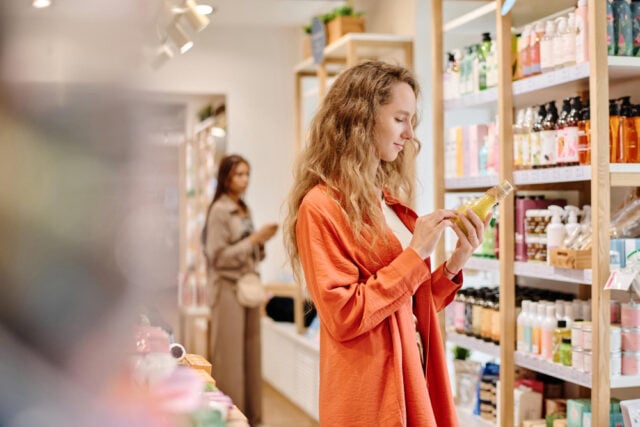
The mass-market retail landscape is witnessing a massive shift as two of America’s largest corporate giants, Target and Walmart, aggressively pivot to capture the highly lucrative beauty and cosmetics sector. Historically, department stores and specialized beauty boutiques held a monopoly on prestige cosmetics, leaving big-box retailers to handle basic personal-care products and low-margin “drugstore” makeup. However, sweeping macroeconomic shifts, evolving consumer behaviors, and strategic corporate alliances have turned the humble retail aisle into a fierce battleground for market share.
According to retail industry reports, both companies are successfully convincing premium consumers to buy their luxury moisturizers and color cosmetics in the same store where they buy household paper goods and groceries. Walmart is scaling up its portfolio to capture high-income shoppers who are “trading down” on essentials, while Target is undergoing a massive real estate transformation to solidify its status as an aesthetic trendsetter. This article explores how these retail titans are restructuring their physical footprints, leveraging advanced consumer behavioral insights, and deploying digital innovations to capture the modern beauty shopper.
The Strategic Catalyst: Changing Macroeconomics and Consumer Mindsets
The primary driver of this sudden realignment is a permanent shift in consumer behavior toward a hybrid mindset. Modern macroeconomic pressures have forced even affluent shoppers to balance careful spending with intentional indulgence. Data from retail tracking firms indicates that rather than completely cutting out non-essential luxuries, consumers are choosing to save on standard household consumables while retaining high-budget spending in performance-critical areas like health and skin longevity.
The beauty sector is uniquely positioned to capitalize on this psychological trend, often referred to in economics as the “Lipstick Effect”—the phenomenon where consumers facing economic uncertainty continue to buy small, affordable luxury items to maintain a sense of personal indulgence. As noted by retail analytics executives, when economic sentiment gets shaky, consumers turn to beauty products for an emotional lift. Recognizing that beauty purchases are heavily driven by these personal motivations, both mass-market retailers realized they needed to transcend their sterile, self-service environments to unlock higher profit margins.

Target’s Playbook: Real Estate Turnarounds and Custom Assortments
Target’s strategy to capture the modern beauty shopper focuses on structural evolution, aesthetic refinement, and exclusive retail curation. While Target famously leaned on its shop-in-shop partnership with Ulta Beauty to introduce high-end brands like Clinique and Fenty Beauty to a massive weekly foot-traffic stream, retail analysts report that the five-year arrangement is concluding. This structural shift has catalyzed a massive corporate turnaround plan centered on building out independent, permanent beauty authority.
+-----------------------------------------------------------------+
|                       TARGET BEAUTY OMNICHANNEL                 |
+-----------------------------------------------------------------+
|   [ Physical Footprint ]    |        [ Digital Layer ]          |
|                             |                                   |
|   * Target Beauty Studios   |        * Circle 360 Ecosystem     |
|   * Low-Profile Fixtures    |        * In-App Shade Matching    |
|   * Specialized Training    |        * Drive Up Integration     |
+-----------------------------------------------------------------+
Target executives revealed that the brand is aggressively scaling its new “Target Beauty Studio” footprint across more than 600 stores. To minimize disruption, Target is systematically restructuring its store environment to appeal to younger consumers. It is removing high-profile, blocking shelf fixtures in favor of open, low-profile displays illuminated by soft LED lighting that mimic the open-exploration layout of specialized cosmetics boutiques.
Additionally, Target has capitalized heavily on digital-first, clean-ingredient beauty startups. The retailer acts as an incubation pad for indie brands that went viral on digital platforms, translating internet trend virality directly into brick-and-mortar sales volume, transforming its multi-billion-dollar beauty division into a primary driver of company growth.
Walmart’s Playbook: Premiumization, “Beauty Experts,” and the “Dupe” Phenomenon
If Target’s objective is to bring the boutique studio experience down to the mass market, Walmart’s strategy focuses on building scale through extreme value engineering, dedicated in-store personnel, and demographic expansion. Walmart has transformed its beauty department by leaning heavily into the “dupe” consumption phenomenon. Modern consumers actively seek out affordable formulations that mimic the design, active ingredients, and functional performance of luxury items at a fraction of the cost.
Instead of hiding from its discount identity, Walmart leaned into it. By collaborating with viral cosmetic manufacturers, Walmart filled its shelves with highly sought-after formulation alternatives. According to corporate performance calls, this strategy has attracted higher-income shoppers making over $100,000 a year, who view finding a high-performing budget alternative as a badge of consumer intelligence rather than a financial compromise.
   Traditional Retail Model            Modern Mass-Beauty Model
+-----------------------------+     +-----------------------------+
|    Luxury Department Store  |     |  Walmart / Target Platform  |
|   [Premium Price / Isolated] |     | [Value Price / Consolidated]|
+--------------+--------------+     +--------------+--------------+
               |                                   |
               v                                   v
    Single Hedonic Purchase             Consolidated Routine
 (High Friction / Low Frequency)     (Low Friction / High Frequency)
To complement this upscale push, Walmart launched its “Beauty 2.0” initiative, which elevates the physical prominence of beauty products and highlights items trending on social media. Crucially, Walmart is changing its labor model to mirror high-end department stores. Following successful pilots, Walmart is rolling out specialized “Beauty Expert” associate roles to hundreds of locations. These dedicated workers are trained specifically to guide customers through thousands of products, breaking away from the traditional shared-responsibility model of discount retail.
To anchor its premium tier, Walmart partnered with the British luxury beauty retailer Space NK. This shop-in-shop concept, branded as “BEAUTYSPACE NK,” introduced indie skincare, specialized haircare, and premium cosmetics to thousands of suburban and rural areas lacking access to traditional luxury malls, alongside new clinical expansions like La Roche-Posay.
Technical Innovation: Enhancing the Omnichannel Customer Journey
Both retailers recognize that physical layout adjustments are ineffective without a strong digital backend. In modern retailing, consumers demand a seamless blend of digital convenience inside physical storefronts. This omnichannel reality has forced Target and Walmart to invest heavily in advanced technologies to remove friction from the shopping process:
- Artificial Intelligence and Augmented Reality: Both companies have built augmented reality (AR) shade-matching tools directly into their mobile ecosystems. These tools allow users to virtually try on lipsticks, foundations, and eyeshadows using their smartphone cameras.
- Algorithmic Personalization: By feeding purchase data from loyalty apps—Target Circle and Walmart Plus—into machine learning models, both retailers deliver personalized product recommendations and targeted digital promotions directly to shoppers’ phones while they browse the physical aisles.
- Frictionless Fulfillment Logistics: The integration of beauty products into curbside pickup models (Target’s Drive Up and Walmart’s Curbside Pickup) has turned beauty purchases into friction-free, impulse decisions. A consumer can order a viral concealer on their lunch break and have it placed in their trunk alongside their groceries within an hour.
Retail Execution: A Side-by-Side Analysis
To see how these competing philosophies map out in execution, we can look directly at how each company positions its beauty ecosystem across core retail variables tracked by industry journalists:
| Strategic Pillar | Target (The Studio Curation Model) | Walmart (The Beauty 2.0 Expert Model) |
| Primary Structural Anchor | Target Beauty Studios (600+ Stores) | Dedicated “Beauty Expert” Associates (400+ Stores) |
| Core Value Proposition | Curated premium experiences and viral indie brand discovery | Democratized luxury, algorithmic value, and high-quality product “dupes” |
| In-Store Environment | Open-floor, soft boutique lighting, counterless layout | High-prominence, tech-integrated, dedicated service beauty aisles |
| Digital Ecosystem Catalyst | Target Circle 360 and integrated in-app AR testing suites | Walmart Plus subscription infrastructure and virtual shade matching |
| Demographic Anchor | Suburban trend-conscious shoppers and aesthetic purists | Broad regional demographics, value hunters, and higher-income traders |
The Verdict: Who Wins the Market Share War?
As Target and Walmart continue to expand their beauty operations, the real losers of this consolidation are traditional mid-tier department stores and isolated strip-mall pharmacies. Mass-market retailers offer a level of convenience and supply chain efficiency that smaller operations cannot match. Market research projects that the U.S. beauty and personal care market will expand significantly over the next decade, offering a massive runway for growth.
Target has successfully captured the cultural conversation, positioning its new internal studios to dynamically rotate trending beauty brands as consumer tastes pivot. Meanwhile, Walmart has utilized its unrivaled operational scale, dedicated associate training programs, and embrace of the “dupe” revolution to ensure that premium-quality personal care is accessible to every geographic and economic bracket.
Ultimately, this corporate rivalry benefits the everyday consumer. By forcing high-end formulations out from behind high-friction department store glass cases, Target and Walmart have fundamentally democratized the beauty industry. Luxury is no longer defined by an expensive zip code or a premium storefront—it is now fully accessible right down the street at the local mass retailer aisle.
Sources and Links:
- Retail Dive: Target, Walmart vie for beauty customers Link: https://www.retaildive.com/news/target-walmart-beauty-customers-q1/820890/
- Cosmetics Business: How Walmart and Target’s beauty offerings dominated in Q1 2026 Link: https://www.cosmeticsbusiness.com/how-walmart-and-targets-beauty-offerings-dominated-Q1-2026
- TheStreet: Walmart makes in-store move to challenge Target Link: https://www.thestreet.com/retail/walmart-makes-in-store-beauty-move-to-challenge-target
- TheStreet: Walmart makes big move into beauty to rival Target Link: https://www.thestreet.com/retail/walmart-makes-big-move-into-beauty-to-rival-target
- Walmart Corporate News: Walmart Start Beauty Accelerator Initiative Link: https://corporate.walmart.com/suppliers/walmart-start
- Cosmoprof North America Retail Report: Place Your Bets: Space NK and Walmart a Winner or Mismatch Link: https://cosmoprofnorthamerica.com/space-nk-and-walmart-a-winner-or-mismatch/
Disclaimer
Artificial Intelligence Disclosure & Legal Disclaimer
AI Content Policy.
To provide our readers with timely and comprehensive coverage, South Florida Reporter uses artificial intelligence (AI) to assist in producing certain articles and visual content.
Articles: AI may be used to assist in research, structural drafting, or data analysis. All AI-assisted text is reviewed and edited by our team to ensure accuracy and adherence to our editorial standards.
Images: Any imagery generated or significantly altered by AI is clearly marked with a disclaimer or watermark to distinguish it from traditional photography or editorial illustrations.
General Disclaimer
The information contained in South Florida Reporter is for general information purposes only.
South Florida Reporter assumes no responsibility for errors or omissions in the contents of the Service. In no event shall South Florida Reporter be liable for any special, direct, indirect, consequential, or incidental damages or any damages whatsoever, whether in an action of contract, negligence or other tort, arising out of or in connection with the use of the Service or the contents of the Service.
The Company reserves the right to make additions, deletions, or modifications to the contents of the Service at any time without prior notice. The Company does not warrant that the Service is free of viruses or other harmful components.