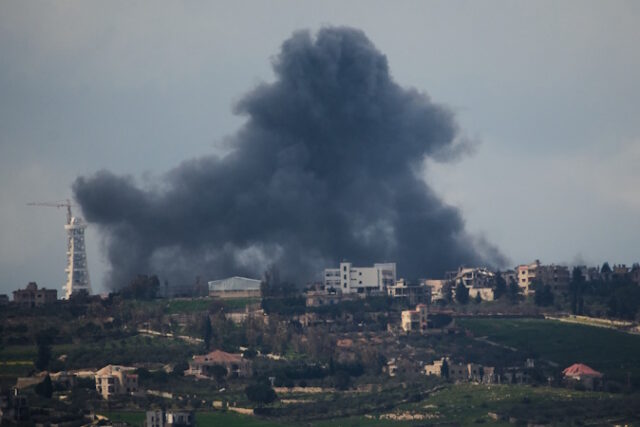
The date of April 16, 2026, may go down in history as the moment the world finally stepped back from the precipice of a total regional conflagration—or it may be remembered as a brief, silent breath before a final, devastating storm. At 5:00 PM EST, a ten-day cessation of hostilities officially began between Israel and Lebanon, a diplomatic breakthrough brokered by the United States that many hope will serve as the gateway to a broader, permanent peace in the Middle East.
However, the silence on the border is not a sign of relaxation. It is a calculated pause in a high-stakes geopolitical chess match where the United States is utilizing a “maximum pressure” economic blockade to force Iran into a final settlement, while Hezbollah remains a volatile wildcard that could shatter the quiet at any moment. As these wars rage and pause, the global economy is reeling, facing the most significant energy disruption in decades and a looming threat of a worldwide recession.
The Strategy of the “Squeeze”
The Biden administration’s successor has leaned heavily into a strategy of economic strangulation paired with aggressive mediation. As of mid-April 2026, the United States and Iran are currently nine days into their own separate, two-week ceasefire. This pause was not born of sudden goodwill but of a brutal realization on both sides: the cost of continued war has become untenable.
The U.S. strategy, frequently described by officials as the “economic squeeze,” involves a multi-layered blockade of Iranian ports and the preparation of “financial equivalent” bombing campaigns—measures designed to isolate the Iranian economy from the global financial system entirely. U.S. Treasury Secretary Scott Bessent has signaled that the administration is ready to escalate this financial pressure if Iran does not move toward a permanent deal.

The primary objective for Washington is the reopening of the Strait of Hormuz. Effectively closed to commercial traffic since early March following Iranian threats and subsequent naval skirmishes, the Strait is the world’s most vital energy artery. Its closure has trapped millions of barrels of oil and massive volumes of Liquefied Natural Gas (LNG), sending shockwaves through every corner of the global market.
The Mediator: Pakistan’s Pivotal Role
In a surprising twist of 2026 diplomacy, Pakistan has emerged as the central conduit for peace. Pakistani Army Chief Asim Munir and Prime Minister Shehbaz Sharif have been shuttling between Tehran, Islamabad, and Washington, acting as the primary intermediaries for a 10-point peace plan.
This plan, which formed the basis for the current two-week truce, calls for:
- An immediate halt to hostilities.
- The phased reopening of the Strait of Hormuz.
- Direct negotiations regarding Iran’s nuclear program.
- Conditional sanctions relief and the release of frozen Iranian assets.
While President Trump has voiced optimism, claiming the war “is going along swimmingly” and “should be ending pretty soon,” the reality on the ground is far more complex. Iran has claimed “victory” by forcing the U.S. to the table, yet its economy is in tatters, and its leadership remains under immense internal and external pressure following the assassination of Supreme Leader Ali Khamenei on February 28.
The Lebanon Front and the Hezbollah Factor
The ceasefire that began today in Lebanon is distinct but deeply interconnected with the Iran-U.S. talks. For weeks, the 2026 Lebanon War has seen some of the most intense combat in the region’s history. Unlike previous conflicts, Israel’s 2026 campaign has been expansive, targeting infrastructure across Lebanon to sever Hezbollah’s supply lines and isolate its strongholds in the south and the Beqaa Valley.
Hezbollah’s involvement remains the primary hurdle to a lasting peace. As an Iranian proxy, Hezbollah joined the fray on March 2, 2026, launching drones and rockets into northern Israel in retaliation for the strikes on Iran. This triggered a massive Israeli ground invasion, with five divisions entering southern Lebanon. The humanitarian cost has been staggering, with over 1 million people displaced—roughly 20% of the Lebanese population.
The new 10-day truce is an attempt by the Lebanese government to reclaim its sovereignty. President Joseph Aoun has vowed to work toward disarming Hezbollah and ensuring that only the Lebanese Armed Forces (LAF) are authorized to bear arms. However, skeptics note that Hezbollah remains a state within a state, and their willingness to abide by a deal brokered by the U.S. and the “Zionist entity” is far from guaranteed.
The Global Economic Toll: A World on the Brink
While the political leaders negotiate, the global economy is paying the price for the volatility. The International Monetary Fund (IMF) recently cut its 2026 global growth outlook to 3.1%, with a warning that a “worst-case scenario” could see growth plummet by an additional 1.3 percentage points—a level that would almost certainly trigger a global recession.
The Energy Crisis
The closure of the Strait of Hormuz has created the “largest supply disruption in the history of the global oil market,” according to the International Energy Agency (IEA).
- Oil Prices: Brent Crude surged past $120 per barrel in March, with volatility continuing as the ceasefires remain fragile.
- Natural Gas: European gas prices nearly doubled to over €60/MWh following a harsh winter and the cutoff of Middle Eastern LNG. QatarEnergy’s declaration of force majeure has left many nations scrambling for alternative energy sources.
Inflation and Industry
The “energy tax” caused by the war has filtered through to every sector. In the UK and the EU, chemical and steel manufacturers have been forced to impose surcharges of up to 30%. This has raised the specter of permanent deindustrialization in Europe as companies struggle to absorb surging electricity and feedstock costs.
Developing nations have been hit hardest. Commodity-importing countries are facing acute currency volatility and rising food prices, as the war has disrupted both the fuel and fertilizer markets. The UNDP estimates that the conflict could reduce the GDP of Arab nations by nearly $200 billion.
The Path Forward: Hope or Hubris?
As the sun sets on the first day of the Lebanon ceasefire, the world watches with bated breath. President Trump has invited the leaders of Israel and Lebanon to the White House for what he calls the “first meaningful talks” since 1983.
The success of these talks depends on three critical factors:
- Iranian Compliance: Will the “economic squeeze” successfully force Tehran to concede on the Strait of Hormuz and its nuclear ambitions?
- Hezbollah’s Restraint: Can the Lebanese government actually exert control over a militant group that has spent decades preparing for this exact confrontation?
- Israeli Security: Prime Minister Netanyahu has made it clear that Israel preserves its “right to take all necessary measures in self-defense.” Any perceived violation by Hezbollah could lead to an immediate resumption of the air campaign.
The attempt at world peace in 2026 is a race against time. Diplomacy is moving slowly, but the economic and humanitarian costs are accelerating. For now, the guns are quiet in Beirut and Tel Aviv, but in the halls of power in Washington, Tehran, and Islamabad, the real battle for the future of the 21st century has only just begun.
Sources and Links:
- Ten Day Cessation of Hostilities to Enable Peace Negotiations Between Israel and Lebanon – U.S. Department of State
- Live Updates: Israel’s ceasefire in Lebanon begins as Iran keeps Strait of Hormuz gridlocked – CBS News
- 2026 Iran war ceasefire – Wikipedia
- US and Iran in indirect talks to extend two-week ceasefire – The Guardian
- 2026 Lebanon war – Wikipedia
- IMF cuts 2026 global growth outlook, warns of Iran war impacts – Kyodo News
- Economic impact of the 2026 Iran war – Wikipedia
- A 10-day ceasefire agreed on by Israel and Lebanon goes into effect – OPB
- Israel and Lebanon reach 10-day ceasefire agreement, Trump says – PBS News
- The 2026 Israeli Invasion of Lebanon – Plan C
Disclaimer
Artificial Intelligence Disclosure & Legal Disclaimer
AI Content Policy.
To provide our readers with timely and comprehensive coverage, South Florida Reporter uses artificial intelligence (AI) to assist in producing certain articles and visual content.
Articles: AI may be used to assist in research, structural drafting, or data analysis. All AI-assisted text is reviewed and edited by our team to ensure accuracy and adherence to our editorial standards.
Images: Any imagery generated or significantly altered by AI is clearly marked with a disclaimer or watermark to distinguish it from traditional photography or editorial illustrations.
General Disclaimer
The information contained in South Florida Reporter is for general information purposes only.
South Florida Reporter assumes no responsibility for errors or omissions in the contents of the Service. In no event shall South Florida Reporter be liable for any special, direct, indirect, consequential, or incidental damages or any damages whatsoever, whether in an action of contract, negligence or other tort, arising out of or in connection with the use of the Service or the contents of the Service.
The Company reserves the right to make additions, deletions, or modifications to the contents of the Service at any time without prior notice. The Company does not warrant that the Service is free of viruses or other harmful components.