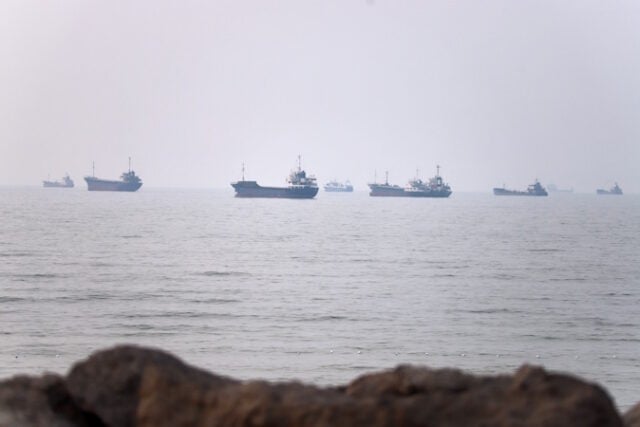
If you have been turning on the news lately, it can feel like a relentless flood of headlines about military deployments, missile strikes, and skyrocketing gas prices. The ongoing conflict involving the United States, Israel, and Iran has evolved into one of the most significant geopolitical crises in recent history. What started as localized military friction has expanded into a complex web of regional combat, economic turmoil, and strategic maneuvers across the Middle East.
Every operational success in the Middle East begins and ends with service members focused on their missions, including the U.S. blockade against Iran. As of July 21, U.S. forces have redirected 8 commercial vessels and disabled 1 to fully enforce the blockade. pic.twitter.com/e9020BcaCQ
— U.S. Central Command (@CENTCOM) July 21, 2026
BREAKING: A Saudi oil tanker is on fire after being struck by the Houthis approximately 70 km north of the Yemeni border, according to UKMTO.
The vessel had departed from Yanbu before the reported attack. The Yemeni Houthis later said “large-scale operations are underway.”… pic.twitter.com/RcUrtPA46X
— The Hormuz Report (@HormuzReport) July 23, 2026
Understanding what is actually happening behind the breaking news alerts can feel daunting. From the massive buildup of American troops to the volatile spikes in crude oil, gas prices, and global stock markets, the implications touch almost every aspect of the modern global economy. Here is a comprehensive, straightforward look at where the conflict stands, how neighboring countries are getting drawn in, and what it means for everyday consumers and investors.

U.S. Manpower Buildup and Escalating Direct Attacks
To grasp the scale of the ongoing war, you have to look at the massive influx of U.S. military power into the region. Beginning with initial deployments earlier this year and continuing into current operations, the Pentagon executed its largest Middle East force surge since the 2003 invasion of Iraq.
The U.S. Deployment Shift
The military presence is not just a defensive posture; it involves heavy air, naval, and ground combat logistics.
- Carrier Strike Groups: Naval assets, including carrier strike groups equipped with F/A-18 Super Hornets and F-35 stealth fighters, have taken position in CENTCOM’s operational waters.
- Specialized Army Divisions: Personnel from elite units—including the 82nd Airborne, 101st Airborne, 10th Mountain Division, and Special Forces units—have been dispatched to support regional defense and operational security.
- Air Superiority Assets: The U.S. Air Force deployed F-22 Raptors, F-15E Strike Eagles, and strategic refueling tankers to partner bases across the region.
A Deadly Tit-for-Tat
As the military footprint expanded, direct kinetic exchanges intensified dramatically. U.S. and Israeli airstrikes targeted Iranian Revolutionary Guard Corps (IRGC) command nodes, missile silos, and key infrastructure facilities. In response, Iranian forces launched hundreds of ballistic missiles and swarms of attack drones directed at U.S. bases, naval vessels, and key regional targets.
The human cost has been steep on both sides. Thousands of military personnel and civilians in Iran have been killed or injured, while U.S. forces have suffered casualties during drone strikes and controlled ordnance detonations. Meanwhile, basic civilian infrastructure—including power grids, bridges, and water desalination plants—has been severely damaged, leaving local communities bearing the heaviest burden.
How Neighboring Regional Countries Are Caught in the Crossfire
This war is far from an isolated duel inside Iranian borders. The conflict has spilled across frontiers, pulling in neighboring nations and proxy groups throughout the Middle East.
| Region / Country | Nature of Involvement & Regional Impact |
| Israel | Direct joint military operations with U.S. forces; active cross-border fronts. |
| Saudi Arabia | Air defense systems on high alert; threats to energy infrastructure. |
| UAE & Kuwait | Intercepting incoming drones/missiles; hosting allied air bases. |
| Jordan | Severe airspace disruptions; missile interception zones over territorial airspace. |
| Lebanon (Hezbollah) | Renewed heavy combat along the southern Lebanese border. |
| Yemen (Houthis) | Threats to Red Sea commercial shipping lanes and long-range missile launches. |
Gulf Cooperation Council (GCC) Nations
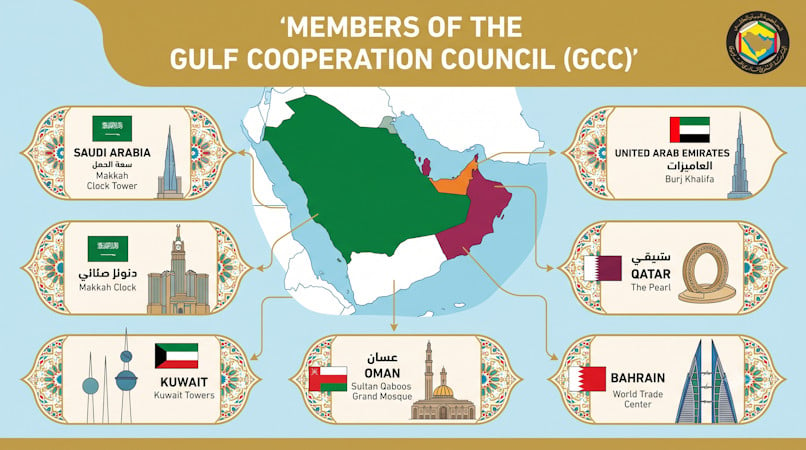
Persian Gulf nations like Saudi Arabia, the United Arab Emirates, and Kuwait have found themselves in a high-stakes balancing act. While these countries host vital American military installations, they have been subjected to incoming Iranian drone and missile salvos aimed at disrupting U.S. logistics and regional trade. Air defense systems across the Gulf are operating continuously to intercept airborne threats.
Jordan and the Wider Airspace Crisis
Jordan’s airspace has repeatedly become a transit corridor for long-range projectiles launched toward Israel or American positions. Interceptions over Jordanian territory have forced civil aviation authorities like the European Union Aviation Safety Agency (EASA) to issue strict airspace travel advisories across the region.
Proxies and Border Fronts
In Lebanon, hostilities between Israel and Hezbollah reignited with intensity, creating an active northern front. Simultaneously, Houthi forces in Yemen have issued fresh warnings targeting Red Sea shipping routes, raising fears of renewed naval disruptions in critical maritime chokepoints.
Economic Impacts: Crude Oil, Gas Prices, and Wall Street
Whenever a major conflict breaks out in the heart of global energy production, economic shocks follow quickly. The 2026 war has proven to be a stark example.
Key Takeaway for Consumers & Investors:
The Strait of Hormuz handles nearly 20% of global oil traffic. Even temporary disruptions or blockades in the strait lead to immediate price surges at local gas stations and elevated volatility across stock portfolios.
The Strait of Hormuz Chokepoint & Crude Oil
The centerpiece of economic anxiety is the Strait of Hormuz—the narrow waterway separating Iran from the Arabian Peninsula. Early in the conflict, Iran instituted naval blockades and live-fire drills, stranding millions of barrels of crude oil per day. Brent crude prices shot up dramatically, topping $100 to $120 per barrel during initial supply panics. Energy agencies worldwide were forced to release emergency strategic reserves to stabilize supply lines.
Gasoline Spikes at the Pump
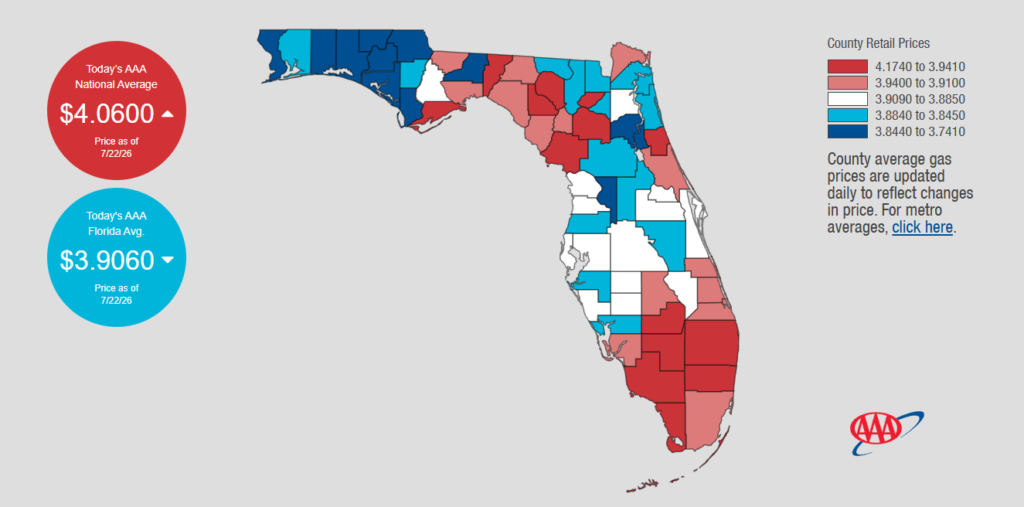
For everyday drivers, global crude spikes translate directly into higher prices at the pump. In the U.S. and Europe, retail gasoline jumped steadily week after week. With refineries shifting production to prioritize military supply and jet fuel, gasoline supply margins narrowed, adding extra upward pressure on everyday fuel costs.
Stock Market Volatility and Inflation Fears

Financial markets have experienced significant swings. While defense and aerospace stocks surged on expectations of expanded military spending, broader equity indices faced headwinds.
- Inflation Concerns: Sustained high energy prices feed directly into consumer inflation, raising the cost of shipping goods and manufacturing.
- Interest Rate Delays: Central banks, including the Federal Reserve and the European Central Bank, have had to rethink interest rate policies, as energy-driven inflation threatens to delay expected rate cuts or risk broader economic slowdowns.
Looking Ahead: What to Watch Next
As diplomatic negotiations ebb and flow, the situation remains fluid. Brief ceasefires and draft memorandum frameworks have struggled to hold under the pressure of renewed tactical strikes. Moving forward, key metrics to watch include whether shipping corridors like the Strait of Hormuz can maintain steady commercial passage, whether diplomatic backchannels can re-engage, and how global markets adapt to prolonged energy adjustments.
Navigating news of war is never easy, but tracking the core levers—military force expansion, regional diplomatic shifts, and energy supply chains—helps cut through the noise and highlight what matters most.
Sources and Links:
- Wikipedia – 2026 United States military buildup in the Middle East https://en.wikipedia.org/wiki/2026_United_States_military_buildup_in_the_Middle_East
- CBS News – Iran War Updates: U.S. launches 12th straight night of strikes as threats to oil trade deepen https://www.cbsnews.com/live-updates/iran-war-us-trump-strait-hormuz-oil-prices-red-sea-houthis/
- The Guardian – New US military death as Israel warns Tehran’s attacks coming close https://www.theguardian.com/us-news/2026/jul/19/military-service-member-death-iran-airstrikes
- Morgan Stanley – Iran Conflict: Seven Takeaways for Investors https://www.morganstanley.com/insights/articles/iran-war-oil-inflation-stock-market-2026
- Wikipedia – Economic impact of the 2026 Iran war https://en.wikipedia.org/wiki/Economic_impact_of_the_2026_Iran_war
- Grist Magazine – Why the Iran war hasn’t caused a global oil crisis — yet https://grist.org/energy/why-the-iran-war-hasnt-caused-a-global-oil-crisis-yet/
- American Jewish Committee (AJC) – The Iran Strikes, Explained: How We Got Here and What It Means https://www.ajc.org/news/the-iran-strikes-explained-how-we-got-here-and-what-it-means
- Wikipedia – 2026 Iran war https://en.wikipedia.org/wiki/2026_Iran_war
- UN News – Middle East: Civilians again under fire as US-Iran strikes continue https://news.un.org/en/story/2026/07/1167979
Disclaimer
Artificial Intelligence Disclosure & Legal Disclaimer
AI Content Policy.
To provide our readers with timely and comprehensive coverage, South Florida Reporter uses artificial intelligence (AI) to assist in producing certain articles and visual content.
Articles: AI may be used to assist in research, structural drafting, or data analysis. All AI-assisted text is reviewed and edited by our team to ensure accuracy and adherence to our editorial standards.
Images: Any imagery generated or significantly altered by AI is clearly marked with a disclaimer or watermark to distinguish it from traditional photography or editorial illustrations.
General Disclaimer
The information contained in South Florida Reporter is for general information purposes only.
South Florida Reporter assumes no responsibility for errors or omissions in the contents of the Service. In no event shall South Florida Reporter be liable for any special, direct, indirect, consequential, or incidental damages or any damages whatsoever, whether in an action of contract, negligence or other tort, arising out of or in connection with the use of the Service or the contents of the Service.
The Company reserves the right to make additions, deletions, or modifications to the contents of the Service at any time without prior notice. The Company does not warrant that the Service is free of viruses or other harmful components.