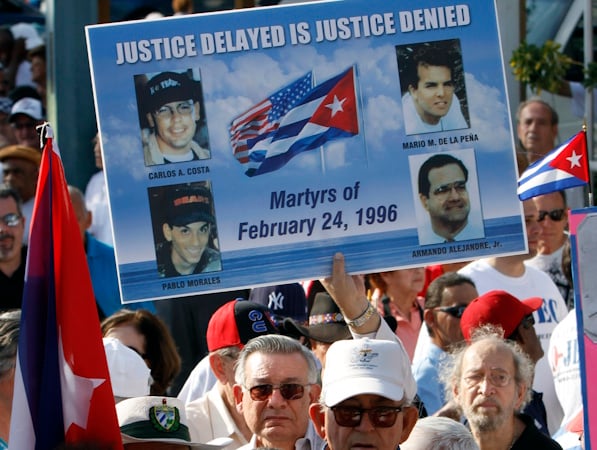
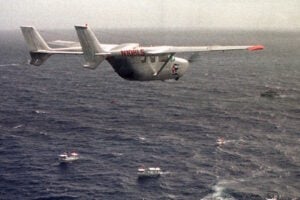
On February 24, 1996, the blue skies over the Florida Straits became the backdrop for an international crisis that would permanently reshape United States-Cuba relations (Lowenfeld, 1996). Two unarmed Cessna 337 Skymaster aircraft, operated by the Miami-based Cuban exile group Hermanos al Rescate (Brothers to the Rescue), were vaporized by air-to-air missiles fired by Cuban military MiG fighters (Lowenfeld, 1996). The attack resulted in the deaths of four men: Carlos Costa, Armando Alejandre Jr., Mario de la Peña, and Pablo Morales.
[The video of the actual radio transmission of the shootdown is below the indictment video]
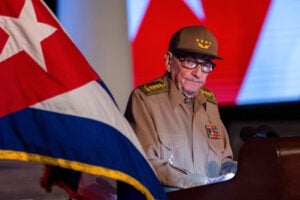
The incident triggered decades of legal warfare in U.S. federal courts. It serves as a stark case study in the intersection of international law, national sovereignty, and extraterritorial criminal jurisdiction. For years, the families of the victims, alongside right-wing Cuban-American advocacy groups, have aggressively pushed the United States Department of Justice to issue a formal criminal indictment against Raúl Castro Ruz (Staff, 2001). As Cuba’s long-serving Minister of the Revolutionary Armed Forces (MINFAR) at the time, Raúl Castro openly admitted to his direct operational role in authorizing the lethal engagement (Lowenfeld, 1996).
The Fatal Flight: February 24, 1996
Brothers to the Rescue was founded in 1991 by José Basulto, a veteran of the Bay of Pigs invasion. The group initially operated with a humanitarian mandate: patrolling the Florida Straits to spot balseros (Cuban rafters) fleeing the severe economic devastation of Cuba’s “Special Period” and relaying their coordinates to the U.S. Coast Guard.

By 1995, however, the group’s operations had taken on a explicitly political edge. Basulto and his pilots began flying directly into Cuban national airspace, occasionally buzzing downtown Havana to scatter anti-regime leaflets and disrupt state communications (Schena, 2008).
“We discussed it with Raúl… and the Joint Chiefs of Staff,” Fidel Castro stated in an interview detailing the lead-up to the event. “We agreed that what happened on January 9 and 13 [the leaflet drops] cannot happen again. We gave the order to the head of the air force… They did what they believe is the right thing. I take responsibility for what happened.” (Lowenfeld, 1996, p. 420).
On the afternoon of February 24, three Brothers to the Rescue Cessnas took off from Opa-locka Airport in Florida. Although the U.S. Federal Aviation Administration (FAA) and secret Cuban state intelligence agents embedded within Miami’s exile community had warned of heightened military readiness in Havana, the flight proceeded.
[Miami Flight Path] ──> (24th Parallel / International Airspace Border)
                               │
   [Cessna #1: Basulto]  ──────┼──> Breached Cuban Airspace (Escaped)
   [Cessna #2: Costa]    ───X  │ <── Shot Down by MiG-29 (3:21 PM)
   [Cessna #3: de la Peña] ─X  │ <── Shot Down by MiG-23 (3:27 PM)
At approximately 3:15 PM, Cuban ground control scrambled a MiG-29UB and a MiG-23UB interceptor. According to subsequent investigations conducted by the International Civil Aviation Organization (ICAO) and verified via cockpit audio recordings intercepted by U.S. intelligence, the MiG pilots locked their radars onto the slow-moving, dual-engine civilian aircraft.
At 3:21 PM, a missile launched from the MiG-29 struck the first Cessna, piloted by Carlos Costa. Six minutes later, at 3:27 PM, the second Cessna, carrying Mario de la Peña and airborne observer Pablo Morales, was obliterated. José Basulto’s plane, flying further south and deep within the technical boundaries of Cuban national airspace, managed to escape into a cloud bank and returned safely to Florida.
Geopolitical Fallout and the Codification of the Embargo
The immediate political shockwave fundamentally altered the Clinton administration’s tentative “people-to-people” engagement strategy with Havana (Vagnoux, 2017). Prior to the shootdown, President Bill Clinton had signaled an inclination to veto the pending Cuban Liberty and Democratic Solidarity Act—better known as the Helms-Burton Act—which sought to severely tighten economic sanctions against the island (Lowenfeld, 1996). Critics argued the bill infringed upon executive branch authority over foreign policy and created severe trade friction with key allies like Canada, Mexico, and the European Union (Kiger, 2009).
The deaths of three U.S. citizens and one legal permanent resident instantly consolidated bipartisan outrage in Washington. Senator Jesse Helms famously proclaimed that the legislation would be on the President’s desk “before the blood dries on Castro’s hands” (Lowenfeld, 1996, p. 420).
On March 12, 1996, surrounded by the grieving families of the four aviators, President Clinton signed the Helms-Burton Act into law (Kiger, 2009). The legislation took the unprecedented step of freezing the existing U.S. economic embargo against Cuba into permanent statutory law (Kiger, 2009). This effectively stripped future American presidents of the executive authority to lift the embargo through executive order unless a transition government in Havana explicitly excluded both Fidel and Raúl Castro (Kiger, 2009).
The Legal Arena: Civil Judgments and Spies
With criminal charges against the top tier of the Cuban leadership stalled by diplomatic immunity and geopolitical caution, the families of the victims turned to the civil court system. In 1997, utilizing the newly enacted Foreign Sovereign Immunities Act (FSIA) exceptions for state sponsors of terrorism, federal attorneys representing the relatives filed suit against the Republic of Cuba and the Cuban Revolutionary Armed Forces.
U.S. District Court Judge Lawrence King presided over the emotional proceedings in Miami. The court reviewed extensive radar data and radio transmissions and confirmed that the two aircraft were systematically destroyed while operating well within international airspace north of the 24th parallel (Lowenfeld, 1996).
Judge King ultimately leveled a staggering $187.6 million judgment against the Cuban government for wrongful death and punitive damages (Staff, 2001). While Cuba ignored the proceedings, the families eventually recovered a portion of the funds (~$96 million) after the U.S. Treasury Department authorized the garnishment of frozen Cuban assets held in escrow accounts belonging to U.S. telecommunications companies operating long-distance lines to the island.
The Wasp Network (La Red Avispa)
The factual foundation for a potential criminal case against Raúl Castro widened considerably in 1998, when the FBI dismantled the Red Avispa (the Wasp Network)—a sophisticated ring of elite Cuban intelligence officers operating deep within South Florida.
       [ MINFAR / Raúl Castro ] (Havana)
                  │
                  ▼
     [ Gerardo Hernández ] (Network "Manuel" - Miami)
                  │
        ┌─────────┴─────────┐
        ▼                   ▼
 [ Juan Pablo Roque ]  [ René González ]
  (Infiltrated BTR)     (Infiltrated BTR)
The ringleader of the network, Gerardo Hernández, was charged with an array of espionage offenses, alongside conspiracy to commit murder. Federal prosecutors successfully demonstrated that Hernández had funneled critical operational intelligence on Brothers to the Rescue’s flight schedules and coordinates directly back to Havana’s Directorate of Military Intelligence (DMI), which answered directly to Minister Raúl Castro.
The trial revealed that the Cuban government had deliberately embedded agents like Juan Pablo Roque—a former Cuban military pilot who defected to Miami, joined Brothers to the Rescue, and then mysteriously fled back to Havana a day before the shootdown—to orchestrate the precise timing of the military interception. In 2001, a Miami jury found Hernández guilty, and he was sentenced to two consecutive life terms in federal prison (TOGHSM, 2011). He was later released in December 2014 as part of a high-profile prisoner exchange during the Obama-led diplomatic opening with Cuba.
The Case for Indicting Raúl Castro
The conviction of Gerardo Hernández established a clear legal precedent: the downing of the aircraft was a premeditated, coordinated criminal conspiracy executed by the Cuban state apparatus. For decades, federal prosecutors in the Southern District of Florida drafted indictments against various members of the chain of command. In August 2003, the U.S. government unsealed indictments against General Rubén Martínez Puente, the head of the Cuban Air Force, and the MiG pilots who pulled the triggers, Lorenzo Alberto Pérez Pérez and Francisco Pérez Pérez.
However, the primary architect of the operation—Raúl Castro—was left off the formal criminal charge sheets.
                  [ CHAIN OF COMMAND ]

             Fidel Castro Ruz (Head of State)
                            │
                            ▼
           Raúl Castro Ruz (Minister of MINFAR)  <── Primary Target for Indictment
                            │
                            ▼
        Gen. Rubén Martínez Puente (Air Force Chief) <── Indicted 2003
                            │
               ┌────────────┴────────────┐
               ▼                         ▼
   Maj. Lorenzo A. Pérez Pérez   Capt. Francisco Pérez Pérez
         (MiG Pilot)                (MiG Co-Pilot/Weapons)
The Legal Framework for Extraterritorial Jurisdiction
The U.S. Department of Justice possesses the clear statutory authority to prosecute foreign nationals for murder committed outside domestic boundaries under specific conditions. In this instance, prosecutors rely on three primary pillars of federal criminal law:
- 18 U.S.C. § 2332a (Use of Weapons of Mass Destruction): Broadly defined to include the deployment of military-grade missiles against civilian targets resulting in the death of U.S. citizens.
- 18 U.S.C. § 32 (Destruction of Aircraft): Fulfills international treaty obligations regarding the safety of civil aviation, providing absolute jurisdiction over any individual who willfully destroys a civil aircraft registered in the United States.
- Conspiracy to Commit Murder in International Airspace: Utilizing the precedent established in United States v. Gerardo Hernández, showing that a continuous chain of command planned and executed the killings.
The Hurdle of Head of State Immunity
The primary historical impediment to indicting Raúl Castro has never been a lack of evidence; it has been the deeply entrenched doctrine of Head of State Immunity under customary international law.
When Fidel Castro fell critically ill in July 2006, he formally delegated his provisional executive authority to Raúl (Wong-Diaz, 2006). By February 2008, Raúl Castro was officially confirmed as the President of the Councils of State and Ministers, a title he held until 2018 (Sullivan, 2008).
Under long-standing U.S. State Department protocol and international legal norms, sitting heads of state, heads of government, and foreign ministers are entirely immune from the criminal jurisdiction of foreign courts. This prevents foreign leaders from being arrested or prosecuted while traveling abroad.
However, because Raúl Castro stepped down from the formal presidency in 2018 and relinquished his ultimate post as the First Secretary of the Communist Party of Cuba in 2021, his absolute immunity status has significantly eroded. Legal scholars note that while residual functional immunity (ratione materiae) continues to protect official acts performed by a state executive while in office, it does not broadly shield individuals from international war crimes, crimes against humanity, or gross violations of jus cogens norms—such as the premeditated slaughter of unarmed civilians in international airspace (Staff, 2001).
Conclusion: The Long Road of International Justice
Thirty years after the smoke cleared over the Florida Straits, the Brothers to the Rescue shootdown remains an open wound in the political landscape of Miami and Havana. The technical, tactical, and legal evidence compiled by international investigators, federal prosecutors, and intelligence agencies paints a definitive picture of a cross-border conspiracy originating at the highest levels of the Cuban military command.
While a physical trial of Raúl Castro within a U.S. federal courtroom remains highly unlikely given Cuba’s absolute refusal to extradite its revolutionary leadership, the push for a formal criminal indictment carries immense symbolic weight. It serves as an unyielding reminder that under international law, the passage of time does not diminish the culpability of those who authorize the extrajudicial termination of civilian lives over international waters.
Sources Used and Links:
- Alvi, H. (2011). Case Studies in Policy Making. Twelfth Edition. Defense Technical Information Center (DTIC). https://apps.dtic.mil/sti/tr/pdf/ADA549607.pdf
- Dunning, J. (1998). The Helms-Burton Act: A Step in the Wrong Direction for United States Policy Toward Cuba. Washington University Journal of Urban and Contemporary Law, 54(1), 213–245. https://openscholarship.wustl.edu/cgi/viewcontent.cgi?article=1024&context=law_urbanlaw
- Galliano, R. J. (1999). U.S.-Cuba Policy Report. Latin American Studies. https://www.latinamericanstudies.org/us-cuba/us-cuba-policy-report-1999-2000.pdf
- Kiger, P. J. (2009). Squeeze Play: The United States, Cuba, and the Helms-Burton Act. Center for Public Integrity. https://cloudfront-files-1.publicintegrity.org/legacy_projects/pdf_reports/SQUEEZEPLAY.pdf
- Lopez-Levy, A. (2014). Cuba After Fidel: Economic Reform, Political Liberalization and Foreign Policy (2006–2014). University of Denver. https://digitalcommons.du.edu/context/etd/article/2212/viewcontent/LopezLevy_denver_0061D_11415.pdf
- Lowenfeld, A. F. (1996). Congress and Cuba: The Helms-Burton Act. American Journal of International Law, 90(3), 419–434. https://www.cambridge.org/core/journals/american-journal-of-international-law/article/congress-and-cuba-the-helmsburton-act/B7716DDDB08C99DB316890C09AAFBF25
- Mariño, S. M. C. (2002). U.S.-Cuban Relations During the Clinton Administration. Latin American Perspectives, 29(4), 47–76. https://library.fes.de/libalt/journals/swetsfulltext/16126202.pdf
- Schena, M. C. (2008). The ideology of free trade and the Cuba exception. Louisiana State University Repository. https://repository.lsu.edu/cgi/viewcontent.cgi?article=1236&context=gradschool_theses
- Staff, L. (2001). Cuban Exiles Sue Castro in Court. NotiSur – South American Political and Economic Affairs. University of New Mexico Digital Repository. https://digitalrepository.unm.edu/cgi/viewcontent.cgi?article=9889&context=noticen
- Sullivan, M. P. (2008). Cuba: Issues for the 110th Congress. CRS Report for Congress. National Agricultural Law Center. https://nationalaglawcenter.org/wp-content/uploads/assets/crs/RL33819.pdf
- TOGHSM. (2011). Gerardo Hernandez v. United States of America. Case No. 10-21957-Civ-LENARD. U.S. District Court for the Southern District of Florida. http://www.freethefive.org/legalFront/GerardoReplyMemo81611.pdf
- Vagnoux, I. (2017). Interview with Dr. Arturo Valenzuela on the United States-Cuba relationship. IdeAs, 9. https://journals.openedition.org/ideas/2230
- Wong-Diaz, F. (2006). Castro’s Cuba: Quo Vadis? Strategic Studies Institute, US Army War College Press. https://press.armywarcollege.edu/cgi/viewcontent.cgi?article=1363&context=monographs
Disclaimer
Artificial Intelligence Disclosure & Legal Disclaimer
AI Content Policy.
To provide our readers with timely and comprehensive coverage, South Florida Reporter uses artificial intelligence (AI) to assist in producing certain articles and visual content.
Articles: AI may be used to assist in research, structural drafting, or data analysis. All AI-assisted text is reviewed and edited by our team to ensure accuracy and adherence to our editorial standards.
Images: Any imagery generated or significantly altered by AI is clearly marked with a disclaimer or watermark to distinguish it from traditional photography or editorial illustrations.
General Disclaimer
The information contained in South Florida Reporter is for general information purposes only.
South Florida Reporter assumes no responsibility for errors or omissions in the contents of the Service. In no event shall South Florida Reporter be liable for any special, direct, indirect, consequential, or incidental damages or any damages whatsoever, whether in an action of contract, negligence or other tort, arising out of or in connection with the use of the Service or the contents of the Service.
The Company reserves the right to make additions, deletions, or modifications to the contents of the Service at any time without prior notice. The Company does not warrant that the Service is free of viruses or other harmful components.