In a seismic shift for the American aviation landscape, Spirit Airlines, the pioneer of the “ultra-low-cost” carrier model in the United States, officially ceased all operations in the early hours of Saturday, May 2, 2026. The shutdown, which followed years of financial turbulence and two separate bankruptcy filings in 2024 and 2025, has left thousands of passengers stranded and an entire workforce in limbo.
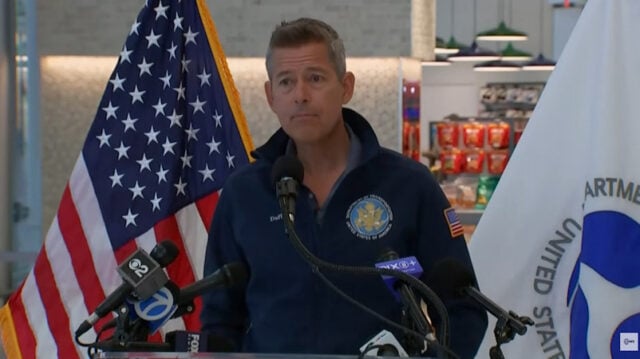
Responding to the crisis with immediate effect, U.S. Transportation Secretary Sean Duffy announced a comprehensive industry-wide “Rescue Package.” This coordination between the Department of Transportation (DOT) and nine major U.S. carriers aims to prevent a travel catastrophe, ensuring that passengers with canceled Spirit tickets can reach their destinations without being subjected to predatory “last-minute” pricing.
The Sudden End of the “Yellow Bird”
The final flight of the Florida-based carrier, Flight 1833 from Detroit to Dallas, touched down just after midnight on Saturday. Shortly thereafter, the company issued a stark statement: “All flights have been canceled and customer service is no longer available.”

The closure marks the first major U.S. airline collapse for purely financial reasons in over 25 years. Despite a last-ditch effort by the Trump administration to negotiate a $500 million federal bailout, talks with Spirit’s creditors collapsed on Friday. While some creditors were willing to accept the government’s terms, a coalition of major bondholders—including prominent hedge funds and investment groups—balked at the deal, preferring a liquidation of the company’s assets.
Spirit’s leadership attributed the final blow to a “sudden and sustained” rise in oil prices, exacerbated by the ongoing conflict in Iran, which crippled the thin profit margins of the low-cost model. The airline leaves behind nearly $2.4 billion in long-term debt.
Secretary Duffy’s Response and the Political Fallout
In a press briefing from Washington, D.C., Secretary Duffy was quick to frame the shutdown as a legacy of the previous administration. Duffy specifically cited the 2024 decision by the Biden-Buttigieg administration to block the proposed merger between JetBlue and Spirit.
“Yet another mess the traveling public has to inherit thanks to the radical policies of Joe Biden and Pete Buttigieg,” Duffy stated. “In blocking the JetBlue/Spirit merger in 2024, they turned their backs on the American consumer and our great aviation workforce. Regardless of how we got here, the Trump Administration is committed to taking care of you and your family when you fly.”
Duffy emphasized that the DOT had spent the last 24 hours “activating” airline partners to ensure that Spirit’s exit from the market did not lead to skyrocketing fares or stranded families.
The Industry Rescue Plan: Rebooking and Price Caps
The primary pillar of the federal response is a negotiated agreement with nine carriers: American, United, Delta, JetBlue, Southwest, Allegiant, Frontier, Avelo, and Breeze. These airlines have committed to supporting Spirit passengers through a combination of capped ticket prices, discounted “rescue fares,” and expanded route capacity.
Capped Fares for Spirit Ticketholders
To protect consumers from price gouging, four of the nation’s largest airlines have implemented strict price caps for those who can prove they had a Spirit booking.
| Airline | Duration of Offer | How to Access |
| JetBlue | 72 Hours | Online/Phone with Spirit Confirmation Number |
| Southwest | 72 Hours | In-person only at airport ticket counters |
| Delta | 5 Days | Online/Phone via dedicated Spirit support line |
| United | 2 Weeks | Dedicated rebooking portal on United.com |
Deep Discounts and Route Freezes
Other carriers are taking more aggressive marketing stances to capture Spirit’s former market share while providing relief:
- Frontier Airlines: Perhaps the most aggressive responder, Frontier is offering “rescue fares” with up to 50% off base prices across its network until May 10, 2026. This is particularly significant as Frontier already serves over 100 routes that overlap with Spirit’s former network.
- Allegiant Air: The carrier has committed to a complete price freeze on all routes that overlap with Spirit to prevent localized monopolies from driving up costs in the short term.
- American and Delta: Both carriers have announced specific “high-volume” discounts for routes previously dominated by Spirit, such as those flying into Fort Lauderdale (FLL) and Orlando (MCO).
Support for the Displaced Workforce
The shutdown has placed thousands of pilots, flight attendants, and ground crew members in a precarious position. Secretary Duffy noted that the rescue efforts extend beyond passengers to the employees who kept the airline running.
- Repatriation Flights: Most major U.S. carriers are allowing Spirit employees to use spare “jump seats” and extending travel pass benefits to help them return home from outstations.
- Fast-Track Hiring: American Airlines and United Airlines have launched dedicated “Spirit Workforce Microsites” to streamline the application process. These carriers, along with others, are offering “preferential employment interviews” to help former Spirit team members jump the queue for open positions.
- Training Credits: Industry leaders are discussing how to credit Spirit’s training hours toward new certifications to ensure a seamless transition for technical staff.
Passenger Rights and Refund Logistics
While the rebooking efforts provide a path forward, the question of financial restitution remains complex. Because Spirit has ceased operations, traditional customer service channels are non-existent. The DOT has issued the following guidance for passengers seeking their money back:
- Automatic Credit/Debit Refunds: Spirit has stated it will attempt to automatically process refunds for tickets purchased directly through the airline using a credit or debit card.
- The “Chargeback” Strategy: Under the Fair Credit Billing Act, passengers who do not receive an automatic refund should immediately contact their credit card issuer to request a chargeback for “services not rendered.”
- Travel Insurance: Passengers are urged to check their policies for “insolvency” or “service cessation” clauses.
- Bankruptcy Claims: For those who paid with vouchers or “Free Spirit” points, the outlook is bleaker. These individuals may need to file a formal “proof of claim” with the bankruptcy court, though these claims are typically settled last and may only result in pennies on the dollar.
The End of an Era: The Legacy of Spirit Airlines
Spirit Airlines leaves behind a complicated legacy. Over its 34-year history, it became the airline everyone loved to hate—while simultaneously benefiting from the “Spirit Effect.” By unbundling every service (from carry-on bags to water), Spirit forced larger legacy carriers to introduce Basic Economy fares, arguably lowering the base price of travel for millions of Americans who previously couldn’t afford to fly.
The final demise of the airline raises significant questions about the future of low-cost travel in the United States. With Spirit gone and Frontier aggressively expanding, the market is poised for further consolidation. Industry analysts warn that while the “rescue fares” provide temporary relief, the long-term absence of Spirit’s aggressive pricing could lead to a permanent increase in domestic airfares, particularly in Spirit strongholds like Las Vegas and South Florida.
Secretary Duffy, however, remains optimistic about the resilience of the market. “The American aviation industry is the strongest in the world,” he concluded. “We are seeing that strength today as competitors step up to help their fellow citizens. We will ensure the skies remain open, competitive, and affordable.”
Sources Used and Links
- U.S. Department of Transportation (Official Briefing): Trump’s Transportation Secretary Sean P. Duffy Secures Relief for Spirit Airlines’ Flyers and Employees https://www.transportation.gov/briefing-room/trumps-transportation-secretary-sean-p-duffy-secures-relief-spirit-airlines-flyers
- Hindustan Times: Spirit Airlines shutdown: US govt declares major support for passengers, workers amid major chaos https://www.hindustantimes.com/world-news/us-news/spirit-airlines-shutdown-us-govt-declares-major-support-for-passengers-workers-amid-chaos-101777732426591.html
- U.S. House of Representatives (Office of Debbie Wasserman Schultz): Constituent Services: Spirit Airlines Updates https://wassermanschultz.house.gov/constituent-services/casework/spirit.htm
- Financial Times: Spirit Airlines winds down operations after bailout talks founder https://www.ft.com/content/18ab5a6a-397a-47b5-af06-f8e846b45bf1
- St Pete Catalyst: Spirit Airlines is out of business, effective today https://stpetecatalyst.com/spirit-airlines-is-out-of-business-effective-today/
- The Economic Times: Frontier responds to Spirit Airlines shutdown with discounted ‘rescue fares’ https://m.economictimes.com/us/news/frontier-responds-to-spirit-airlines-shutdown-with-discounted-rescue-fares-for-stranded-passengers/articleshow/130712655.cms
- Frontier Airlines Newsroom: Frontier Airlines Announces Discounted Rescue Fares to Support Spirit Airlines Customers https://news.flyfrontier.com/frontier-airlines-announces-discounted-rescue-fares-to-support-spirit-airlines-customers/
- ABC10: US officials pledge support for Spirit Airlines flyers and employees https://www.abc10.com/article/news/nation-world/united-states-transportation-pledge-secure-relief-help-spirit-airlines-ticketholders-travelers-employees/507-41245c4d-595a-4227-bf08-e89d42c1d35a
Disclaimer
Artificial Intelligence Disclosure & Legal Disclaimer
AI Content Policy.
To provide our readers with timely and comprehensive coverage, South Florida Reporter uses artificial intelligence (AI) to assist in producing certain articles and visual content.
Articles: AI may be used to assist in research, structural drafting, or data analysis. All AI-assisted text is reviewed and edited by our team to ensure accuracy and adherence to our editorial standards.
Images: Any imagery generated or significantly altered by AI is clearly marked with a disclaimer or watermark to distinguish it from traditional photography or editorial illustrations.
General Disclaimer
The information contained in South Florida Reporter is for general information purposes only.
South Florida Reporter assumes no responsibility for errors or omissions in the contents of the Service. In no event shall South Florida Reporter be liable for any special, direct, indirect, consequential, or incidental damages or any damages whatsoever, whether in an action of contract, negligence or other tort, arising out of or in connection with the use of the Service or the contents of the Service.
The Company reserves the right to make additions, deletions, or modifications to the contents of the Service at any time without prior notice. The Company does not warrant that the Service is free of viruses or other harmful components.