JERUSALEM — A fragile, two-month-old Middle East ceasefire collapsed in spectacular fashion Sunday night when Iran launched multiple barrages of ballistic missiles directly targeting northern Israel. The major military escalation follows intense Israeli airstrikes earlier in the day against Hezbollah targets in Beirut’s southern suburbs, completely upending diplomatic mediation efforts and raising the immediate threat of a broader regional war.
IRGC says it accepted a ceasefire with US on condition that it was “a ceasefire on all fronts”.
It said the US & Israel failed to meet their commitment by launching attacks in Lebanon & “violating ceasefire by repeatedly attacking Iranian shores & vessels in Strait of Hormuz,…
— Iran’s Today (@Iran) June 7, 2026
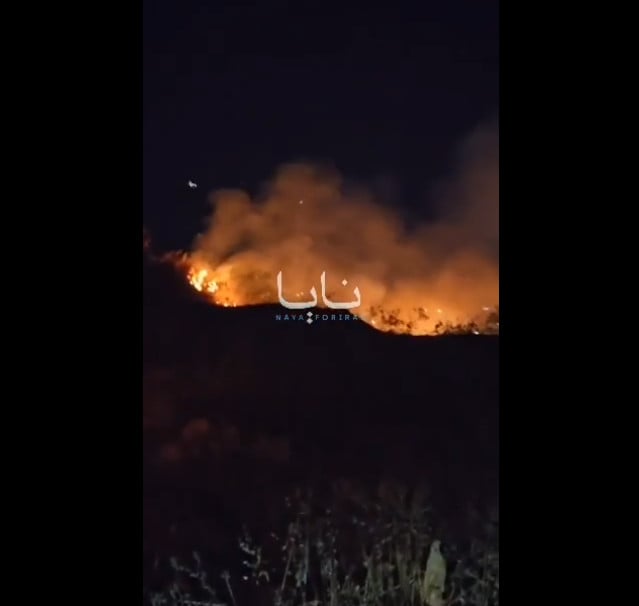
Fires have broken out in the northern occupied territories following direct hits by Iranian missiles. pic.twitter.com/JB8ssBrXho
— IRNA News Agency ☫ (@IrnaEnglish) June 7, 2026

The Israel Defense Forces (IDF) and Home Front Command issued urgent nationwide alerts, activating air defense networks as sirens wailed across northern Israeli cities. According to Israeli military officials, at least four separate waves of incoming missiles were detected originating from Iranian territory. While Israel’s multi-layered missile shield, including the Arrow and David’s Sling systems, engaged the incoming threats, the sudden bombardment forced hundreds of thousands of residents into protected bomb shelters and shattered the relative calm maintained since an April 8 truce.
Escalation Cycle: From Beirut to Tehran
The renewed hostilities began earlier on Sunday when Israeli fighter jets struck a residential building in the Dahiyeh district of southern Beirut—a known stronghold for the Iranian-backed militant group Hezbollah. The Lebanese Health Ministry reported that the strike killed two people and wounded 20 others. Israel defended the operation as a necessary retaliation for a Hezbollah drone strike on an army post in Dovev Barracks earlier that morning, which the IDF labeled a direct violation of the standing ceasefire.
However, Iran’s Islamic Revolutionary Guard Corps (IRGC) Top Joint Military Command quickly declared that the strikes on Beirut’s southern suburbs crossed “all red lines.” In a public broadcast via Iran’s state television network, Tehran announced the initiation of direct military operations against Israeli territory, warning that the Jewish state would face “more crushing and regretful blows” if operations in Lebanon expanded.
The IRGC statement added:
“We had previously warned that if the crimes in the Dahiyeh area of Beirut expand, we will attack targets in the occupied territories.”
The Air Defense Battle Over Northern Israel
As the missiles traversed regional airspace, the IDF mobilized its full defense capabilities. Witnesses in northern Israel reported hearing multiple thunderous explosions overhead as interceptors met the incoming ballistic targets. Initial military assessments indicated that while several missiles were successfully neutralized, the volume of the four distinct salvos tested the tracking and engagement capacity of regional commands.
In response to the unfolding threat, the Israeli Home Front Command rapidly dispatched emergency push alerts to mobile phones across the nation. Civilians were ordered to enter fortified safe rooms and underground shelters immediately, while temporary, stringent restrictions on public gatherings and educational activities were re-imposed across northern districts.
| Conflict Metric | Sunday, June 7, 2026 Status |
| Primary Aggressor | Islamic Republic of Iran (Direct Launch) |
| Target Zone | Northern Israel & Associated Security Sectors |
| Preceding Trigger | Israeli airstrike in Dahiyeh, Beirut (2 killed, 20 wounded) |
| Ceasefire Status | Fragile April 8 Truce Effectively Shattered |
| Civilian Impact | Nationwide Home Front alerts; thousands moved to shelters |
Geopolitical Fallout and the US Factor
The sudden collapse of the ceasefire severely complicates delicate trilateral negotiations involving Washington, Jerusalem, and Tehran. Prior to the missile strikes, Iranian diplomats had reportedly suspended face-to-face negotiations over their nuclear program and traffic protocols in the Strait of Hormuz, conditioning any future diplomatic progress on a permanent, verifiable halt to Israeli operations in Lebanon.
Adding to the diplomatic friction, Iran’s Parliament Speaker and top negotiator, Mohammad Baqer Qalibaf, explicitly threatened American military assets in the region via a statement on social media platform X. Qalibaf claimed that a tightening U.S. naval blockade on Iran, alongside Washington’s perceived “green light” for Israeli actions in Beirut, rendered both American bases and Israeli assets legitimate military targets.
“They are neither committed to a ceasefire nor believe in dialogue,” Qalibaf stated. “Through the naval blockade and violation of agreements regarding Lebanon, they showed that they only understand the language of power.”
Meanwhile, in Washington, domestic political pressure continues to shape the American response. In a recent interview broadcast on NBC News’ Meet the Press, U.S. President Donald Trump reiterated a hardline stance against Tehran, flatly refusing to unfreeze Iranian financial assets or ease international sanctions before a comprehensive regional peace deal is fully finalized and signed. “Comes after,” Trump stated regarding sanction relief. “Yeah. If they behave, if they do a good job, we start talking. Yeah.”
A Region on the Brink
The June 7 missile strike marks the gravest direct confrontation between Iran and Israel since the formal initiation of the wider conflict earlier this year. Military analysts express deep concern that the direct nature of the Iranian strikes—bypassing proxy forces like Hezbollah and Yemen’s Houthis to strike from Iranian soil—leaves Israeli leadership with little choice but to plan a robust, kinetic counter-response directly against Iranian command infrastructure.
With the April ceasefire in ruins, mediation efforts led by regional states and international powers have stalled. Emergency sessions of Israel’s security cabinet are currently underway in Tel Aviv to determine the scale and scope of the inevitable retaliation, while international monitoring groups warn that the Middle East has entered its most volatile security spiral of the decade.
Sources and Links
- Associated Press (AP): Israel says Iran launched a missile at it, in a first during fragile ceasefire
- Middle East Eye: Iran fires missiles at Israel in retaliation for continued attacks on Lebanon
- The Times of Israel: Iran launches missile attack on northern Israel
- The Media Line: Iran Launches 4 Barrages of Missiles at Israel After Warning of ‘Painful’ Retaliation for Beirut Strikes
- The Hindu (via AFP & Reuters): West Asia war LIVE: Israel army says territory being targeted by Iranian missiles
- Institute for the Study of War (ISW): Iran Update Special Report
Disclaimer
Artificial Intelligence Disclosure & Legal Disclaimer
AI Content Policy.
To provide our readers with timely and comprehensive coverage, South Florida Reporter uses artificial intelligence (AI) to assist in producing certain articles and visual content.
Articles: AI may be used to assist in research, structural drafting, or data analysis. All AI-assisted text is reviewed and edited by our team to ensure accuracy and adherence to our editorial standards.
Images: Any imagery generated or significantly altered by AI is clearly marked with a disclaimer or watermark to distinguish it from traditional photography or editorial illustrations.
General Disclaimer
The information contained in South Florida Reporter is for general information purposes only.
South Florida Reporter assumes no responsibility for errors or omissions in the contents of the Service. In no event shall South Florida Reporter be liable for any special, direct, indirect, consequential, or incidental damages or any damages whatsoever, whether in an action of contract, negligence or other tort, arising out of or in connection with the use of the Service or the contents of the Service.
The Company reserves the right to make additions, deletions, or modifications to the contents of the Service at any time without prior notice. The Company does not warrant that the Service is free of viruses or other harmful components.