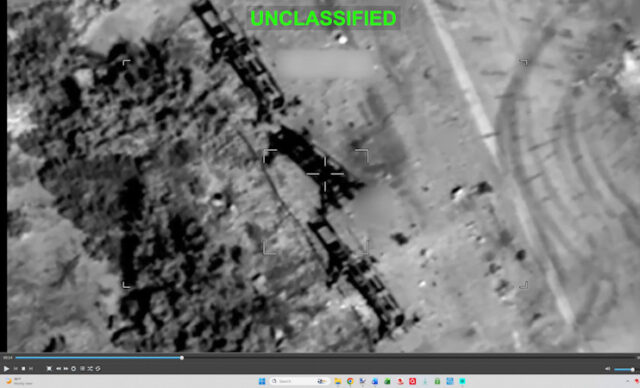
The geopolitical landscape of West Asia is undergoing a violent transformation. A fragile ceasefire negotiated just last month has abruptly disintegrated. Even as a multi-city funeral procession concluded today, July 9, 2026, explosions rocked military infrastructure across Iran, and retaliatory ballistic missiles targeted American strategic interests in the Persian Gulf. The long-standing shadow war has mutated into a sustained, high-intensity conflict with no clear endgame.
IRGC Releases Footage of Retaliatory Strikes on US Military Bases in Kuwait, Bahrainhttps://t.co/p1J9xNcl8H pic.twitter.com/kuGUKMNSUR
— Fars News Agency (@EnglishFars) July 9, 2026
The Fall and Farewell of Ayatollah Khamenei
The current explosion of violence traces directly back to February 28, 2026, when a U.S.-backed Israeli air campaign, code-named Operation Epic Fury, assassinated Iran’s Supreme Leader, Ayatollah Ali Khamenei, inside his heavily fortified Tehran compound. The precision strike decimated Iran’s primary ideological anchor, killing dozens of senior intelligence officials and throwing the clerical establishment into defensive disarray.

Today, July 9, 2026, this crisis culminated in a massive state funeral inside the holy city of Mashhad, where an estimated 15 million black-clad mourners flooded the streets surrounding the Shrine of Imam Reza. While the state orchestrated the multi-city procession to project geopolitical resilience, the event was instantly consumed by demands for blood retribution. Mourners raised red flags demanding vengeance against Washington, even as the regime’s newly named successor, Mojtaba Khamenei, remained entirely hidden from public view due to severe blast injuries sustained in that initial February strike. This high-profile concealment has exposed profound security vulnerabilities at the very apex of the Iranian leadership, leaving the nation deeply vulnerable as direct military hostilities reignite across the entire theater.
The Regional Front: Iran’s Attacks on Other Countries
Iran’s overarching military philosophy has long dictated that the nation must fight its battles beyond its own borders to protect the core of the Islamic Republic. This proxy-heavy defense strategy has increasingly manifested as direct kinetic aggression against an array of neighboring sovereign nations.
- Direct Ballistic Warfare Against Israel: The historical reliance on regional proxies like Lebanon’s Hezbollah or Hamas in Gaza was fundamentally upended when Iran initiated massive, direct bombardments from its own soil. Iranian forces launched more than 300 attack drones and cruise missiles in an initial wave, followed weeks later by a secondary barrage of 180 advanced ballistic missiles targeting Israeli airbases.
- Destabilization of the Arab Gulf States: In an effort to punish regional states aligned with Western defensive networks, Tehran has routinely expanded its targeting architecture. The United Arab Emirates, Saudi Arabia, Bahrain, and Kuwait have all faced persistent drone incursions and missile threats aimed directly at oil processing facilities, desalination plants, and commercial shipping channels.
- Violations of Iraq, Syria, and Pakistan: Tehran has routinely ignored international borders by launching precision ballistic missiles into the Kurdistan Region of Iraq (KRI) and northern Syria under the pretext of eradicating Western espionage cells. This aggressive outward projection even triggered a brief, volatile border conflict with Pakistan, during which the two heavily armed neighbors traded deadly cross-border missile strikes before diplomatic channels enforced a temporary de-escalation.
Today’s Breakdown and Clashes
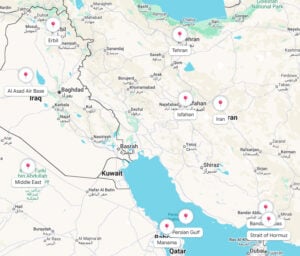
The fragile truce signed last month in Islamabad was meant to freeze active hostilities while international mediators structured a long-term diplomatic off-ramp. Today, that truce lies in ruins.
The U.S. military launched a sweeping aerial campaign, striking ninety distinct military targets across Iran. Crucially, several of these precision strikes detonated within the immediate security perimeter of an active Iranian nuclear power plant, signaling a shift toward dismantling Iran’s atomic infrastructure.
Iran’s response was immediate and disruptive. Beyond launching missiles at neighboring Gulf states, Iranian cyber and kinetic units successfully disabled the critical Tehran-Mashhad railway line, halting the transport of millions of funeral attendees and locking down domestic travel networks. U.S. President Donald Trump immediately briefed Israeli Prime Minister Benjamin Netanyahu on the expanding operations, confirming that American forces are aggressively moving to re-establish total naval dominance in the Persian Gulf.
Historical Echoes: The Blueprint of 1989
The incredible scale and emotional volatility of today’s funeral in Mashhad directly mimics the regime’s historical template established during the 1989 burial of Iran’s revolutionary founder, Ayatollah Ruhollah Khomeini.
In June 1989, a crowd of more than 10 million mourners completely overwhelmed the capital of Tehran. The collective grief turned so chaotic that the crowd tore away pieces of Khomeini’s burial shroud, causing his body to physically fall from the casket and forcing the military to use a helicopter to rescue the corpse from the masses.
While the state successfully maintained tighter physical control over Ali Khamenei’s glass-enclosed casket today, the core political objective remains unchanged from 1989. The clerical establishment deliberately utilizes these massive, emotional funeral spectacles as a blunt instrument of state legitimacy. By parading millions of black-clad citizens before international news cameras, the regime seeks to project a facade of unyielding ideological permanence—attempting to convince both the West and its own fractured population that the Islamic Republic’s revolutionary fire remains completely unextinguished.
Sources and Links:
- The Hindu: West Asia war LIVE: New U.S., Iran fighting erupts ahead of Khamenei burial
- Wikipedia: State funeral of Ali Khamenei
- The Times of Israel: Masses gather in Iraq’s holy Shiite cities as Khamenei funeral frenzy crosses border
- Dawn News: Funeral prayers offered for supreme leader Ali Khamenei in Iran’s Mashhad
- Wikipedia: Assassination of Ali Khamenei
- The Guardian: Ayatollah Ali Khamenei obituary
- Al-Monitor: Slain Iranian leader buried as successor remains out of sight
- Wikipedia: List of Iranian officials killed during the 2026 Iran war
- Las Vegas Sun: Iran’s Supreme Leader Ayatollah Ali Khamenei has been laid to rest months after U.S. and Israeli airstrikes killed him
- The Spokesman-Review: Body of slain Iranian supreme leader arrives at Shi’ite shrine for burial
Disclaimer
Artificial Intelligence Disclosure & Legal Disclaimer
AI Content Policy.
To provide our readers with timely and comprehensive coverage, South Florida Reporter uses artificial intelligence (AI) to assist in producing certain articles and visual content.
Articles: AI may be used to assist in research, structural drafting, or data analysis. All AI-assisted text is reviewed and edited by our team to ensure accuracy and adherence to our editorial standards.
Images: Any imagery generated or significantly altered by AI is clearly marked with a disclaimer or watermark to distinguish it from traditional photography or editorial illustrations.
General Disclaimer
The information contained in South Florida Reporter is for general information purposes only.
South Florida Reporter assumes no responsibility for errors or omissions in the contents of the Service. In no event shall South Florida Reporter be liable for any special, direct, indirect, consequential, or incidental damages or any damages whatsoever, whether in an action of contract, negligence or other tort, arising out of or in connection with the use of the Service or the contents of the Service.
The Company reserves the right to make additions, deletions, or modifications to the contents of the Service at any time without prior notice. The Company does not warrant that the Service is free of viruses or other harmful components.