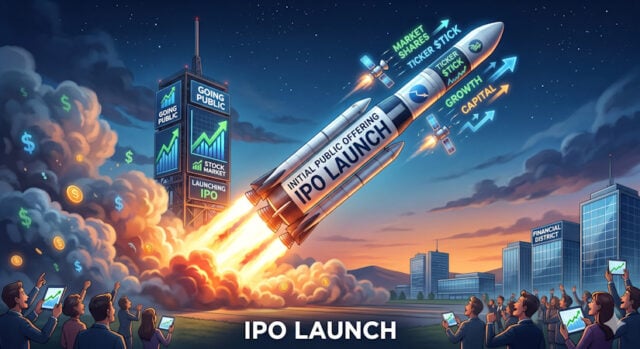
If you’ve ever wanted to own a piece of the cosmos—or at least the technology pulling us toward it—your moment has arrived. For years, investing in SpaceX was a privilege reserved exclusively for venture capitalists, ultra-wealthy insiders, and institutional titans. The rest of us had to sit on the sidelines, watching Falcon 9 rockets stick perfect landings on drone ships while wishing our brokerage accounts could catch some of that upward momentum.
That is all about to change. SpaceX has officially pulled back the curtain, shattering decades of standard market conventions to launch the largest initial public offering (IPO)—the process where a private company first sells shares to the general public—in global financial history.
With a target listing date of June 12, 2026, the entire investing world is holding its breath. This isn’t just a routine tech flotation. It is an absolute monster of a deal that fundamentally changes the intersection of space exploration, global internet connectivity, and advanced artificial intelligence. Let’s break down exactly what this historic debut looks like, what the company is actually worth, the hidden risks lurking inside the prospectus, and how you can get a piece of the action.
The Eye-Popping Math: Breaking Down the Numbers
Let’s talk numbers first, because the scale of this listing is genuinely hard to wrap your head around. According to the company’s latest amended prospectus, filed on Wednesday, June 3, 2026, SpaceX is seeking to sell 555.6 million shares at a fixed price of $135 per share.

That baseline sale alone will raise a staggering $75 billion. If investor demand goes completely off the charts—as Wall Street fully expects—underwriters can trigger a “greenshoe option” (a standard regulatory mechanism that allows banks to sell additional shares to stabilize prices). If that happens, the total capital raised could soar to $86 billion.
To put that in context, the previous world record for an IPO belonged to the state-owned oil behemoth Saudi Aramco, which raised $29 billion back in 2019. SpaceX isn’t just breaking that record; it is completely obliterating it.
At $135 per share, the entire company is being valued at roughly $1.75 trillion to $1.78 trillion. If those metrics hold when the opening bell rings on the Nasdaq under the ticker symbol SPCX, SpaceX will instantly step onto the public stage as one of the most valuable corporations on Earth, rubbing shoulders with the likes of Nvidia, Apple, and Microsoft.
Not Just Rockets: The Three-Headed Monster
To understand why Wall Street is willing to assign a $1.78 trillion valuation to a space business, you have to realize that you aren’t just buying a rocket-launching company. Following a massive $250 billion merger with Musk’s AI startup, xAI, in February 2026, SpaceX has undergone legal and operational restructuring into a sprawling, three-headed technology conglomerate.
When you purchase a share of SPCX, your capital is sliced across three highly interdependent divisions:
1. Space (22% of 2025 Revenue)
This is the core heritage business everyone knows and loves: the reliable Falcon 9 fleet, the Dragon capsules ferrying astronauts to the International Space Station, and the gargantuan Starship system currently being tested for deep-space missions. While heavy manufacturing and launches capture the public’s imagination, they act primarily as the structural foundation for the rest of the empire. Think of this segment as the cosmic railroad tracks upon which the other business lines run.
2. Connectivity / Starlink (61% of 2025 Revenue)
This is the financial engine keeping the lights on. Starlink uses a vast network of satellites in low Earth orbit to beam high-speed internet to every corner of the globe. The growth curve here has been nothing short of staggering. Starlink had 2.3 million subscribers in 2023, which jumped to 8.9 million by the end of 2025. As of the close of the first quarter of 2026, the active subscriber base has surpassed 10.3 million users.
Interestingly, the financial documents show that while Starlink’s user base is expanding aggressively, its average revenue per user (ARPU) has dropped from $99 a month in 2023 down to $66 a month in early 2026. SpaceX is deliberately lowering prices to undercut traditional, ground-based internet providers and achieve global dominance.
3. Artificial Intelligence (17% of 2025 Revenue)
This is the new frontier that is driving the tech world wild. Through the xAI integration, SpaceX now owns the Grok AI model and some of the largest data centers on the planet. Why put AI and rockets together? Musk’s vision involves building massive, orbital AI data centers powered by solar energy in space.
While that may sound like science fiction, the division is already generating massive terrestrial revenue. SpaceX recently signed a landmark computing partnership with AI giant Anthropic, which is leasing SpaceX’s ground-based supercomputing clusters to train its next-generation models. That single agreement is bringing in a stunning $1.25 billion every single month through May 2029.
The Financial Realities: Losses, Loans, and Ironclad Control
Before you transfer your life savings into SPCX on day one, we need to have a serious, peer-to-peer chat about what is actually inside this prospectus. High-flying tech IPOs always come with massive asterisks, and this one has a few that should make any rational investor pause.
The Cash Burn is Real
Despite bringing in $18.7 billion in revenue in 2025, SpaceX actually lost $4.9 billion last year. Even worse, the company’s operating losses have accelerated into 2026, with the first quarter of this year alone accounting for nearly 75% of all the losses recorded in 2025.
Where is all that cash going? Capital expenditure (Capex)—the money a company spends to buy, maintain, or improve fixed assets. SpaceX is pouring tens of billions of dollars into building out computational infrastructure for AI and launching thousands of new Starlink satellites. In fact, AI accounted for an astronomical 76% of the company’s total capital expenditures in the first quarter of 2026.
The Under-the-Hood Debt
SpaceX is also using a massive chunk of the money it raises next week to clear up some balance sheet messiness. Within six months of the IPO, the company is legally obligated to use $20 billion of the proceeds to repay a short-term bridge loan extended by its lead underwriting banks in March. That loan was used to refinance debt inherited directly from Musk’s private ownership of X (formerly Twitter) and xAI. Essentially, public investors are helping to clean up previous corporate re-engineering efforts.
You Have No Say
If you like corporate democracy, look away. The prospectus outlines a unique and incredibly rigid governance structure. Elon Musk is entrenched at the top as CEO, Chief Technical Officer, and Chairman. He controls nearly all of the super-voting Class B shares, which grant ten votes per share versus the single vote attached to the Class A shares being sold to the public.
When the dust settles, Musk will wield 82.4% of the total voting power. He is entirely insulated from accountability; the Class B shares are the only ones with the structural power to remove him. This has deeply frustrated major institutional players like the New York State Common Retirement Fund and CalPERS, who have openly criticized the setup. If you buy in, you are strapped into the passenger seat while Elon drives the ship.
How the Public Can Get In On the Action
Historically, regular retail investors get treated like an afterthought during massive tech debuts. Institutional hedge funds and investment banks usually snap up the shares at the initial offer price, leaving everyday traders to buy the scraps hours later on the open market after the price has already popped 30% or 40%.
But SpaceX is flipping the script. In an incredibly unusual move, reports indicate that up to 25% of the entire share pool is being deliberately reserved for individual retail investors.
If you want to buy shares at the initial $135 offer price before public trading starts on June 12, here are your primary options.
Direct Access via Mainstream Brokerages
A select group of major consumer brokerages has secured allocations of the pre-IPO shares for their users. If you are based in the United States, you can log into your account and check for IPO access through the following platforms:
- Robinhood & SoFi Technologies: Both platforms have built their brands around retail inclusion and are actively accepting structural indications of interest for the SPCX listing.
- Fidelity, Charles Schwab, and E*Trade (Morgan Stanley): The traditional brokerage heavyweights are also offering clients ways to request allocations, though individual approval may depend on account minimums or trading history.
If you are an international investor based in the United Kingdom, getting your hands on a US-based IPO is usually next to impossible. However, due to the sheer scale of global demand, British brokerages like Hargreaves Lansdown and AJ Bell are officially offering their clients a direct mechanism to bid for individual shares before the launch.
The Indirect Blue-Chip Route: Alphabet (Google)
If you don’t want to deal with the volatility of buying an individual stock on IPO day, you can get clean, indirect exposure through Alphabet (NASDAQ: GOOGL). Regulatory filings reveal that Google originally bought a massive stake in SpaceX back in 2015. While subsequent funding rounds and the recent February xAI merger have diluted that position down to roughly 5%, a 5% stake in a $1.75 trillion company is worth nearly $87.5 billion. When SpaceX’s valuation is officially marked up in the public market, Alphabet’s balance sheet will receive a massive, multibillion-dollar boost.
Alternative Funds
For those who miss out on direct allocations but still want pre-market exposure, specialized private-equity access vehicles like the Fundrise Innovation Fund hold actual physical shares of private SpaceX stock. On the exchange-traded fund (ETF) side, popular thematic funds like Cathie Wood’s ARK Space & Defense Innovation ETF (ARKX) or the Procure Space ETF (UFO) don’t hold private SpaceX stock directly yet, but they are guaranteed to build heavy weightings in SPCX the moment it integrates into major market indices.
The Final Verdict: To Buy or to Hold?
There is no sugarcoating it: SpaceX is a thrilling company doing things that human beings have never accomplished before. They dominate global orbital launches, they run the world’s most successful satellite broadband network, and they are aggressively positioning themselves at the cutting edge of the global artificial intelligence boom.
However, trading at a staggering 92 times its annual revenue while burning through billions of dollars in infrastructure costs means this stock is priced for absolute perfection. If a single Starship test goes catastrophically wrong, or if the orbital AI data center thesis hits a regulatory brick wall, the downward volatility could be brutal.
If you decide to participate in this historic market event, do it with eyes wide open. Allocate capital that you are comfortable leaving locked away for the long haul, understand that Elon Musk calls 100% of the shots, and get ready for a wild, interstellar ride.
Sources and Links:
- The Guardian: SpaceX IPO: how can I buy shares, and what are the risks?
- The Guardian: SpaceX targets biggest ever stock market debut, putting Musk on course to be a trillionaire
- The Financial Times: Elon Musk’s SpaceX pitches investors $1.78tn valuation in historic IPO
- Associated Press (AP News): SpaceX’s IPO is set to be the biggest ever and could make Elon Musk a trillionaire
- Hargreaves Lansdown (HL): Inside SpaceX’s IPO filing – revenue, Starlink, AI and key financials
- The Motley Fool: 3 Ways to Buy SpaceX Stock Before Its Blockbuster IPO
- The Motley Fool: Can You Invest in Starlink in 2026? Details & Alternatives
- Zacks Investment Research: SpaceX IPO 2026 Guide: Everything You Need to Know and Consider
- SatNews: Analyst Projects Massive Subscription Growth for Starlink Ahead of Imminent SpaceX IPO
Disclaimer
Artificial Intelligence Disclosure & Legal Disclaimer
AI Content Policy.
To provide our readers with timely and comprehensive coverage, South Florida Reporter uses artificial intelligence (AI) to assist in producing certain articles and visual content.
Articles: AI may be used to assist in research, structural drafting, or data analysis. All AI-assisted text is reviewed and edited by our team to ensure accuracy and adherence to our editorial standards.
Images: Any imagery generated or significantly altered by AI is clearly marked with a disclaimer or watermark to distinguish it from traditional photography or editorial illustrations.
General Disclaimer
The information contained in South Florida Reporter is for general information purposes only.
South Florida Reporter assumes no responsibility for errors or omissions in the contents of the Service. In no event shall South Florida Reporter be liable for any special, direct, indirect, consequential, or incidental damages or any damages whatsoever, whether in an action of contract, negligence or other tort, arising out of or in connection with the use of the Service or the contents of the Service.
The Company reserves the right to make additions, deletions, or modifications to the contents of the Service at any time without prior notice. The Company does not warrant that the Service is free of viruses or other harmful components.