Military friction between the United States and Iran follows an entrenched pattern of escalation. Hostilities regularly surface across critical air corridors and strategic maritime trade routes. Unmanned aerial vehicles repeatedly target military outposts and commercial logistics hubs. In response, targeted airstrikes hit designated operational infrastructure and command centers. Both nations officially state a desire for deterrence rather than open warfare. Yet, recurring retaliatory operations consistently undermine sustained diplomatic engagement. Regional stability remains exceedingly fragile under these ongoing military exchanges. Civilian populations bear substantial economic and humanitarian burdens during these crises.
Regional proxy networks constitute a primary vector for operational clashes. Tehran maintains active coordination with armed factions across Iraq, Syria, and Yemen. These regional groups frequently deploy rockets and loitering munitions against American forces. Washington counters by deploying combat aircraft against designated munitions depots and command facilities. Subsequent counterstrikes seek to re-establish tactical deterrence across the theater. However, kinetic deterrence rarely prevents subsequent offensive operations. Tactical red lines remain volatile across the broader Middle Eastern battlespace. Each tactical engagement alters the regional security calculation.
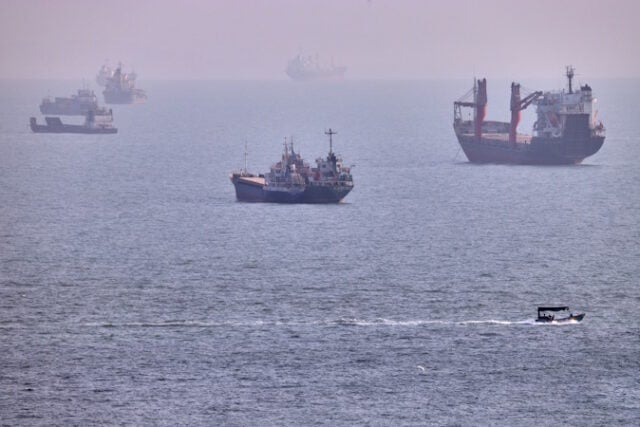
Maritime choke points have evolved into critical zones of friction. The Strait of Hormuz and the southern Red Sea experience regular disruptions. Unmanned systems and naval drones target commercial navigation without advance warning. Allied naval forces conduct continuous air-defense interceptions to protect international shipping lanes. These military operations disrupt global commercial supply chains. Maritime insurance rates fluctuate rapidly in response to security incidents. Energy markets remain acutely vulnerable to ongoing tactical developments. The broader economic consequences extend far beyond the immediate theater of operations.
Domestic political imperatives severely constrain diplomatic maneuverability for both administrations. American policymakers face domestic pressure to demonstrate strength and protect forward-deployed personnel. Perceived inaction risks projecting weakness to geopolitical adversaries. Concurrently, Iranian leadership treats resistance against foreign influence as an institutional priority. Unanswered tactical strikes create domestic and regional vulnerabilities for Tehran. Neither administration can easily accept visible operational compromises. Consequently, rigid political positions perpetuate the operational status quo. Hardline rhetoric leaves little room for constructive diplomatic concessions.

This strategic dynamic creates significant risk of catastrophic miscalculation. Both governments carefully calibrate operations to avoid mass-casualty events. Nevertheless, operational control during kinetic exchanges is never absolute. An unexpected mass-casualty strike would compel severe retaliation. Such an outcome could rapidly transform localized exchanges into a broader war. Formal diplomatic channels remain largely inactive between the two capitals. Without structured communication, tactical engagements will dictate future regional developments. The ongoing cycle of strikes remains an enduring international security challenge.
Sources Used
Disclaimer
Artificial Intelligence Disclosure & Legal Disclaimer
AI Content Policy.
To provide our readers with timely and comprehensive coverage, South Florida Reporter uses artificial intelligence (AI) to assist in producing certain articles and visual content.
Articles: AI may be used to assist in research, structural drafting, or data analysis. All AI-assisted text is reviewed and edited by our team to ensure accuracy and adherence to our editorial standards.
Images: Any imagery generated or significantly altered by AI is clearly marked with a disclaimer or watermark to distinguish it from traditional photography or editorial illustrations.
General Disclaimer
The information contained in South Florida Reporter is for general information purposes only.
South Florida Reporter assumes no responsibility for errors or omissions in the contents of the Service. In no event shall South Florida Reporter be liable for any special, direct, indirect, consequential, or incidental damages or any damages whatsoever, whether in an action of contract, negligence or other tort, arising out of or in connection with the use of the Service or the contents of the Service.
The Company reserves the right to make additions, deletions, or modifications to the contents of the Service at any time without prior notice. The Company does not warrant that the Service is free of viruses or other harmful components.