The Roar of a New Era in Jerusalem
On the evening of March 19, 2026, against the backdrop of a Middle East engulfed in the most significant military conflagration in decades, Israeli Prime Minister Benjamin Netanyahu stepped before a podium in Jerusalem. His address to a world teetering on the edge of an energy collapse was equal parts a military report, a diplomatic manifesto, and a blueprint for a post-Ayatollah world. Opening with a defiant “I am alive,” a direct rebuff to rumors circulating in the wake of recent Iranian missile strikes on Israeli soil, Netanyahu delivered a news conference that signaled the beginning of the end for the Islamic Republic.
The Prime Minister’s address came exactly twenty days into “Operation Roaring Lion,” a massive air and special operations campaign targeting Iran. With the global economy reeling from a 60% surge in oil prices and the vital Strait of Hormuz effectively shuttered by Iranian naval aggression, Netanyahu framed Israel’s recent unilateral actions as the essential catalyst for breaking Tehran’s “blackmail” of the international community.
Twenty Days of “Roaring Lion”: The Military Results
The centerpiece of Netanyahu’s address was a triumphant summary of the first twenty days of the campaign, which began on February 28, 2026. Flanked by maps showing the devastation of Iranian military infrastructure, the Prime Minister detailed what he described as the “most successful aerial campaign in human history.”
According to the data released during the conference, the combined forces of Israel and the United States (under the parallel U.S. operation “Epic Fury”) have struck over 15,000 Iranian targets. Of these, 7,000 were hit by U.S. forces, while the remainder were dismantled by the Israeli Air Force (IAF). The results, Netanyahu claimed, have functionally neutralized Iran’s ability to wage conventional war:

- Nuclear Neutralization: Netanyahu made the boldest claim yet: “Iran no longer has the ability to enrich uranium.” He stated that the “industries of death” at Natanz, Fordow, and Arak have been “crushed,” with senior nuclear scientists mortally struck in the opening days of the war.
- Missile and Drone Collapse: The campaign has seen a 90% decline in Iranian ballistic missile launches and a 95% decline in drone attacks since the start of the conflict. Over 2,600 crucial components of the Iranian missile program have been obliterated.
- Naval Destruction: In a blow to Iran’s regional power, Netanyahu confirmed that the Iranian Navy is “lying at the bottom of the sea.” Over 120 naval vessels have been damaged or sunk, and all 11 of Iran’s submarines have been confirmed destroyed.
- Decapitation of Leadership: The Prime Minister referenced the “total chaos” in Tehran. Following the death of Supreme Leader Ali Khamenei in the war’s initial salvo, the successor, Mojtaba Khamenei, is reportedly “wounded and likely disfigured,” unable to show his face in public. On March 18, just a day before the conference, Israeli strikes also killed Iranian Intelligence Minister Esmail Khatib.
Netanyahu highlighted a specific, grim success: the strike on Azadi Stadium in Tehran. He explained that after the first week of the war, Iranian security forces, including the Basij and IRGC, attempted to regroup at large sports complexes to use them as shields. Israeli intelligence identified these “mustering points,” and subsequent precision strikes killed hundreds of regime personnel, forcing the “organs of oppression” into a disorganized retreat.
Striking “Iran’s Wallet”: The Unilateral Move on South Pars
Perhaps the most controversial and significant revelation of the press conference was Netanyahu’s admission that Israel “acted alone” in striking the South Pars gas field—the world’s largest natural gas reserve. On March 18, Israeli aircraft targeted the onshore processing hub at Asaluyeh, taking the facilities offline and effectively damaging up to one-fifth of Iran’s total gas processing capacity.
This strike occurred without the direct participation or prior knowledge of the United States. Netanyahu framed this unilateralism not as a rift with Washington, but as a strategic service to the global community. “By hitting Iran’s wallet, we are crippling the regime’s capacity to sustain its military machine,” he said.
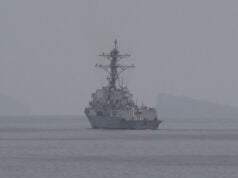
He argued that this bold action was the key to reopening the Strait of Hormuz. While the U.S. Navy has been engaged in a systematic “peeling away” of Iranian naval assets, Israel’s strike on the gas pipes sent a clear message: Iran’s attempt to strangle the world’s oil supply would result in the total destruction of its own economic lifeblood. By demonstrating that Iran’s most vital economic assets are defenseless, Israel has altered the calculus of the Iranian blockade, making the continued closure of the Strait a suicidal prospect for the regime.
The Trump-Netanyahu Partnership: “Unprecedented Strength”
Despite the public nuance regarding the South Pars strike—where President Donald Trump posted on Truth Social that the U.S. “knew nothing” of the attack—Netanyahu emphasized that the partnership with the United States remains the bedrock of Israeli security.
He described his relationship with Trump as “a hundred times stronger than any relationship that has ever existed between an American president and an Israeli prime minister.” He revealed that he and the President speak nearly every day to coordinate the broader objectives of the war: the total dismantling of the “Axis of Evil.” Netanyahu thanked the U.S. for its “overwhelming force” and for providing the diplomatic “breathing room” that allows Israel to act decisively when necessary.
Historical Parallels: Khamenei and the “Modern Hitler”
Netanyahu’s rhetoric reached its peak of intensity when he addressed the moral foundations of the war. He frequently drew parallels between the current Iranian leadership and the Nazi regime of the 1930s and 40s. He reiterated his characterization of the late Ali Khamenei and his successors as “modern Hitlers” leading a “death cult” committed to a “Final Solution” for the Jewish state.
“The lessons of the Holocaust have been learned,” Netanyahu asserted. He argued that just as the world failed to confront Hitler early, leading to global catastrophe, the “War of Redemption” (as he termed it) is a proactive prevention of a second Holocaust. He claimed the Iranian regime, like the Nazis in their final days, is now hiding in bunkers, “cracking” under pressure, and losing control of a population that yearns for liberation.
The Future of Oil: Bypassing the “Strait of Terror”
Looking beyond the immediate conflict, Netanyahu outlined a vision for a “New Global Energy Era.” He argued that the world can no longer remain a hostage to the geography of the Persian Gulf.
“The future of rerouting oil is already here,” he declared. He pointed to the successful activation of the Saudi East-West “Petroline” and the UAE’s Habshan-Fujairah pipeline, which are currently operating at full capacity to bypass the Strait of Hormuz, which Iran threatens. Netanyahu proposed developing a permanent, expanded corridor of pipelines and rail links across the Arabian Peninsula to the Mediterranean—a “Pathway to the West” that would render the Strait of Hormuz strategically irrelevant.
This vision, supported by the Abraham Accords and the burgeoning alliance with Gulf partners, would permanently shift the global energy center of gravity away from Iranian-controlled waters. “We are not just winning a war,” Netanyahu concluded, “we are building a new reality where energy flows freely, and the shadow of Tehran no longer looms over the world’s economy.”
Sources Used and Links
- Operations Epic Fury and Roaring Lion: 3/19/26 Update – JINSA https://jinsa.org/wp-content/uploads/2026/03/Operations-Epic-Fury-and-Roaring-Lion-03-19-26.pdf
- March 12, 2026: Real Time Updates – Operation Roaring Lion | IDF https://www.idf.il/en/mini-sites/operation-roaring-lion/real-time-updates-day-by-day/march-12-2026-real-time-updates-operation-roaring-lion/
- Iran Update Special Report, March 18, 2026 | ISW https://understandingwar.org/research/middle-east/iran-update-special-report-march-18-2026/
- Netanyahu says Iran can no longer enrich uranium; Iran continues attacks on oil and natural gas facilities – The Sumter Item / AP http://www.theitem.com/stories/netanyahu-says-iran-can-no-longer-enrich-uranium-iran-continues-attacks-on-oil-and-natural-gas,440899
- The Middle East in flames: How Operation Epic Fury ignited a regional conflagration – Times of India https://timesofindia.indiatimes.com/defence/international/the-middle-east-in-flames-how-operation-epic-fury-ignited-a-regional-conflagration/articleshow/129679266.cms
- IDF exploited Iran fallback plan, struck forces at stadiums, report finds | The Jerusalem Post https://www.jpost.com/middle-east/iran-news/article-890577
- Iran-Israel war LIVE: Netanyahu says Iran has no capacity to enrich uranium, make ballistic missiles – The Hindu https://www.thehindu.com/news/international/iran-israel-usa-war-live-updates-march-19-2026/article70760463.ece
- PM Netanyahu’s Remarks at his Press Conference (March 12, 2026) – Gov.il https://www.gov.il/en/pages/spoke-ari-press120326
Disclaimer
Artificial Intelligence Disclosure & Legal Disclaimer
AI Content Policy.
To provide our readers with timely and comprehensive coverage, South Florida Reporter uses artificial intelligence (AI) to assist in producing certain articles and visual content.
Articles: AI may be used to assist in research, structural drafting, or data analysis. All AI-assisted text is reviewed and edited by our team to ensure accuracy and adherence to our editorial standards.
Images: Any imagery generated or significantly altered by AI is clearly marked with a disclaimer or watermark to distinguish it from traditional photography or editorial illustrations.
General Disclaimer
The information contained in South Florida Reporter is for general information purposes only.
South Florida Reporter assumes no responsibility for errors or omissions in the contents of the Service. In no event shall South Florida Reporter be liable for any special, direct, indirect, consequential, or incidental damages or any damages whatsoever, whether in an action of contract, negligence or other tort, arising out of or in connection with the use of the Service or the contents of the Service.
The Company reserves the right to make additions, deletions, or modifications to the contents of the Service at any time without prior notice. The Company does not warrant that the Service is free of viruses or other harmful components.