The Strategic Reset: Reimagining a Functional Giant
The ready-to-drink (RTD) protein beverage market is undergoing a seismic shift, moving away from specialized bodybuilding communities and firmly into the mainstream consumer lifestyle space. At the center of this transformation is PepsiCo’s dramatic, multi-million-dollar revitalization of Muscle Milk. Originally engineered as a heavy, multi-ingredient meal replacement and muscle-building supplement for elite athletes, Muscle Milk has been completely overhauled to meet the strict demands of today’s health-conscious public.
By eliminating nearly half of its traditional ingredient list, removing all artificial colors, flavors, and sweeteners, and shifting its primary protein source exclusively to ultra-filtered milk, PepsiCo is repositioning Muscle Milk as a clean, lifestyle-oriented powerhouse.
This total brand reset comes at a critical juncture. The functional beverage sector has evolved into an intensely competitive arena where consumers demand absolute transparency on their nutrition labels. No longer satisfied with simply reading the total grams of protein on a bottle, modern buyers look closely at the ingredient list underneath. Recognizing that its legacy formulation carried the baggage of an older, supplement-heavy era, PepsiCo executed this sweeping rebrand to safeguard its market share, broaden its demographic reach, and directly challenge competitors like Coca-Cola’s highly successful Fairlife-powered Core Power line.
From Bodybuilders to Everyday Lifestyles: The Evolution of Muscle Milk
To fully comprehend the scale of this 2026 rebrand, it is necessary to look at the history of the brand. Muscle Milk was founded in 2000 by CytoSport, a company deeply rooted in the sports supplement tradition. For its first decade and a half, the brand was marketed with hyper-masculine imagery, heavy dark plastic bottles, and a dense formula packed with complex lipids, caseins, whey isolates, and a long list of synthetic vitamins. It was a staple of weight rooms, football locker rooms, and hardcore fitness centers.

In 2014, consumer packaged goods (CPG) heavyweight Hormel Foods acquired CytoSport for $450 million, seeking to move the brand further into mainstream grocery aisles. While Hormel successfully expanded its retail footprint, the formulation remained largely anchored in its traditional supplement roots. Realizing the massive potential of the functional nutrition category, PepsiCo acquired Muscle Milk along with the plant-based Evolve brand in 2019.
The true turning point for the brand came in early 2023, when PepsiCo consolidated its entire athletic and functional beverage portfolio. The company united its flagship brand, Gatorade, with Propel, Fast Twitch, Evolve, and Muscle Milk into a single, cohesive business unit known as the Gatorade Portfolio. This consolidation allowed individual brands to share scientific insights from the Gatorade Sports Science Institute (GSSI), tap into unified distribution pipelines, and leverage the massive cultural equity of the Gatorade name.
Despite these structural advantages, by late 2025, PepsiCo executives observed that Muscle Milk’s performance was not meeting internal expectations. Marissa Pines, the Vice President of PepsiCo’s Gatorade business, candidly acknowledged that sales growth for the brand was softer than anticipated in 2025. The root cause was clear: an explosion of newer, cleaner, dairy-based competitors had entered the market, making Muscle Milk’s long, artificial-heavy ingredient deck look outdated to everyday consumers. The 2026 rebrand is the direct answer to this commercial challenge.
Inside the Formula: The Science of Clean Sourcing
The most significant element of the rebrand is the complete reconstruction of the liquid inside the bottle. PepsiCo’s research and development teams stripped away the legacy blend of calcium caseinate, sodium caseinate, and heavy oil powders, replacing them entirely with a single, premium foundation: ultra-filtered milk.
The Shift to Ultra-Filtered Milk
Ultra-filtered milk undergoes a specialized mechanical filtration process that separates components based on molecular size. By passing raw dairy through micro-fine membranes, water, lactose, and certain minerals are removed, leaving behind a naturally concentrated liquid rich in native whey and casein proteins. This process yields three critical benefits for the reformulated Muscle Milk:
- Unmatched Smoothness: It eliminates the chalky, overly viscous, or heavy mouthfeel traditionally associated with caseinate powders, yielding a light, refreshing, shake-like texture.
- Natural Lactose Reduction: The mechanical removal of sugars during filtration allows the product to remain highly digestible for lactose-sensitive consumers without requiring heavy chemical enzymes.
- Purity of Protein: The protein remains tied to its original dairy matrix, maintaining high bioavailability for muscle synthesis and recovery.
The Radical 50% Clean-Label Reduction
By leveraging the natural properties of ultra-filtered milk, PepsiCo succeeded in reducing Muscle Milk’s overall ingredient count by nearly 50%. The product development team systematically removed non-essential synthetic vitamin mixes, thickening gums, and artificial chemical stabilizing agents.
Most importantly, the brand completely eliminated artificial sweeteners (such as sucralose and acesulfame potassium), artificial flavors, and added chemical colors. Instead, the product relies on natural sweetening profiles and clean, recognizable ingredients. This shift aligns Muscle Milk with the “clean-label” movement, transforming it from an intimidating chemical supplement into an approachable, wholesome dairy beverage.
| Attribute | Legacy Muscle Milk (Pre-2026) | Reformulated Muscle Milk (2026 Launch) |
| Primary Protein Base | Calcium/Sodium Caseinate, Whey Isolate, Oil Powders | 100% Ultra-Filtered Milk |
| Ingredient Count | Long, complex chemical deck | Reduced by nearly 50% |
| Sweeteners & Colors | Artificial (Sucralose, Acesulfame K, Synthetic Dyes) | Zero Artificial Sweeteners, Flavors, or Colors |
| Standard RTD Protein | 25 Grams | 26 Grams |
| Pro Line RTD Protein | 40 Grams (14 oz) / 32 Grams (11 oz) | 42 Grams (14 oz) / 33 Grams (11 oz) |
| Core Flavors | Dozens of synthetic varieties | Focused: Chocolate, Vanilla, Cookies ‘N Creme, Strawberries ‘N Creme |
Upping the Ante: Enhanced Nutritional Metrics
While shortening the ingredient deck is a key focus of the rebrand, PepsiCo was careful not to sacrifice the core nutritional value that consumers expect. In fact, the company increased the protein content across its entire ready-to-drink lineup.
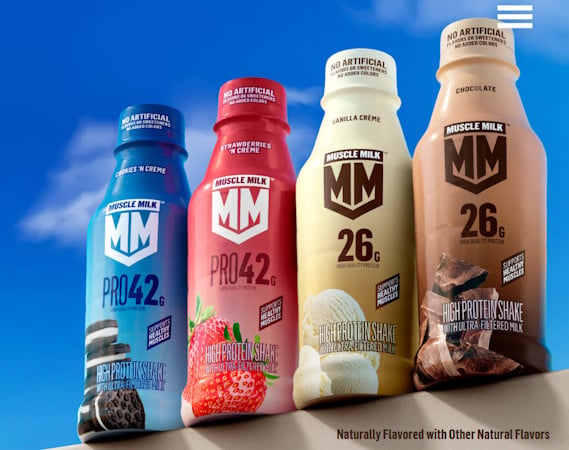
The standard, everyday ready-to-drink Muscle Milk bottle has been upgraded from 25 grams of protein to 26 grams. This adjustment is small but highly strategic, as it positions the drink directly alongside the baseline offerings of its main competitors. For consumers with higher athletic requirements, the high-performance Muscle Milk Pro line received an even larger upgrade. The 14-ounce Pro bottle now delivers 42 grams of protein (up from 40 grams), while the compact 11-ounce Pro bottle has been elevated to 33 grams of protein (up from 32 grams).
To maintain consumer familiarity amid these changes, PepsiCo focused its initial rollout on four classic flavor profiles: Chocolate, Vanilla Creme, Cookies ‘n Creme, and Strawberries ‘n Creme. Crucially, despite the transition to more expensive ultra-filtered milk and cleaner ingredients, PepsiCo chose to maintain strict price parity with the previous generation. This pricing strategy ensures that existing customers face no financial barrier to adoption, while new consumers are offered an enhanced value proposition relative to premium competitors.
Visual Transformation: Packaging for an Inclusive Consumer Base
The liquid formulation is only half the battle; changing consumer perception requires a total overhaul of the brand’s visual identity. For over two decades, Muscle Milk bottles relied on dark, aggressive, heavy supplement-style graphics. While effective for the traditional bodybuilding community, this design language created a psychological barrier for general wellness consumers, who often associated it with extreme muscle mass rather than daily health.
The new 2026 design language strips away the aggressive aesthetics in favor of a bright, minimalist, and modern presentation. The new labels utilize clean, light backgrounds with a streamlined layout that immediately highlights the product’s primary functional benefits:
The New Brand Identity Blueprint: Clean white backgrounds, crisp minimalist text, prominent placement of the 26g or 42g protein badges, and bold front-and-center callouts stating: “No Artificial Sweeteners, Flavors, or Added Colors.”
This visual layout shifts Muscle Milk from an intimidating gym-bag supplement to an appealing lifestyle beverage suitable for a breakfast table, a corporate desk, or a casual afternoon snack. It invites a far wider demographic into the brand ecosystem, supporting the Gatorade Portfolio’s broader goal of providing high-quality nutrition for everyone.
Demographic Expansion: The “Protein for All” Campaign
This rebrand is supported by a sweeping new marketing directive titled “Protein for All.” This multi-channel advertising strategy marks a permanent departure from the athlete-only marketing of the past, repositioning protein as an essential everyday macronutrient for all stages of life.
The campaign features everyday scenarios alongside traditional fitness imagery. Commercials and digital ads showcase a diverse array of individuals: corporate professionals sipping a shake during a hectic morning commute, parents seeking a quick, nutritious snack between school drop-offs, yoga practitioners seeking light post-session recovery, and elderly individuals focused on maintaining healthy muscle mass.
This strategy is backed by deep shifts in consumer psychology. As noted by Ram Krishnan, CEO of PepsiCo Beverages, the company’s focus has expanded from simply packing maximum protein grams into a bottle to delivering functional nutrition that integrates naturally with how the human body works throughout the entire day. By framing Muscle Milk as a clean, drinkable alternative to processed snacks or skipped meals, PepsiCo is tapping into a massive, underserved segment of the population that values health but avoids traditional sports supplements.
The Competitive Landscape: The Confrontation with Coca-Cola
The primary commercial catalyst for this rebrand is the intense competitive pressure within the premium dairy space, specifically from Coca-Cola’s Fairlife brand. Coca-Cola’s acquisition and scaling of Fairlife stands as one of the most successful beverage stories of the past decade. Its flagship protein line, Core Power, built a dominant market position by leveraging the exact attributes Muscle Milk previously lacked: an ultra-filtered milk base, a smooth texture, and a clean label.
Core Power’s standard 26-gram and Elite 42-gram offerings established the industry standard for taste and macro-efficiency in convenience stores and supermarkets across North America. For years, Muscle Milk lost ground to Core Power because consumers frequently chose the clean taste of ultra-filtered dairy over traditional caseinate blends.
By matching Core Power exactly gram-for-gram (26g standard, 42g top-tier) and adopting the same ultra-filtered milk foundation, PepsiCo is engaging in a direct market confrontation. Muscle Milk’s distinct competitive advantage in this matchup is its new commitment to zero artificial sweeteners across the board, coupled with the immense distribution footprint of the Gatorade Portfolio. This direct competition between the two beverage giants is poised to reshape grocery and convenience store shelves throughout 2026 and beyond.
The Macro View: GLP-1 Medications and the Functional Health Boom
PepsiCo’s aggressive investment in the reformulation of Muscle Milk is also tied to broader macroeconomic and medical trends transforming the food and beverage industry in 2026. Specifically, the widespread adoption of GLP-1 weight-loss medications (such as Ozempic, Wegovy, and Mounjaro) has fundamentally altered consumer eating habits.
Patients undergoing GLP-1 therapies experience significantly reduced appetite and lower overall food intake. However, to prevent muscle wasting and maintain basic metabolic health, these individuals require highly concentrated, high-quality protein and fiber sources that do not come with excessive calories or heavy artificial chemical loads. PepsiCo CEO Ramon Laguarta has explicitly identified this shift as a multi-year innovation opportunity for the company’s functional beverage divisions.
Muscle Milk’s new clean-label, high-protein, low-ingredient structure fits perfectly into this emerging health ecosystem. Alongside other recent PepsiCo innovations—such as the launch of Propel Clear Protein (a functional powder mix enhanced with fiber and electrolytes aimed directly at wellness consumers) and protein-boosted ready-to-drink Starbucks Coffee collaborations—the Muscle Milk rebrand represents a coordinated corporate effort to capture leadership in the modern health and wellness landscape.
Early Market Results and the Multi-Year Rollout
The newly designed Muscle Milk bottles began arriving on retail shelves nationwide in April 2026, and early performance indicators suggest that PepsiCo’s calculated risk is paying off. According to internal data shared by Marissa Pines, initial retail reception has been highly encouraging. At one major national retail chain, sales surged by an impressive 30% immediately following the introduction of the new formulation and packaging. This early success validates the premise that everyday consumers were eager to embrace the Muscle Milk brand once the artificial elements and intimidating packaging were removed.
However, PepsiCo views this initial launch as just the first phase of a comprehensive, multi-year brand evolution. The company has structured a tiered rollout to transition its entire product matrix into this new architecture:
- Spring 2026: Complete nationwide rollout of the reformulated Ready-to-Drink (RTD) liquid bottles (Standard and Pro lines).
- Late 2026: Introduction of the modernized, minimalist visual packaging to Muscle Milk’s extensive line of bulk protein powders.
- 2027: Execution of a full clean-label liquid formulation overhaul for the powder lineup, matching the zero-artificial, ultra-filtered structural profile of the bottles.
This disciplined, phased approach ensures that manufacturing facilities, supply chains, and dairy sourcing partnerships can scale sustainably, solidifying the new formulation as the permanent blueprint for the brand’s future.
The New Blueprint for Performance Nutrition
PepsiCo’s complete reengineering of Muscle Milk provides a definitive look at the future of mass-market functional nutrition. By stripping away nearly half the ingredients and embracing an ultra-filtered dairy foundation, the company has successfully transitioned a legacy bodybuilding brand into a clean, modern lifestyle staple.
This strategic pivot demonstrates that in the modern retail environment, corporate transparency, clean labeling, and high-quality sourcing are no longer optional features reserved for niche health-food stores—they are essential requirements for mass-market success. Armed with an enhanced nutritional profile, a highly efficient distribution system, and a marketing message focused on inclusivity, the reborn Muscle Milk is well-positioned to serve a broad demographic of wellness-seeking consumers.
Sources Used and Links:
- Food Dive: PepsiCo’s Muscle Milk flexes rebrand in crowded protein drink space
- Food Dive: PepsiCo taps into protein boom with 3 beverage innovations
- Muscle Milk Official Brand Site: Muscle Milk Protein For All
- Muscle Milk Brand Story: Our Story & The Gatorade Portfolio
- Fast Company: Why PepsiCo’s Gatorade is now a portfolio of brands with Muscle Milk, Propel, and more
- KSL News / Associated Press: Gatorade, inventor of the sports drink, is getting a rebrand targeting non-athletes
Disclaimer
Artificial Intelligence Disclosure & Legal Disclaimer
AI Content Policy.
To provide our readers with timely and comprehensive coverage, South Florida Reporter uses artificial intelligence (AI) to assist in producing certain articles and visual content.
Articles: AI may be used to assist in research, structural drafting, or data analysis. All AI-assisted text is reviewed and edited by our team to ensure accuracy and adherence to our editorial standards.
Images: Any imagery generated or significantly altered by AI is clearly marked with a disclaimer or watermark to distinguish it from traditional photography or editorial illustrations.
General Disclaimer
The information contained in South Florida Reporter is for general information purposes only.
South Florida Reporter assumes no responsibility for errors or omissions in the contents of the Service. In no event shall South Florida Reporter be liable for any special, direct, indirect, consequential, or incidental damages or any damages whatsoever, whether in an action of contract, negligence or other tort, arising out of or in connection with the use of the Service or the contents of the Service.
The Company reserves the right to make additions, deletions, or modifications to the contents of the Service at any time without prior notice. The Company does not warrant that the Service is free of viruses or other harmful components.