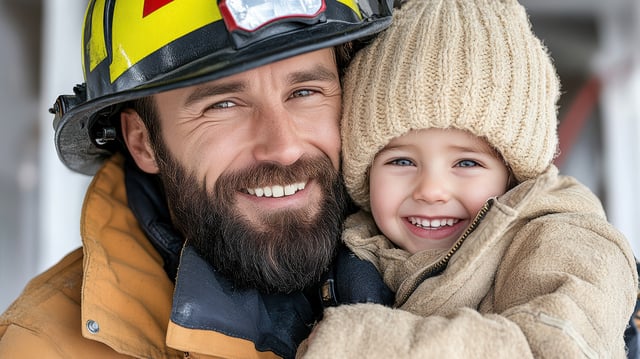
Being raised by a fire chief brings unique lessons and values into everyday family life, shaping children in subtle yet lasting ways. The blend of high-stakes responsibility with genuine care creates an environment where leadership, courage, and resilience are lived out, not just discussed.
Michael Vogel knows that children watch closely as their parent balances the demands of emergency response with the warmth and stability of home, gaining firsthand insight into the complexities of service and sacrifice. As these young observers encounter stories from the fireground, learn about teamwork under pressure, and experience the ebb and flow of a firefighter’s unpredictable schedule, they begin to internalize qualities such as integrity, persistence, and empathy.
The influence of a fire chief extends far beyond professional boundaries, fostering an atmosphere where open communication, safe risk-taking, and lifelong values are part of daily life. Over time, these experiences become embedded in the family’s culture, guiding children as they grow into confident, principled adults who understand the true meaning of leadership and bravery.
The Fire Chief’s Unique Role at Home and Work
A fire chief’s responsibilities do not end when the shift is over. At home, the skills required to manage emergencies are often repurposed for family life, where calm decision-making and clear communication remain vital.

Children watch closely as their parent navigates both the structured environment of the firehouse and the unpredictable nature of daily life, absorbing lessons about responsibility and leadership.
The same qualities that inspire trust and confidence in a crew—integrity, accountability, and composure—also shape the atmosphere within a household. When a fire chief encourages open dialogue after a tough day or helps a child face a challenge, they demonstrate that leadership extends beyond professional boundaries.
Balancing both worlds, the fire chief models how one can lead with compassion and strength in every setting. Sometimes, the ability to juggle competing priorities at home mirrors the demands faced at work, giving children a firsthand view of adaptability in action.
Teaching Courage Beyond the Fireground
Courage isn’t reserved solely for moments of crisis. A fire chief naturally brings lessons learned on the fireground into everyday parenting, showing children that bravery is woven into daily choices. Whether it’s standing up for a friend at school or trying a new activity, these acts of courage reflect the same values upheld in emergency response.
Children who see their parents handle difficult situations with poise gradually internalize the idea that courage is about persistence and integrity, not just bold action.
When a fire chief takes time to discuss moral dilemmas or encourages a child to speak honestly, they reinforce the idea that bravery often begins with small, meaningful decisions. This environment of encouragement helps children develop the confidence to face their own fears, no matter how big or small.
Sharing Experiences to Inspire Bravery
Stories from the firehouse often capture a child’s attention in a way that simple advice cannot. When a fire chief recounts overcoming fear during a dangerous rescue or describes teamwork under pressure, those narratives become powerful teaching tools.
Such moments allow children to visualize courage in action and connect it to their own lives, sparking curiosity and admiration.
Sometimes, a quiet conversation at the dinner table about a challenging call or a difficult choice becomes the spark that inspires a child to step out of their comfort zone. These shared memories help children recognize that bravery isn’t about being fearless; it’s about acting with conviction, even when uncertainty looms.
Over time, these stories become family lore, shaping the way children perceive and respond to challenges in their own world.
Encouraging Safe Risk-Taking and Growth
Fire chiefs know firsthand the value of measured risk and preparation. At home, this understanding translates into supporting children as they take on new challenges, whether it’s learning to ride a bike or speaking in front of a class. Careful encouragement helps children step beyond their comfort zone, building resilience with each small victory.
By setting boundaries and offering reassurance, a fire chief parent teaches that growth comes from facing the unknown, not avoiding it. Children learn to approach new situations with both caution and confidence, trusting that mistakes are steps along the path to mastery. They also begin to understand that setbacks are not failures, but opportunities to learn and grow stronger.
Managing Professional Demands and Family Guidance
Balancing the unpredictable schedule of a fire chief with the needs of a family requires intention and adaptability. There are days when the pager interrupts bedtime stories or family dinners are missed, but the commitment to being present remains steady. Children come to appreciate the importance of service and responsibility, while also understanding that quality moments together matter more than quantity.
Through creative routines and honest conversations, a fire chief weaves together work and family life. Even brief check-ins or shared traditions can strengthen family ties, demonstrating that leadership at home is as deliberate as commanding a team in the field.
Sometimes, celebrating small wins as a family—like a successful shift swap or making time for a weekend outing—reinforces the bond and keeps the family grounded despite the demands of the job.
Building Lifelong Values Through Mentorship
Children raised by a fire chief often carry forward a sense of purpose shaped by daily example. Through ongoing mentorship, values like empathy, discipline, and teamwork become habits rather than lessons. The impact of such guidance appears in the way children treat others, approach challenges, and make choices long after childhood ends.
In many cases, these foundational values serve as a compass, guiding them confidently into adulthood. The legacy of a fire chief’s mentorship can be seen in the next generation’s willingness to help others, their resilience in the face of adversity, and their ability to work cooperatively toward shared goals, echoing the lessons learned at home.
Disclaimer
Artificial Intelligence Disclosure & Legal Disclaimer
AI Content Policy.
To provide our readers with timely and comprehensive coverage, South Florida Reporter uses artificial intelligence (AI) to assist in producing certain articles and visual content.
Articles: AI may be used to assist in research, structural drafting, or data analysis. All AI-assisted text is reviewed and edited by our team to ensure accuracy and adherence to our editorial standards.
Images: Any imagery generated or significantly altered by AI is clearly marked with a disclaimer or watermark to distinguish it from traditional photography or editorial illustrations.
General Disclaimer
The information contained in South Florida Reporter is for general information purposes only.
South Florida Reporter assumes no responsibility for errors or omissions in the contents of the Service. In no event shall South Florida Reporter be liable for any special, direct, indirect, consequential, or incidental damages or any damages whatsoever, whether in an action of contract, negligence or other tort, arising out of or in connection with the use of the Service or the contents of the Service.
The Company reserves the right to make additions, deletions, or modifications to the contents of the Service at any time without prior notice. The Company does not warrant that the Service is free of viruses or other harmful components.