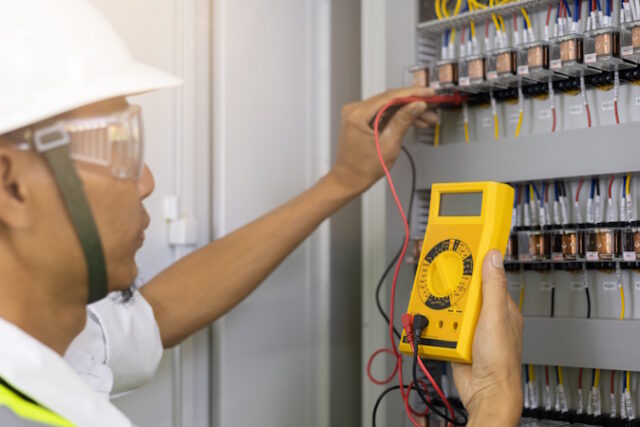
Electrical protection remains one of the most important parts of safe power distribution. Homes, commercial buildings, factories, and industrial facilities all depend on reliable protection devices that can interrupt dangerous fault conditions before equipment damage or fire hazards occur. For decades, fuses were widely used because of their simple design and low cost. However, as electrical systems became more advanced, industries began shifting toward more efficient and reusable protection technologies.
Today, many people researching what is a miniature circuit breaker also want to understand why MCBs have largely replaced traditional fuses in modern installations. Frequent fuse replacement, slower recovery times, limited fault visibility, and growing maintenance demands have all contributed to this transition. Understanding the differences between these protection methods can help improve electrical safety and long-term reliability.
Understanding How Fuses Work
Fuses are among the oldest electrical protection devices still used today. A fuse contains a thin metal strip or wire that melts when electrical current rises above a safe level. Once the fuse element melts, the circuit is interrupted, preventing excessive current from damaging connected equipment or wiring.
Why Fuses Were Widely Used
For many years, fuses provided practical protection for basic electrical systems because they were:

- Simple to install
- Affordable for residential and industrial use
- Fast at interrupting dangerous fault currents
Their straightforward operation made them reliable in smaller systems where electrical loads were less complex than modern installations.
Limitations of Traditional Fuses
Despite their advantages, fuses create several challenges in modern electrical environments. Once a fuse operates, it must be physically replaced before power can be restored. In large facilities, this process may increase downtime and delay troubleshooting.
Fault identification can also become difficult because blown fuses do not always provide clear visual indication of the exact problem. In systems with multiple circuits, technicians may spend additional time locating the affected area before repairs can begin.
What Is a Miniature Circuit Breaker?
A miniature circuit breaker is an automatic protection device designed to interrupt electrical current during overloads or short circuits. Unlike fuses, MCBs use a mechanical switching mechanism that trips automatically when abnormal current conditions are detected.
One of the main advantages of an MCB is its resettable design. After the fault condition is corrected, the breaker can usually be switched back on without replacement.
How MCBs Provide Protection
Modern MCBs combine several protective functions within one device:
| Protection Mechanism | Function |
| Thermal protection | Responds to overload conditions |
| Magnetic protection | Reacts instantly to short circuits |
| Arc extinguishing system | Safely interrupts electrical faults |
This integrated design allows MCBs to provide more advanced and reusable protection compared to traditional fuse systems.
Key Differences Between MCBs and Fuses
Although both devices protect electrical circuits, they operate differently and offer distinct advantages.
| Feature | Fuse | MCB |
| Reusability | Must be replaced | Can be reset |
| Maintenance | Higher maintenance needs | Lower maintenance |
| Fault indication | Limited visibility | Clear trip indication |
| Convenience | Manual replacement required | Simple reset operation |
| Long-term cost | Repeated replacement expenses | Better long-term value |
These differences explain why many industries now favor MCB technology for both residential and commercial applications.
Why Industries Have Shifted Toward MCBs
The move toward miniature circuit breakers reflects the growing demands of modern electrical systems. Buildings and industrial facilities now rely heavily on automation, sensitive electronics, and continuous power availability. As a result, faster fault recovery and reduced maintenance have become major priorities.
Faster Power Restoration
When an MCB trips, technicians can usually identify the affected circuit immediately, correct the issue, and restore operation by resetting the breaker. This process is far quicker than replacing a blown fuse, especially in large facilities with complex electrical systems.
In environments where electrical continuity is critical, reducing downtime is extremely important. Manufacturing plants, office buildings, hospitals, hotels, and data-driven operations all depend on stable electrical distribution to maintain productivity and operational stability.
Improved Safety and Fault Visibility
Modern MCBs provide clearer fault indication compared to fuses. A tripped breaker directly identifies the affected circuit, which simplifies troubleshooting and maintenance.
MCBs also include enhanced safety features such as:
- Improved arc control
- Accurate trip performance
- Better fault isolation
These features help create safer electrical environments while supporting more reliable power distribution.
Applications Where MCBs Perform Better
Modern electrical systems contain increasingly sensitive equipment that benefits from reusable and reliable protection devices.
Residential Installations
In homes, MCBs are commonly used to protect lighting systems, kitchen appliances, HVAC equipment, entertainment electronics, and smart home technologies. Because MCBs can be reset easily, homeowners can restore power quickly after temporary overload conditions.
Commercial and Industrial Systems
Commercial facilities often contain large numbers of connected devices and changing electrical loads throughout the day. Offices, retail spaces, hotels, and mixed-use buildings all require dependable electrical distribution to support computers, communication systems, lighting, and climate control equipment.
Industrial environments place even greater demands on protection systems. Motors, compressors, automation equipment, and manufacturing machinery frequently operate under varying load conditions. In these situations, minimizing downtime becomes essential for maintaining productivity and reducing operational losses.
Situations Where Fuses Are Still Used
Although MCBs dominate many installations today, fuses still remain useful in certain specialized applications.
Some industrial systems continue using specific fuse types because they can interrupt extremely high fault currents very quickly. Semiconductor protection is another area where fast-acting fuse technologies may still provide advantages for highly sensitive equipment.
Fuses also remain practical in smaller electronic devices, automotive systems, and portable equipment where compact size and low replacement cost are important considerations.
Choosing the Right Protection Device
Selecting the correct protection solution depends on the specific requirements of the installation. Factors such as electrical load type, maintenance expectations, installation size, and long-term operating costs should all be evaluated carefully.
In environments where operational continuity and rapid recovery are important, MCBs often offer greater advantages due to their reusable design and enhanced safety features.
As electrical infrastructure becomes more dependent on automation, renewable energy systems, EV charging equipment, and connected technologies, dependable protection becomes increasingly important. Properly selected circuit protection devices help improve safety, reduce downtime, and support long-term system reliability.
Modern electrical manufacturers continue to develop technologies that support safer, more efficient power distribution. CHINT helps support operational safety and reliable electrical performance across residential, commercial, and industrial applications.
Conclusion
Understanding what a miniature circuit breaker is helps explain why modern electrical systems have largely moved beyond traditional fuse-based protection. While fuses still remain useful in some specialized applications, MCBs offer greater convenience, improved safety, easier maintenance, and stronger long-term operational value.
As electrical systems become increasingly advanced, dependable circuit protection remains essential for maintaining stable, efficient operation. Choosing the right protection device can help reduce downtime, improve reliability, and support the long-term performance of modern electrical infrastructure.
Disclaimer
Artificial Intelligence Disclosure & Legal Disclaimer
AI Content Policy.
To provide our readers with timely and comprehensive coverage, South Florida Reporter uses artificial intelligence (AI) to assist in producing certain articles and visual content.
Articles: AI may be used to assist in research, structural drafting, or data analysis. All AI-assisted text is reviewed and edited by our team to ensure accuracy and adherence to our editorial standards.
Images: Any imagery generated or significantly altered by AI is clearly marked with a disclaimer or watermark to distinguish it from traditional photography or editorial illustrations.
General Disclaimer
The information contained in South Florida Reporter is for general information purposes only.
South Florida Reporter assumes no responsibility for errors or omissions in the contents of the Service. In no event shall South Florida Reporter be liable for any special, direct, indirect, consequential, or incidental damages or any damages whatsoever, whether in an action of contract, negligence or other tort, arising out of or in connection with the use of the Service or the contents of the Service.
The Company reserves the right to make additions, deletions, or modifications to the contents of the Service at any time without prior notice. The Company does not warrant that the Service is free of viruses or other harmful components.