A major legal shift has redefined the landscape of public safety and firearm access across Florida. In a decision with deep emotional and political resonance, the state’s Fourth District Court of Appeal (4th DCA) ruled that individuals as young as 18 years old possess the constitutional right to carry concealed firearms in public. The decision explicitly alters long-standing age restrictions on concealed weapons and directly impacts Broward County—the community forever altered by the 2018 Marjory Stoneman Douglas High School massacre.
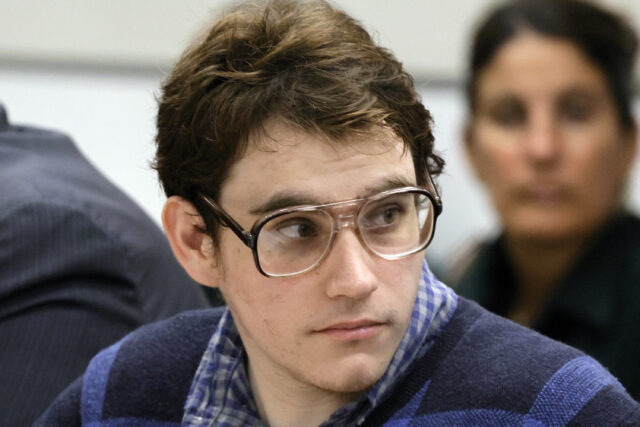
The ruling has drawn sharp criticism from gun-safety advocates and investigative journalists, who point out that the age threshold now matches that of Parkland mass murderer Nikolas Cruz when he legally purchased his weapon. Compounding the controversy is what critics describe as an intentional abdication of duty by Florida’s top legal officers, specifically citing Attorney General James Uthmeier’s decision to remain passive during critical stages of the litigation.
Reporting from the independent investigative outlet Florida Bulldog has brought intense scrutiny to the mechanics of this case, detailing how state officials seemingly bypassed their statutory responsibilities. Journalist Noreen Marcus, writing for Florida Bulldog, reported that the state appeals court ruled “that kids as young as convicted killer Nikolas Cruz have the right to walk around with concealed guns,” a development that has sent shockwaves through South Florida’s legal and civic circles.
The Core of the Court’s Ruling
The Fourth District Court of Appeal’s decision represents a broad expansion of gun rights in Florida, building upon the state’s transition to permitless concealed carry. Prior to this ruling, Florida statute generally restricted concealed carry permits and privileges to individuals 21 years of age or older, with limited exceptions for military personnel.

The legal challenge argued that restricting law-abiding young adults between the ages of 18 and 20 from carrying concealed weapons for self-defense violates their Second Amendment rights. Utilizing recent federal jurisprudence—most notably the U.S. Supreme Court’s landmark Bruen decision, which requires gun regulations to align with the historical tradition of firearm regulation in the United States—the 4th DCA determined that the age-based ban could not withstand constitutional scrutiny.
For communities in South Florida, the ruling is viewed through the lens of historical tragedy. Opponents of the expanded access emphasize that young adults in the 18-to-20 demographic are statistically more prone to impulsive behaviors and represent a disproportionate share of violent crime involvements. The fact that the ruling emerged from the appellate district covering Broward County has added a layer of bitter irony for local safety advocates who spent years fighting for tighter restrictions following the 17 lives lost in Parkland.
Accusations of Executive Inaction
While the judicial reasoning relies heavily on current conservative legal interpretations of the Second Amendment, the political controversy centers on the behavior of Florida’s executive branch. Investigative reports indicate that the expansion of gun rights was not just won by gun-rights advocates in court, but was effectively conceded by state leadership.
Attorney General James Uthmeier has faced intense scrutiny for allegedly ignoring his explicit constitutional and statutory “duty to prosecute” or defend state laws with full vigor. Legal analysts suggest that the Attorney General’s office failed to present a robust historical or structural defense of the 21-year-old age limit, effectively allowing the challenge to proceed to an inevitable conclusion.
This passive strategy has been interpreted by critics as a calculated political move to allow the courts to enact highly controversial conservative policies without requiring the legislature or the governor’s office to pass new, potentially unpopular bills ahead of upcoming election cycles. By remaining passive, state leaders can satisfy their core Second Amendment base while avoiding the political blowback of actively voting to put concealed handguns into the hands of 18-year-olds.
Public and Legal Ramifications
The practical impact of the 4th DCA ruling is immediate. Eighteen-, 19-, and 20-year-olds in Florida may now carry concealed firearms in public spaces where carry is legally permitted, matching the standards applied to older adults. Law enforcement agencies across South Florida are currently adjusting training protocols to reflect the change, ensuring officers understand that the mere sight or possession of a concealed firearm by an older teenager is no longer automatic grounds for detention or a weapons charge.
Gun rights organizations have celebrated the ruling as a long-overdue correction, asserting that if an 18-year-old is old enough to vote, sign contracts, and serve in the military, they are old enough to exercise their fundamental right to self-defense. They argue that the Bruen standard makes it clear that arbitrary age walls are unconstitutional.
Conversely, the ruling has re-ignited fierce debates over public safety in a state frequently affected by high-profile mass shootings. Gun-control advocacy groups argue that lowering the age threshold undermines the few meaningful protections established after the Parkland shooting, such as the state’s red-flag laws and original age increases for purchasing rifles.
As municipal leaders and school boards grapple with the new legal reality, attention remains fixed on Tallahassee. The intersection of an expansive judiciary and an executive branch increasingly willing to step aside creates a new precedent for how law is shaped in Florida. With the 4th DCA setting the pace, the legal framework governing public safety continues to shift rapidly, leaving local communities to navigate the real-world consequences.
Sources
- Florida Bulldog Investigative Report on AG Uthmeier and 4th DCA Gun Ruling
Disclaimer
Artificial Intelligence Disclosure & Legal Disclaimer
AI Content Policy.
To provide our readers with timely and comprehensive coverage, South Florida Reporter uses artificial intelligence (AI) to assist in producing certain articles and visual content.
Articles: AI may be used to assist in research, structural drafting, or data analysis. All AI-assisted text is reviewed and edited by our team to ensure accuracy and adherence to our editorial standards.
Images: Any imagery generated or significantly altered by AI is clearly marked with a disclaimer or watermark to distinguish it from traditional photography or editorial illustrations.
General Disclaimer
The information contained in South Florida Reporter is for general information purposes only.
South Florida Reporter assumes no responsibility for errors or omissions in the contents of the Service. In no event shall South Florida Reporter be liable for any special, direct, indirect, consequential, or incidental damages or any damages whatsoever, whether in an action of contract, negligence or other tort, arising out of or in connection with the use of the Service or the contents of the Service.
The Company reserves the right to make additions, deletions, or modifications to the contents of the Service at any time without prior notice. The Company does not warrant that the Service is free of viruses or other harmful components.