Government accountability is often a game of shadows and whispers, but in Broward County, the shadows seem to have been codified into a nine-page employment contract. Recent investigations by Florida Bulldog have pulled back the curtain on a practice that essentially puts a price tag on the silence of high-ranking law enforcement officials. According to investigative reporter Dan Christensen, Broward Sheriff Gregory Tony has implemented a system where top brass sign non-disclosure agreements (NDAs) that hold their post-employment benefits hostage. It is a bold move, even for a sheriff whose career has been defined by controversy, and it raises a fundamental question about the health of Florida’s democracy: Can public money be used to buy a private reputation?
The core of the issue, as detailed in the Florida Bulldog report, is a “non-disparagement clause” tucked into employment agreements for the Broward Sheriff’s Office (BSO) top tier. This isn’t your standard corporate NDA designed to protect trade secrets or client lists. Instead, these clauses appear to target any public criticism of the Sheriff himself. If a former high-ranking official decides to speak out about internal decisions, misconduct, or the general atmosphere at BSO, they risk losing a significant sum of money. We aren’t talking about a few hundred dollars; these are lucrative “separation payments” for accumulated sick leave, holiday time, and vacation days that can add up to tens of thousands of taxpayer dollars.
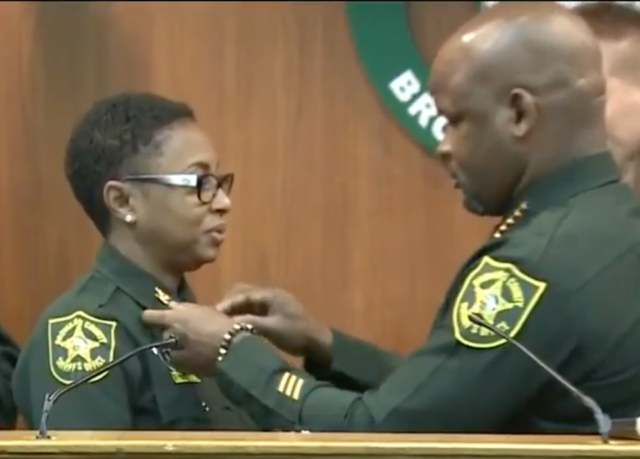
The evidence for this practice surfaced in a document signed on March 30, 2021, by Sheriff Tony and his former second-in-command, Undersheriff Nichole Anderson. As Florida Bulldog notes, “Tony’s general counsel Terrence Lynch signed a week later.” While it’s currently unclear how many other leaders have signed similar pacts, the “at-will” nature of BSO employment creates a powerful incentive for compliance. In an environment where the Sheriff can fire anyone at any time for any reason—or no reason at all—signing a gag order might feel less like an option and more like a requirement for survival.
This practice is particularly jarring when viewed through the lens of Florida’s legal history. The Sunshine State is famous for its Government-in-the-Sunshine Law, a pillar of transparency designed to ensure that the public has access to the inner workings of its institutions. By using public funds as a “clawback” mechanism for silence, the BSO appears to be creating a wall around the Sheriff’s Office. Christensen points out that while NDAs are legal for protecting sensitive law enforcement records or medical data, using them to “insulate [the Sheriff] from possible future criticism” likely crosses into the realm of ethical violations.

The constitutional implications are equally serious. The Florida Constitution’s “Sunshine Amendment” explicitly prohibits public officers from breaching the public trust for private gain. If a Sheriff uses the taxing power of the county—the money you pay every year—to ensure that his peers don’t talk about his mistakes, is that not a private gain? The Florida Bulldog suggests that this maneuver could violate the Code of Ethics for Public Officers, which forbids the “corrupt use” of an official position to secure special privileges or benefits for oneself. In this case, the “benefit” is a polished public image, bought with funds meant for public safety.
To understand why this matters, we have to look at the broader context of Sheriff Tony’s tenure. This is a man who has navigated a minefield of scandals since being appointed by Governor Ron DeSantis in 2019. From revelations that he withheld information about a fatal shooting during his youth in Philadelphia to allegations of lying on driver’s license applications and ethics complaints about “gold rings” given to staff, Tony has spent much of his time in office fighting off legal and reputational threats.
Just months ago, Tony fired Undersheriff Nichole Anderson, allegedly because he suspected she might challenge him in a future election. When she left, the NDA she signed years prior became her primary constraint. This “purge” of command staff, as described by Florida Bulldog, creates a leadership vacuum, leaving only those who have promised never to speak up. When the people with the most “unique knowledge of Tony’s decision making, behind-the-scenes conduct and potential wrongdoing” are effectively silenced by a financial gun to their heads, the public is left in the dark.
The financial mechanism here is ingenious in its cynicism. When an employee leaves, they typically receive a lump sum payment for their “accumulated annual leave, holiday leave, sick leave, sick leave bonus days, personal days and comp time.” Under the agreement uncovered by Christensen, BSO reserves the right to “claw back” that payment if the former employee disparages the Sheriff. It turns earned benefits—compensation for years of service—into a hush-money fund. It shifts the burden of proof onto the employee and forces them to choose between their financial security and their duty to the public.
One must wonder what a leader is so afraid of that they feel the need to contractually mandate silence from their closest advisors. If the operations at BSO are above board, why the need for a nine-page gag order? The chilling effect this has on whistleblowers cannot be overstated. A colonel or a major who witnesses corruption or mismanagement now has a six-figure reason to look the other way. This isn’t just about Sheriff Tony; it’s about a blueprint for how any public official could potentially dismantle oversight by turning their subordinates into paid mutes.
Public reaction to these revelations has been sharp. Critics argue that if forcing NDAs on public employees isn’t a violation of the current code of ethics, then the code is fundamentally broken. There are calls for the Attorney General, the State Attorney, or the Broward County Inspector General to step in. However, given Tony’s history of surviving ethics investigations—including a recent settlement that resulted in only a “public censure” for serious allegations—there is a palpable sense of skepticism among the citizenry.
The Florida Bulldog’s reporting highlights a growing trend of “scorched-earth” tactics within the Sheriff’s Office. The investigation suggests that Tony has used the full resources of his office to “go nuclear” on those he perceives as threats, including local mayors and city managers. When combined with the NDAs, a picture emerges of an administration that views transparency as a threat and dissent as a fireable offense.
In a truly conversational sense, we have to ask ourselves: Is this the kind of law enforcement leadership we want? Law enforcement depends on trust. We trust deputies with the power of life and death, and we trust their leaders to manage them with integrity. When that leadership uses our money to buy the silence of their peers, that trust is fundamentally compromised. The NDAs are a symptom of a deeper malaise—a belief that the office belongs to the individual, rather than the people.
As this story continues to develop, it will likely serve as a landmark case for Florida’s transparency laws. If the courts or the ethics commission allow these agreements to stand, it sets a precedent that could be adopted by every school board, city council, and government agency in the state. The “Sunshine” in Florida might get a lot dimmer if every public paycheck comes with a side of permanent silence.
For now, the Broward Sheriff’s Office remains a place of high stakes and quiet hallways. Sheriff Tony continues to maintain his position, even as the list of those who could speak against him remains bound by the contracts they signed. But as the Florida Bulldog has shown, no matter how much you pay for silence, the truth has a way of finding its way into the light. The question for Broward residents is whether they will demand that their public funds be used for the public good, rather than for the protection of a single man’s career.
While some might argue that these agreements are necessary for “orderly transitions” or to prevent “political theater,” that argument falls flat when applied to public servants. We don’t pay our leaders to be comfortable; we pay them to be accountable. When accountability becomes a luxury that can be traded for a lump-sum check, the very foundation of public service is eroded.
If you are a resident of Broward County, or even just a concerned citizen of Florida, this isn’t just an “internal BSO matter.” It challenges the idea that you have a right to know how your government works. It challenges the idea that the people we elect are our servants, not our masters. And as long as these NDAs remain in force, the “Sunshine” of Florida’s government remains obscured by a cloud of paid-for silence.
Source Used:
Disclaimer
Artificial Intelligence Disclosure & Legal Disclaimer
AI Content Policy.
To provide our readers with timely and comprehensive coverage, South Florida Reporter uses artificial intelligence (AI) to assist in producing certain articles and visual content.
Articles: AI may be used to assist in research, structural drafting, or data analysis. All AI-assisted text is reviewed and edited by our team to ensure accuracy and adherence to our editorial standards.
Images: Any imagery generated or significantly altered by AI is clearly marked with a disclaimer or watermark to distinguish it from traditional photography or editorial illustrations.
General Disclaimer
The information contained in South Florida Reporter is for general information purposes only.
South Florida Reporter assumes no responsibility for errors or omissions in the contents of the Service. In no event shall South Florida Reporter be liable for any special, direct, indirect, consequential, or incidental damages or any damages whatsoever, whether in an action of contract, negligence or other tort, arising out of or in connection with the use of the Service or the contents of the Service.
The Company reserves the right to make additions, deletions, or modifications to the contents of the Service at any time without prior notice. The Company does not warrant that the Service is free of viruses or other harmful components.