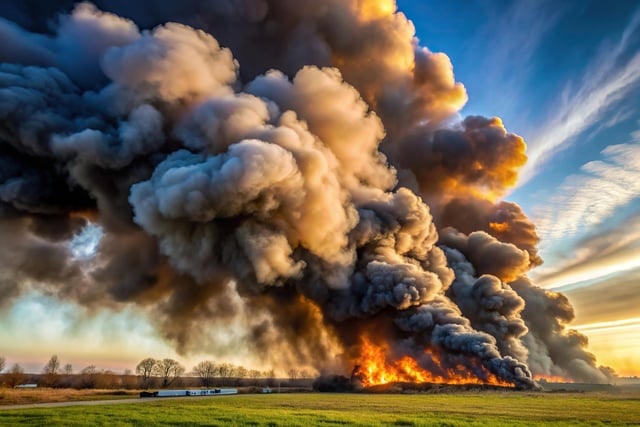
Florida’s equine industry is one of the most powerful agricultural sectors in the entire country. The state is home to hundreds of thousands of horses, and the economic weight behind that population is staggering. That’s not a figure you can afford to ignore, especially as Florida wildfires continue to grow in both frequency and intensity.
When flames tear through the state’s forests, pastures, and rural communities, the ripple effects reach every corner of the equine world, from backyard horse owners in Alachua County to large-scale breeding operations near Lochloosa Lake.
What’s Driving the Rise in Florida Wildfires
Florida’s subtropical climate sets the stage for some of the most unpredictable fire conditions in the nation. The state’s dry season stretches from October through May, and during that period, wildfire risk spikes dramatically. Low relative humidity, high wind speeds, and prolonged drought can push the Keetch-Byram Drought Index to dangerous levels, making even a small spark a serious threat.
Human activity is a major ignition source. Escaped debris burning, equipment sparks, and accidental fires account for a significant portion of fire incidents across the state each year. Lightning rounds out the rest. Fire officials from the Florida Forest Service and the Florida Department of Agriculture and Consumer Services work alongside Alachua County Fire Rescue and other fire units to contain these blazes, but the landscape doesn’t make it easy.

Wildland fires in Florida’s fire-adapted landscapes can transition quickly from a ground fire to a surface fire and, under the wrong conditions, escalate into a crown fire that’s nearly impossible to stop without containment lines and air attack aircraft.
Recent wildfire seasons have been brutal. Fires like the Lochloosa West Fire, the Cow Creek Fire, and the State Road 26 Fire have brought fire activity dangerously close to horse country, scorching thousands of acres across central and northern Florida and putting countless equine operations on high alert.
The Threat of Wildfire Smoke to Horse Health
One of the most immediate and underestimated dangers for horse owners is wildfire smoke. While evacuation grabs the headlines, smoke can harm horses even when a fire is miles away. Because horses have significantly larger lungs than most mammals, the fine particulate matter found in wildfire smoke, often less than one micron in diameter, can penetrate deep into their airways and settle in lung tissue, causing serious damage.
Horses exposed to wildfire smoke can develop persistent coughing, nasal discharge, wheezing, and increased respiratory rate. Those with pre-existing conditions like equine asthma or recurrent airway obstruction are especially vulnerable and face a higher risk of complications like bronchitis or pneumonia. Healthy horses aren’t immune either. Horses exposed during prolonged smoke events exhibit coughing at rest and during exercise, and may show signs of airway inflammation.
Recovery isn’t quick. Airway damage from smoke exposure can take 4 to 6 weeks to heal, meaning affected horses can’t return to training, competition, or breeding schedules on their normal timelines. That downtime translates directly into financial losses for trainers, breeders, and farm owners throughout the equine sector.
If you keep horses in a smoky area, bring them indoors if possible, reduce exercise, and soak hay to reduce additional dust and particulate inhalation. Fresh, clean water is also critical because proper hydration helps horses clear inhaled particles from their airways more effectively. Keep a close eye on the air quality index daily during wildfire season and treat it the same way you’d treat a Red Flag Warning.
Evacuation Challenges and the Cost of Being Unprepared
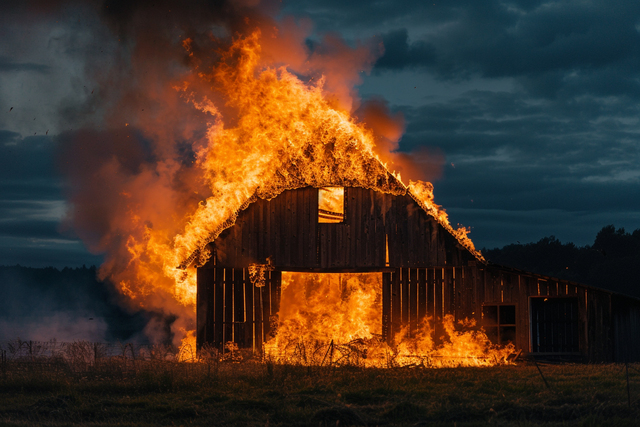
Getting horses out during an active wildfire isn’t like loading up for a trail ride. It’s stressful, fast-moving, and full of variables you can’t always control. Wildfires spread quickly, and the window between a reverse 911 call and a mandatory evacuation order can be razor-thin.
Having a proper emergency plan in place before wildfire season starts isn’t optional. That means identifying multiple evacuation routes in advance, testing those routes with your trailer, and confirming that regional boarding facilities or fairgrounds have space available. Your horses should be trailer-trained well before any emergency arises. You’ll also want updated health certificates, negative Coggins tests, vaccination records, and ID documentation ready to go. They’re what gets your horses returned to you if they get separated in the chaos.
The University of Florida’s Large Animal Hospital has urged horse owners across the state to develop their evacuation plans now, particularly given the extreme drought conditions that have placed many Florida counties under active wildfire threat in recent seasons. Florida Equine Disaster Response continues to push for greater preparedness across the state by offering training and evacuation assistance to both horse owners and first responders.
What You Can Do Right Now
You don’t have to wait for a fire map to show flames near your property to start preparing. Keep tabs on fire reports from the Florida Forest Service and fire behavior updates from the Florida Division of Emergency Management throughout the dry season. Watch for red flag warnings issued by the National Weather Service, which signal the combination of high wind speed, low relative humidity, and dry fuels that make wildfire spread most likely.
Conclusion
Florida’s equine industry is too valuable and too deeply rooted to be left vulnerable to wildfire threats. With hundreds of thousands of horses depending on their owners’ readiness, preparation isn’t just responsible, but it’s essential. Understanding how wildfires affect air quality, horse health, pastures, and farm operations gives you the best shot at protecting what you’ve built. Stay informed, plan early, and don’t wait for a fire to remind you how quickly things can change.
Disclaimer
Artificial Intelligence Disclosure & Legal Disclaimer
AI Content Policy.
To provide our readers with timely and comprehensive coverage, South Florida Reporter uses artificial intelligence (AI) to assist in producing certain articles and visual content.
Articles: AI may be used to assist in research, structural drafting, or data analysis. All AI-assisted text is reviewed and edited by our team to ensure accuracy and adherence to our editorial standards.
Images: Any imagery generated or significantly altered by AI is clearly marked with a disclaimer or watermark to distinguish it from traditional photography or editorial illustrations.
General Disclaimer
The information contained in South Florida Reporter is for general information purposes only.
South Florida Reporter assumes no responsibility for errors or omissions in the contents of the Service. In no event shall South Florida Reporter be liable for any special, direct, indirect, consequential, or incidental damages or any damages whatsoever, whether in an action of contract, negligence or other tort, arising out of or in connection with the use of the Service or the contents of the Service.
The Company reserves the right to make additions, deletions, or modifications to the contents of the Service at any time without prior notice. The Company does not warrant that the Service is free of viruses or other harmful components.