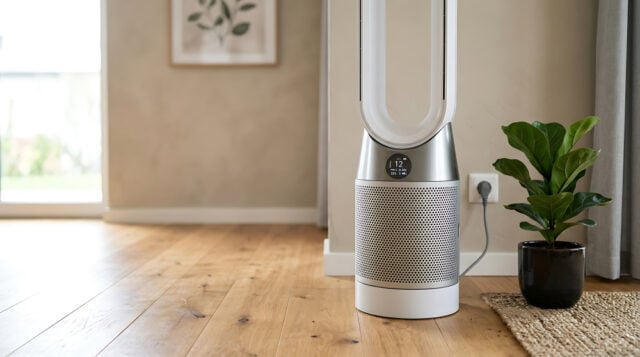
Most of us spend the overwhelming majority of our time indoors, which means the air inside homes, offices, and apartments has an outsized impact on daily comfort and wellbeing. Indoor spaces can accumulate a surprising mix of pollutants—dust, smoke, allergens, moisture-related contaminants, cleaning-product emissions, and combustion by-products—often at levels higher than what’s found outside. Effective indoor air management rarely comes down to a single fix. Instead, it relies on three complementary strategies: source control, ventilation, and filtration. Some readers may consider an air purifier as one part of a broader indoor-air strategy, but it’s worth understanding upfront that filtration complements rather than replaces reducing pollution at its source and bringing in fresh outdoor air. No single product or technology should be treated as a complete solution.
Understanding Common Indoor Air Pollutants
Indoor air quality refers to the condition of the air within a building, including the types and concentrations of contaminants present. These contaminants generally fall into three categories: particulate pollutants (dust, pollen, smoke particles), biological contaminants (mould spores, pet dander, bacteria), and gaseous pollutants (volatile organic compounds, carbon monoxide, and other combustion emissions).
Common sources include cooking and frying, tobacco smoke and vaping, cleaning products and fragranced items, damp or water-damaged areas, poorly maintained combustion appliances, and outdoor pollution drifting in through open doors, windows, or ventilation systems. The specific risks in any given home depend heavily on the building’s construction, the occupants’ habits, and local outdoor conditions—there’s no universal checklist that applies identically everywhere.
Start With Source Control
Removing or reducing a pollutant at its origin is typically the most effective first step, since it’s far easier to stop a problem before it spreads than to clean it up after the fact. Practical measures include repairing leaks promptly, avoiding indoor smoking or vaping, storing chemicals and solvents safely, and cutting back on unnecessary use of heavily fragranced products. Combustion appliances should be maintained regularly and vented safely outdoors.

Take cooking, for instance: running an exhaust fan while frying food removes steam, smoke, and grease particles right at the source. Trying to clear those same particles after they’ve already dispersed throughout the kitchen and adjoining rooms is a far less efficient approach. It’s also worth distinguishing between genuinely eliminating a pollutant source and simply masking its odor—air fresheners may make a room smell better without doing anything to address the underlying issue.
Improve Ventilation Safely
Ventilation works by diluting indoor pollutants with outdoor air and clearing stale air from the home. Running kitchen and bathroom exhaust fans during cooking or showering, opening windows when conditions allow, and maintaining HVAC systems according to manufacturer guidance all support healthier air exchange. It’s worth confirming that exhaust fans actually vent outdoors rather than into attics or wall cavities, where they can do more harm than good.
That said, opening windows isn’t always the right call. During wildfire smoke events, high pollen counts, extreme temperatures, or stretches of heavy outdoor pollution, bringing in outdoor air can make things worse rather than better. Before ventilating, it helps to ask a few questions:
- Is the outdoor air reasonably clean right now?
- Is this room currently producing excess moisture or pollutants?
- Is the exhaust fan functioning properly?
- Are vents, inlets, and outlets free of obstructions?
Ventilation should never be treated as a substitute for repairing leaks, addressing mould, or fixing combustion-safety issues—those problems call for direct action, not just dilution.
Use Filtration as a Supporting Measure
Filtration can meaningfully reduce certain airborne particles, but it can’t resolve every indoor air problem on its own. Filtration options generally fall into two categories: filters built into HVAC systems and portable devices designed for individual rooms. How well they actually perform depends on filter efficiency, airflow, room size, how long the unit runs, and ongoing maintenance such as timely filter replacement.
A filter rated for high particle removal won’t do much good if airflow through it is restricted, or if it’s sitting in a room disconnected from the actual pollution source. Filtration also has clear limits: it generally doesn’t address persistent moisture problems, radon, carbon monoxide, or sources that are still actively releasing pollutants. Any air-cleaning device should be used according to its safety instructions, with attention paid to whether it produces unwanted by-products of its own.
Manage Moisture, Allergens, and Dust
Moisture control sits at the center of managing mould and other biological contaminants. Running bathroom fans during and after showers, drying wet materials quickly, and maintaining reasonable indoor humidity all help reduce the conditions that let mould take hold. Visible mould should be cleaned safely, but just as importantly, the moisture source feeding it needs to be dealt with too.
Dust and allergens call for a different combination of habits: regular cleaning of high-traffic areas, washing bedding, grooming pets, and keeping sleeping areas tidy. A bedroom with noticeable pet allergens, for example, usually improves through several combined steps—frequent vacuuming, washing bedding in hot water, limiting pet access to the room, and maintaining good ventilation—rather than through any single device working in isolation.
Build a Room-by-Room Indoor-Air Plan
Pinpointing where pollutants are most likely to originate makes it much easier to prioritize action:
- Kitchen: Use an externally vented hood or fan during cooking.
- Bathroom: Control moisture through ventilation and prompt drying.
- Bedroom: Manage dust and allergen buildup through regular cleaning.
- Garage or utility area: Prevent vehicle exhaust from drifting into living spaces.
- Basement or crawl space: Watch for dampness, musty smells, and radon risk.
Key takeaway: The most effective plan typically starts with the pollutant source, adds ventilation where conditions allow, and uses filtration to support—not replace—those efforts.
| Strategy | Primary Purpose | Key Limitation
|
| Source control | Eliminates or reduces pollutants at origin | Can’t address pollutants already dispersed |
| Ventilation | Dilutes and removes indoor air with outdoor air | Not ideal during poor outdoor air quality |
| Filtration | Captures some airborne particles | Doesn’t address gases, moisture, or ongoing sources |
Common Mistakes to Avoid
Some frequent missteps include leaning on a filtration device while ignoring mould, smoke, or leaks; opening windows automatically regardless of outdoor conditions; blocking HVAC returns or exhaust grilles; putting off filter replacement; assuming that an odour’s disappearance means the pollutant is gone; and using strong cleaning chemicals in poorly ventilated rooms.
Making Improvements That Last
Healthier indoor air generally comes down to combining three habits: control sources, ventilate when conditions are suitable, and use filtration as a supplement. This is an ongoing maintenance process, not a one-time purchase or cleaning session. A practical starting point is to walk through the home room by room, note recurring issues like cooking odours, dampness, or stuffiness, and tackle the most significant source first before layering in ventilation and filtration improvements.
Disclaimer
Artificial Intelligence Disclosure & Legal Disclaimer
AI Content Policy.
To provide our readers with timely and comprehensive coverage, South Florida Reporter uses artificial intelligence (AI) to assist in producing certain articles and visual content.
Articles: AI may be used to assist in research, structural drafting, or data analysis. All AI-assisted text is reviewed and edited by our team to ensure accuracy and adherence to our editorial standards.
Images: Any imagery generated or significantly altered by AI is clearly marked with a disclaimer or watermark to distinguish it from traditional photography or editorial illustrations.
General Disclaimer
The information contained in South Florida Reporter is for general information purposes only.
South Florida Reporter assumes no responsibility for errors or omissions in the contents of the Service. In no event shall South Florida Reporter be liable for any special, direct, indirect, consequential, or incidental damages or any damages whatsoever, whether in an action of contract, negligence or other tort, arising out of or in connection with the use of the Service or the contents of the Service.
The Company reserves the right to make additions, deletions, or modifications to the contents of the Service at any time without prior notice. The Company does not warrant that the Service is free of viruses or other harmful components.