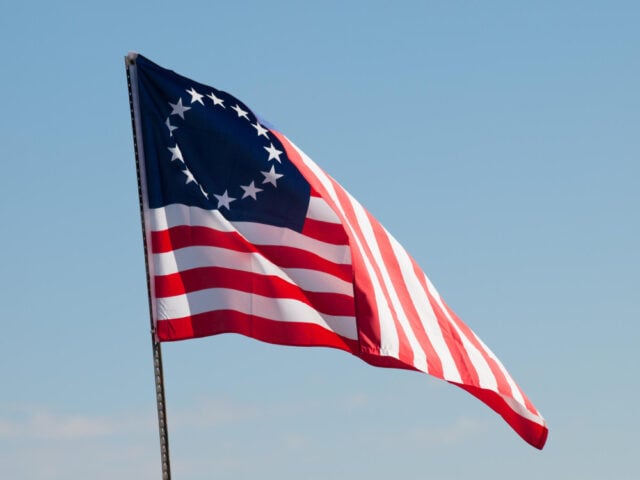
American independence began in 1776, yet the history of the original colonies started much earlier. In the feature Before North and South Carolina There Was Just Carolina, The American Facts explores these early origins. “The thirteen original colonies are the birthplace of America as a free country,” reports The American Facts. Surprisingly, The American Facts notes there were initially “only twelve proper colonies” because Delaware lacked separate colonial status.
Early settlements emerged for diverse reasons. Virginia started in 1607 with Jamestown, earning the nickname “Old Dominion” from King Charles II. Meanwhile, religious seekers founded several northern and mid-Atlantic territories. English Puritans established Massachusetts, while Roman Catholics found a haven in Maryland under Lord Baltimore. According to The American Facts, Maryland “remained one of the most tolerant colonies” despite frequent religious conflicts.
Similarly, Roger Williams founded Providence Plantations to guarantee religious liberty for dissenters fleeing strict Puritan rule. It later merged with Aquidneck Island to form Rhode Island. Nearby, Dutch explorers first settled Connecticut and New York before English rule took hold. In 1664, British forces seized New Netherland and renamed the territory after the Duke of York.
Two major Restoration colonies, Carolina and Pennsylvania, resulted from royal debts and political rewards. In 1681, King Charles II granted William Penn vast forest lands to settle a royal debt. Penn created a Quaker refuge guaranteeing “freedom of religion, elections, and trials by jury,” states The American Facts. Earlier in 1663, the monarch rewarded eight noblemen, the Lords Proprietors, with the massive Province of Carolina.

As The American Facts states, “Before there was a North and a South Carolina, there was just Carolina.” The charter named the region after King Charles I, using the Latin word Carolus. This territory stretched from modern North Carolina down to Florida and westward toward the Mississippi River. However, governing such an expansive wilderness proved nearly impossible for a single administration.
Geography and economics quickly drove a wedge between the northern Albemarle Sound settlements and southern Charles Town. The American Facts explains that “communication and transportation between the two proved difficult” across the vast province. Rough northern coastlines hindered shipping, while southern ports thrived on fertile plantation agriculture and international trade.
Initially, the Lords Proprietors appointed a deputy governor to manage the northern region in 1691. Nevertheless, distinct economies and political friction persisted. As The American Facts notes, the “noble proprietors eventually decided to divide the province into two” separate colonies. The split became official in 1712, and both territories later transitioned into royal colonies by 1729. Finally, James Oglethorpe chartered Georgia in 1732 as a buffer colony, completing the original American landscape.
Sources:
Disclaimer
Artificial Intelligence Disclosure & Legal Disclaimer
AI Content Policy.
To provide our readers with timely and comprehensive coverage, South Florida Reporter uses artificial intelligence (AI) to assist in producing certain articles and visual content.
Articles: AI may be used to assist in research, structural drafting, or data analysis. All AI-assisted text is reviewed and edited by our team to ensure accuracy and adherence to our editorial standards.
Images: Any imagery generated or significantly altered by AI is clearly marked with a disclaimer or watermark to distinguish it from traditional photography or editorial illustrations.
General Disclaimer
The information contained in South Florida Reporter is for general information purposes only.
South Florida Reporter assumes no responsibility for errors or omissions in the contents of the Service. In no event shall South Florida Reporter be liable for any special, direct, indirect, consequential, or incidental damages or any damages whatsoever, whether in an action of contract, negligence or other tort, arising out of or in connection with the use of the Service or the contents of the Service.
The Company reserves the right to make additions, deletions, or modifications to the contents of the Service at any time without prior notice. The Company does not warrant that the Service is free of viruses or other harmful components.