When disaster strikes, the public’s gaze rarely first turns to national capitals or international aid organizations for help. Instead, it turns toward the person in the local town hall, the county emergency manager, and the community service managers on the ground. In the geography of a crisis, local leaders are the “first mile” of response. They are the bridge between chaotic uncertainty and organized recovery.
However, as the frequency of climate-related disasters, public health emergencies, and infrastructure failures increases, the traditional “command and control” model of leadership is proving insufficient. Modern emergency management directors coordination requires a shift toward a more networked, tech-enabled, and human-centric approach.
Here is how local leaders can create a stronger, more resilient response when the unthinkable happens.
1. Building the “Blue Sky” Infrastructure
The foundation of a strong emergency response is laid during what emergency managers call “Blue Sky” days—the quiet periods when no immediate threat exists. Coordination cannot be improvised in the middle of a flood or a blackout; it must be a practiced reflex.

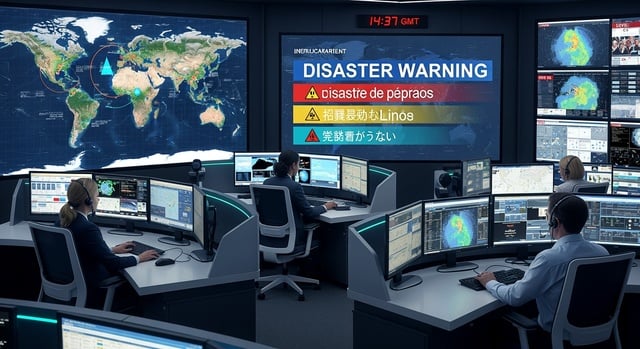
Local leaders must move beyond simply having a binder on a shelf. True preparation involves the creation of a “Unified Command” structure that transcends departmental silos. This means bringing police, fire, public works, and health officials into the same room for regular, high-stakes simulations.
These drills shouldn’t just test equipment, but should test relationships as well. Strengthening response efforts starts with knowing the sound of your colleagues’ voices and the limits of their resources long before the sirens wail.
2. Forging Cross-Sector Partnerships
The government cannot go it alone. One of the most significant force multipliers in modern emergency response is the integration of the private sector and non-profit organizations into the formal coordination plan.
Local leaders should actively recruit “Community Partners in Resilience.” This includes local grocery chains that can provide water and food, hardware stores that can prioritize supplies for city repairs, and local tech firms that can assist with data management. Furthermore, faith-based organizations and neighborhood associations often have deeper trust within specific demographics than the government does. By formalizing these partnerships through Memorandums of Understanding (MOUs), leaders ensure that when an emergency occurs, a pre-vetted network of resources is ready to be activated.
3. Mastering the Art of Unified Communication
In an emergency, information is as vital as oxygen. When communication is fragmented, panic fills the void. Local leaders must establish themselves as the “Single Source of Truth.”
To coordinate effectively, leaders should employ a multi-channel communication strategy. This isn’t just about a press conference at noon; it’s about a synchronized pulse of information across SMS alerts, social media, local radio, and physical signage in high-traffic areas.
However, the quality of the message is as important as the medium. Coordination fails when instructions are vague. Leaders must provide actionable, hyper-local information. Transparency about what is not known is also crucial. Admitting a gap in information builds more trust than providing a false sense of certainty that later evaporates.
4. Leveraging Real-Time Data and Technology
In the age of the “Smart City,” local leaders have more tools than ever to coordinate response efforts. Geographic Information Systems (GIS) mapping allows leaders to visualize a crisis in real time, layering data like power outages, road closures, and the locations of vulnerable populations (such as nursing homes) onto a single interface.
Effective coordination requires a “Common Operating Picture.” When every department—from the water utility to the school board—is looking at the same real-time map, the risk of redundant efforts or dangerous gaps is minimized. Furthermore, leaders should embrace crowdsourced data. Apps that allow citizens to report downed trees or clogged storm drains can provide “eyes on the ground” that official sensors might miss, allowing for a more agile deployment of resources.
5. Prioritizing Equity in the Response
History has shown that emergencies do not affect all populations equally; low-income neighborhoods, the elderly, and those with language barriers are often hit hardest and helped last.
Coordinating a stronger response means integrating an “Equity Lens” into every stage of the plan. This involves:
- Language Access: Ensuring all emergency alerts are disseminated in the primary languages spoken in the community.
- The Vulnerability Index: Using census data to identify households without vehicles or individuals who rely on electricity for medical devices.
- Decentralized Assistance: Operating mobile clinics or supply hubs in neighborhoods that lack easy access to central government buildings.
By focusing coordination on the “edges” of the community rather than just the center, leaders ensure a more robust recovery for the entire ecosystem.
6. The “After-Action” Evolution
The coordination of a response shouldn’t end when the immediate danger passes. The final stage of leadership is the “After-Action Review” (AAR). This is the process of turning a traumatic event into a learning opportunity.
Strong leaders resist the urge to simply celebrate the “wins” and instead host honest, sometimes uncomfortable, debriefs. Where did the communication break down? Which neighborhoods felt neglected? Did the technology perform as expected?
By documenting these lessons and immediately updating Standard Operating Procedures (SOPs), leaders ensure the community’s resilience is not static but evolving. They turn the “post-disaster” phase into the “pre-disaster” phase for the next event, creating a cycle of continuous improvement.
Conclusion: The Human Element of Coordination
At its core, coordinating an emergency response is less about logistics and more about psychology. It is about a leader’s ability to project calm, foster cooperation, and instill a sense of shared purpose.
Local leaders do not need to have all the answers, but they must provide the framework where answers can be found. By building deep-rooted partnerships, embracing the transparency of modern technology, and placing equity at the heart of their strategy, they do more than just manage a crisis. They weave a tighter social fabric that can withstand the stresses of tomorrow.
Disclaimer
Artificial Intelligence Disclosure & Legal Disclaimer
AI Content Policy.
To provide our readers with timely and comprehensive coverage, South Florida Reporter uses artificial intelligence (AI) to assist in producing certain articles and visual content.
Articles: AI may be used to assist in research, structural drafting, or data analysis. All AI-assisted text is reviewed and edited by our team to ensure accuracy and adherence to our editorial standards.
Images: Any imagery generated or significantly altered by AI is clearly marked with a disclaimer or watermark to distinguish it from traditional photography or editorial illustrations.
General Disclaimer
The information contained in South Florida Reporter is for general information purposes only.
South Florida Reporter assumes no responsibility for errors or omissions in the contents of the Service. In no event shall South Florida Reporter be liable for any special, direct, indirect, consequential, or incidental damages or any damages whatsoever, whether in an action of contract, negligence or other tort, arising out of or in connection with the use of the Service or the contents of the Service.
The Company reserves the right to make additions, deletions, or modifications to the contents of the Service at any time without prior notice. The Company does not warrant that the Service is free of viruses or other harmful components.