Living by the coast has obvious appeal, from sea views and fresh air to the character of established seaside towns. However, a coastal location can affect more than the visible parts of a property such as the roof, exterior walls or garden. Some of the most important effects may develop out of sight, within the drainage system beneath the ground, which is why problems such as blocked drains Brighton homeowners encounter can sometimes be linked to wider local conditions rather than everyday household use alone.
Drainage problems in coastal areas are rarely caused by one single “seaside” factor. Instead, they often result from a combination of conditions, including periods of heavy rainfall, increased surface water, high groundwater levels, movement in the surrounding ground and the condition of older drainage infrastructure. Aging pipes, weakened joints and existing defects can all become more noticeable when these pressures occur together.
For homeowners, this means that drainage performance can be influenced not only by how the system is used, but also by the environment around the property. DrainBoss regularly deals with drainage issues in coastal areas and understands how local conditions can contribute to recurring or weather-related problems. Recognizing these wider factors is the first step towards understanding why some coastal homes experience drainage issues more frequently than others.
Heavy Rain Can Put More Pressure on Drainage Systems
Rainwater should normally be directed away from a property through gutters, downpipes, gullies and surface water drainage systems. Under ordinary conditions, these routes are designed to manage rainfall without affecting the foul drainage that carries wastewater from sinks, baths and toilets. Problems are more likely to appear when a large volume of rain falls within a short period.

During intense or prolonged rainfall, gullies and surface drains may receive water faster than they can discharge it. If the surrounding ground is already saturated, there is also less capacity for water to soak away naturally. This can lead to temporary pooling around external drains, slower surface water removal or, in more serious cases, localized flooding.
The situation worsens when drainage points are partially obstructed. Leaves, soil, silt and other debris can collect around gratings and inside gullies, reducing the amount of water that can pass through. A drain that performs normally in light rain may struggle when both water volume and accumulated debris increase simultaneously.
Heavy rain can also reveal weaknesses that were previously easy to miss. A partially restricted pipe, damaged joint or section with poor flow may cope adequately during dry weather, but additional water places the system under greater pressure. This is why some drainage problems first become noticeable during or shortly after periods of particularly wet weather.
Groundwater Can Affect Drains Without Being Visible at the Surface
Groundwater is water held naturally within soil and rock beneath the surface. Its level changes over time depending on rainfall, local geology and how quickly the ground can absorb and release water. After prolonged wet weather, groundwater levels can rise significantly, even when there is no obvious standing water around a property.
This matters because underground drains are not always completely watertight. Where a pipe has small cracks, weakened joints or displaced connections, groundwater can enter the drainage system from the surrounding ground. This process is known as infiltration. The additional water occupies space in the pipework and sewer network, reducing the capacity available for normal household wastewater.
As a result, a drainage system may come under pressure without the homeowner seeing any visible flooding outside. The first signs may instead appear indoors or at inspection points, for example through slower drainage, higher water levels in chambers or problems that become more noticeable after extended periods of wet weather.
Why Older Pipe Joints Are Particularly Vulnerable
Older drainage systems are more likely to contain joints that have weakened over time. Small cracks can develop around connections, sections may shift slightly out of alignment, and previous repairs can create points where the pipe is no longer as well sealed as it once was.
These imperfections may remain relatively insignificant during dry conditions. When groundwater rises, however, they provide potential entry points for surrounding water. Even a small amount of infiltration through several weak joints can increase the volume passing through the system and add to the pressure from wet weather.
This does not mean that every older drain will be affected by groundwater. The level of risk depends on the condition of the pipework, the surrounding ground and local water levels. What matters is that existing weaknesses can become much more important when environmental conditions change.
Older Coastal Homes Often Come with Older Drainage Infrastructure
Many British coastal towns have large numbers of Victorian and other period properties. While these homes are valued for their character, the drainage beneath them may have a much more complicated history than the building above suggests. Parts of the system may date back many decades, while other sections may have been replaced, extended or repaired at different stages.
As a result, a single property can contain drainage made from different materials and installed to different standards. Older pipework may connect to newer sections, original joints may sit alongside later repairs, and alterations carried out during extensions or renovations can create a system that has evolved gradually rather than being installed as one complete network.
This does not mean that an older property automatically has poor drainage. Many long-established systems continue to function effectively. However, age can increase the likelihood of minor defects, such as worn joints, small cracks, displaced connections, or sections that have already been repaired. These weaknesses may remain unnoticed while water continues to flow normally.
The actual condition of an older drainage system therefore cannot be judged by the age of the property alone. Two neighboring period homes may have completely different pipe conditions depending on previous maintenance, alterations, ground conditions and the materials used. Where problems begin to recur, a proper inspection is usually needed to establish whether aging infrastructure is contributing to them.
Ground Movement Can Change the Alignment of Underground Pipes
Underground drainage relies on the surrounding ground to provide stable support and help keep pipework in the correct position. When soil shifts, settles or changes volume over time, the pressure around buried pipes can become uneven. This does not mean that coastal conditions automatically cause pipes to move, but local geology and changing ground conditions can make existing weaknesses more significant.
Even relatively small movements can affect sections of a drainage system. A pipe may shift slightly at a joint, lose part of its original gradient or develop a localized dip where wastewater and debris are more likely to collect. Connections can also become weakened if adjoining sections move by different amounts.
Where pipework is already aging or damaged, ground movement may place additional stress on small cracks or vulnerable joints. Over time, these defects can widen or sections can become displaced enough to interfere with normal flow. In more serious cases, structural damage may develop and require repair.
The effect is often gradual rather than sudden. A drainage system may continue to function despite a minor change in alignment, with problems only becoming noticeable once waste starts accumulating in a low section or another factor, such as heavy rainfall, places additional pressure on the system.
Tree Roots Can Exploit Existing Weaknesses in Drain Pipes
Tree roots are another factor that can affect underground drainage, particularly around older properties with established gardens and mature vegetation. In most cases, roots do not simply break through a completely sound pipe. Problems are more likely to begin where the drainage system already has a weakness, such as a small crack, a defective joint, or a displaced connection.
Roots naturally grow towards sources of moisture. If water is escaping through a damaged section of pipework, fine roots can find their way into even a very small opening. Once inside, they may continue to grow and spread through the pipe, gradually turning a minor structural defect into a more serious drainage issue.
As the root mass becomes larger, it can start to catch toilet paper, grease and other waste passing through the system. This reduces the pipe’s effective diameter and restricts wastewater flow. A defect that originally affected only the pipe’s physical condition can therefore develop into a recurring blockage as well.
The presence of roots should also be treated as a sign of an underlying defect that may allow them to enter. Removing the root growth can restore flow, but if the damaged joint or crack remains, the problem may return over time.
Does Salt Air Actually Damage Your Drains?
It is easy to assume that drainage problems near the coast are mainly caused by salt. In reality, living close to the sea does not mean that saltwater is constantly passing through or surrounding household drainage pipes. For most underground systems, factors such as pipe condition, groundwater, heavy rainfall, ground movement and existing structural defects are usually more important.
Many buried drains are made from materials such as plastic or vitrified clay, which are not affected by coastal air in the same way as exposed metal. The underground environment also protects much of the pipework from direct contact with sea spray and salt-laden air.
Exposed metal components can be a different matter. External covers, fittings and other metal drainage elements may be more vulnerable to corrosion in coastal conditions, particularly where they are regularly exposed to moisture and salty air. Over time, this can affect their condition and may require more frequent inspection or maintenance.
So while coastal exposure can influence certain parts of a drainage system, it is misleading to treat salt as the main explanation for drainage problems in seaside properties. In most cases, the more important question is whether the system already has weaknesses that environmental conditions can expose or worsen.
What Happens When Several Coastal Factors Combine?
Drainage problems in coastal properties often become more noticeable when several pressures affect the same system at once. A pipe may already have a minor weakness, but that weakness can remain almost invisible until changing environmental conditions place additional strain on it.
| Coastal factor | What it can affect | Possible result |
| Heavy rainfall | Surface drains and gullies | Standing water or temporary overloading |
| High groundwater | Defective underground pipes | Infiltration and reduced capacity |
| Ageing pipework | Joints and pipe walls | Cracks, displacement or leakage |
| Ground movement | Pipe alignment | Poor flow or structural defects |
| Root ingress | Existing cracks and joints | Restricted flow and recurring problems |
These factors do not always act independently. In many cases, additional environmental pressure exposes or accelerates a weakness already present in the drainage system.
Warning Signs Coastal Homeowners Should Not Ignore
Drainage problems do not always begin with a complete blockage or obvious overflow. In many cases, the first signs are small changes in how the system behaves, particularly during or after wet weather. What matters most is whether those changes begin to repeat.
Homeowners should pay attention to signs such as:
- drains becoming noticeably slower after periods of rain;
- gurgling sounds from toilets or plugholes;
- unpleasant drain smells that keep returning;
- repeated blockages in the same part of the property;
- water remaining around an external gully for longer than usual;
- unusually high water levels or overflowing around inspection chambers;
- drainage problems that appear mainly after prolonged rainfall.
A single isolated symptom does not necessarily indicate a serious fault. A one-off slow drain, for example, may have a simple local cause. The situation becomes more significant when the same symptom returns, affects several parts of the system or consistently appears after similar weather conditions.
Recurring patterns may suggest that the drainage system is struggling under certain conditions rather than experiencing occasional minor blockages. Recognizing that pattern early makes it easier to investigate the underlying cause before the problem becomes more disruptive.
How the Cause of a Coastal Drainage Problem Is Identified
Identifying the cause of a drainage problem usually begins with examining the affected part of the system.
The first step is usually to inspect accessible drainage points, including gullies, inspection chambers and any areas where symptoms are most noticeable. This can help establish whether the problem appears to be localized or affects a wider part of the system.
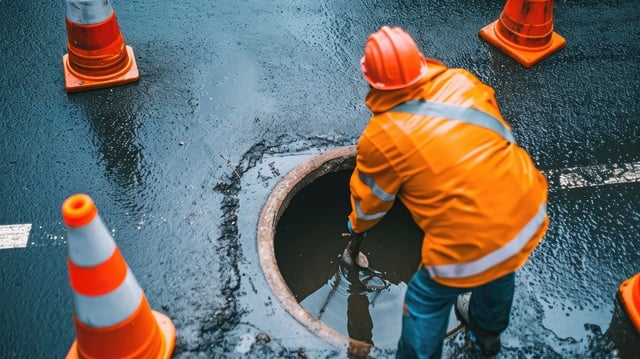
Where the cause is not obvious, a CCTV drain survey can provide a much clearer picture of what is happening underground. A camera is passed through the pipework to examine its internal condition directly. This allows issues such as cracks, displaced joints, root ingress, changes in alignment or collapsed sections to be identified without relying on guesswork.
Clearing a Drain and Repairing a Drain Are Not the Same Thing
A blocked drain and a damaged drain are related problems, but they are not the same. A blockage is primarily a flow problem: something is restricting the movement of wastewater through the pipe. A crack, displaced joint or damaged section of pipework is a structural problem that affects the condition of the drainage system itself.
This distinction matters because clearing a blockage can restore normal flow without necessarily resolving the underlying cause. If waste has accumulated around a damaged joint, for example, removing the obstruction may make the drain appear to work normally again. However, if the structural defect remains, debris can begin to collect in the same area and the problem may return.
Different situations therefore require different responses. High-pressure water jetting may be suitable for removing certain types of build-up and restoring flow through restricted pipework. Where root ingress has been identified, specialist root cutting may be needed to remove the obstruction. If an inspection reveals cracks, displaced joints or other structural damage, repair work may be necessary rather than repeated clearance alone.
The aim is not simply to get water moving again, but to understand whether the problem is temporary or being caused by a defect within the pipework. That distinction is especially important when the same drainage issue keeps returning in the same location.
When Can a Damaged Drain Be Repaired Without Excavation?
Not every damaged drain needs to be dug up and replaced. In some cases, trenchless or no-dig repair methods can restore the pipe from inside, avoiding the need to excavate gardens, paving, driveways or other finished surfaces above the drainage line.
For a localized defect, such as a short cracked or weakened section, patch lining may be suitable. This involves installing a reinforced repair over the damaged area inside the existing pipe. Where a longer section is affected, drain relining can be used to create a new internal lining along a greater length of the pipe.
These methods can significantly reduce disruption, particularly where drainage runs beneath landscaped areas or hard surfaces that would otherwise need to be removed and reinstated. However, no-dig repair is not appropriate for every type of damage. Severely collapsed, badly displaced or inaccessible sections may still require excavation.
The repair method should therefore be chosen only after the pipe’s condition has been properly identified. Understanding the location, extent, and type of the defect is essential before deciding whether a trenchless repair is suitable or more extensive work is required.
How to Reduce Drainage Risks in a Coastal Home
Reducing drainage risk on a coastal property is less about performing constant maintenance and more about noticing changes early. A system that normally performs well does not need unnecessary intervention, but small changes in behavior can provide useful warning signs before a more serious problem develops.
Simple preventative steps include:
- keeping external gullies and drainage channels clear;
- removing leaves, silt and other accumulated debris;
- paying attention to how drains behave after prolonged rainfall;
- investigating recurring problems instead of repeatedly clearing the same blockage;
- checking accessible inspection chambers from time to time;
- having persistent drainage issues properly diagnosed;
- giving older drainage systems extra attention during renovations or before purchasing a property.
Early recognition is particularly important in older coastal homes, where ageing pipework and environmental conditions can interact. Identifying a developing issue early can help prevent a relatively minor defect from becoming a more disruptive drainage problem later.
When Is It Time to Call a Drainage Specialist?
Not every drainage issue requires professional investigation. A minor, isolated problem may have a straightforward cause, particularly if it occurs once and does not return. The situation is different when the same symptoms recur or when several parts of the drainage system are affected simultaneously.
Professional inspection is particularly advisable when:
- a blockage repeatedly returns in the same location;
- several sinks, toilets or other fixtures are affected;
- there are signs of root ingress or suspected structural damage;
- wastewater backs up instead of simply draining more slowly.
These patterns can indicate that the problem extends beyond a simple local obstruction. A recurring blockage may be linked to a displaced joint, damaged section of pipe or another structural defect, while problems affecting several fixtures can suggest an issue further along the drainage system.
The main reason to seek specialist help is therefore not simply the severity of a single symptom, but its pattern and persistence. When the same drainage problem keeps returning, proper diagnosis is usually more useful than repeatedly treating the immediate effect.
Coastal Location Does Not Have to Mean Constant Drainage Problems
Living near the coast does not mean that drainage problems are inevitable. However, coastal conditions can make existing weaknesses within a drainage system become noticeable sooner, particularly where the pipework is older or already damaged.
The most effective approach is therefore to understand why a problem keeps returning rather than repeatedly treating the same symptom. Proper investigation can help distinguish a straightforward blockage from an underlying structural fault and determine whether clearance, repair or another solution is appropriate. DrainBoss Plumbing & Drainage works with both homes and businesses on drainage issues including drain unblocking, repairs, CCTV drain surveys, high-pressure water jetting and drain relining, using diagnostic methods to identify the source of persistent problems before deciding on the appropriate remedial work.
Disclaimer
Artificial Intelligence Disclosure & Legal Disclaimer
AI Content Policy.
To provide our readers with timely and comprehensive coverage, South Florida Reporter uses artificial intelligence (AI) to assist in producing certain articles and visual content.
Articles: AI may be used to assist in research, structural drafting, or data analysis. All AI-assisted text is reviewed and edited by our team to ensure accuracy and adherence to our editorial standards.
Images: Any imagery generated or significantly altered by AI is clearly marked with a disclaimer or watermark to distinguish it from traditional photography or editorial illustrations.
General Disclaimer
The information contained in South Florida Reporter is for general information purposes only.
South Florida Reporter assumes no responsibility for errors or omissions in the contents of the Service. In no event shall South Florida Reporter be liable for any special, direct, indirect, consequential, or incidental damages or any damages whatsoever, whether in an action of contract, negligence or other tort, arising out of or in connection with the use of the Service or the contents of the Service.
The Company reserves the right to make additions, deletions, or modifications to the contents of the Service at any time without prior notice. The Company does not warrant that the Service is free of viruses or other harmful components.