Written by Corrie Pelc — Fact checked by Jill Seladi-Schulman, Ph.D.
As we age, our bodies age along with us. Known as physiological aging, the process in which the body’s cells, tissues, and organs age can occur more quickly for some people and more slowly for others.
Past studies show that a person’s physiological age can even be older than their chronological or birth age, depending on the types of health choices they make during their lifetime.
Making healthy lifestyle decisions, such as eating a healthy diet, exercising regularly, not smoking, limiting alcohol intake, managing stress, and staying cognitively engaged, can help slow physiological aging.

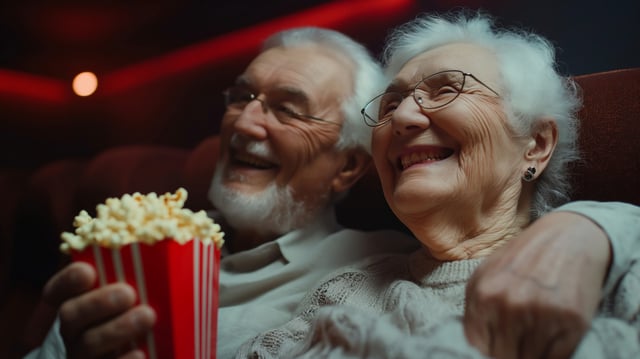
Now, a new study published in the Journal of Epidemiology and Community Health says that engaging in cultural experiences — such as going to the movies, the theater, or a museum — may also help slow a person’s physiological aging.
Examining cultural experiences and physiological markers
For this study, researchers analyzed health data from almost 1,900 adults who had taken part in the English Longitudinal Study of Ageing — an ongoing study including adults ages 50 or older living in England.
Study participants were asked via questionnaire how often they went to the movies, a museum or art gallery, a theater production, a concert, or an opera.
Participants also had 10 physiological markers measured, including pulse pressure, diastolic blood pressure, low-density lipoprotein (LDL) cholesterol, body mass index (BMI), and walking speed.
“Many factors influence physiological aging,” Yusuke Matsuyama, PhD, DDS, associate professor and researcher in the Department of Dental Public Health at the Institute of Science Tokyo in Japan, and first author of this study, told Medical News Today. “Therefore, I believe that a range of approaches is needed to slow physiological aging and promote healthy aging.”
“Cultural engagement has been associated with well-being and various health outcomes and, importantly, it is modifiable,” Matsuyama continued. “I recently began studying physiological aging and therefore became interested in cultural engagement as a potential determinant.”
At the study’s conclusion, researchers found that study participants with a high level of cultural engagement — attending a cultural event every few months or so — had a physiological age of about 66.9 years, which was lower than that of those with lower levels of cultural engagement.
Scientists also found that a one-point increase in cultural engagement score was associated with a 0.085-year (31 days) reduction in physiological age. This was after adjusting for certain factors such as household income and chronic health conditions.
“Specifically, our analytical approach eliminates bias from factors that do not change over time, such as genetic characteristics and/or personality traits,” Matsuyama said. “This provides more robust evidence that cultural engagement is associated with a lower physiological age.”
“Cultural engagement can take many forms, in terms of frequency, continuity, and whether people participate alone or with others,” he added. “These different aspects warrant further investigation.”
An observational study that requires more research
MNT spoke with Anna Chodos, MD, MPH, professor in the Division of Geriatrics at the University of California, San Francisco, and executive director of Dementia Care Aware (DCA), who was not involved in this study.
Chodos commented that there is an intuitiveness to these results that she thinks readers will appreciate.
“We can all imagine people who seem to be thriving more in older age who are also those we see being an active part of our cultural life as a society,” she explained.
“For example, those people who are out on the town to see theater or appreciate other cultural events. We know that cognitive stimulation and social engagement lead to better physiologic aging, so this makes sense that it would be protective for these adults as they age.” — Anna Chodos, MD, MPH
“However, we must note, as the authors do, that this is an observational study,” Chodos added. “So, we hope that being engaged is protective of dementia, but it is also possible that some people may be more capable of being engaged. Someone whose cognitive decline limits them from going out to the theater would also have that factor as a health contributor for physiological aging.”
MNT also spoke with Kamal Wagle, MD, a geriatrician with Hackensack University Medical Center in New Jersey, who was also not involved in this study, and said future research in this area should investigate the causal relationship between cultural engagement and physiological aging through intervention studies.
“It would also be beneficial to explore the impact of different types and frequencies of cultural activities on specific health markers,” Wagle continued. “Longitudinal studies are essential to understand the long-term effects. Additionally, research should include diverse populations to ensure findings are applicable across various cultural and socioeconomic backgrounds.”
Dung Trinh, MD, an internist for MemorialCare Medical Group and chief medical officer of the Healthy Brain Clinic in Irvine, CA, who was not involved in this study, said these findings are encouraging because they suggest that something as accessible and meaningful as going to a museum, concert, theater, or cinema may be associated with healthier aging across several body systems.
For readers who wish to increase their level of cultural engagement, Trinh suggested starting small and choosing activities you genuinely enjoy, because consistency matters more than forcing yourself into something that feels like a chore.
“That could mean visiting a local museum every few months, attending a community concert, joining a book or film group, going to a library program, or exploring free cultural events in your area,” he told MNT.
“Invite a friend or family member when possible, since the social connection may be part of the benefit, and look for low-cost, accessible options if transportation, mobility, or finances are barriers. The goal is not to reach a perfect number of outings, but to build regular cultural and social stimulation into your routine.” — Dung Trinh, MD
“At the same time, I would emphasize that this was an observational study, so it does not prove that cultural engagement directly slows aging; healthier, more mobile, and more socially connected people may also be more likely to participate,” Trinh added. “Still, the consistency of the findings over time makes cultural engagement a promising addition to broader healthy-aging strategies.”
Disclaimer
Artificial Intelligence Disclosure & Legal Disclaimer
AI Content Policy.
To provide our readers with timely and comprehensive coverage, South Florida Reporter uses artificial intelligence (AI) to assist in producing certain articles and visual content.
Articles: AI may be used to assist in research, structural drafting, or data analysis. All AI-assisted text is reviewed and edited by our team to ensure accuracy and adherence to our editorial standards.
Images: Any imagery generated or significantly altered by AI is clearly marked with a disclaimer or watermark to distinguish it from traditional photography or editorial illustrations.
General Disclaimer
The information contained in South Florida Reporter is for general information purposes only.
South Florida Reporter assumes no responsibility for errors or omissions in the contents of the Service. In no event shall South Florida Reporter be liable for any special, direct, indirect, consequential, or incidental damages or any damages whatsoever, whether in an action of contract, negligence or other tort, arising out of or in connection with the use of the Service or the contents of the Service.
The Company reserves the right to make additions, deletions, or modifications to the contents of the Service at any time without prior notice. The Company does not warrant that the Service is free of viruses or other harmful components.